
Enough of Billy Waggledagger as we used to call him at school. How many bees?
Well only 17, so probably not bees as in the insects.
These...
 ...as in Bee Orchids. That's far more than we've found so far but they are in flower and that makes life a lot easier. Still tricky when they are secreted amongst taller vegetation.
Most had only one flower but this one has three and another bud looks like it gonan open during the next bout of summer sunshine.
 Cute wee things I really like 'em.
And you get a cunning pollination strategy the 'bee' really does imitate a bee - even smells like one - to attract passing male bees. Trouble is we don't have that species here in the UK so how does it reproduce? Well it does a bit of self pollination and relies on some other dumb insects that don't kmow they're not bees. If you're thinking I just regurgitated that info straight off Springwatch I have to tell you I already knew it.


 Little belters aren't they. One of my favourites; never tire of looking at them.
 Support for the Bee Orchids came in the form of a lone Orange Hawkweed, its alternative name of Fox and Cubs is much more fitting. Another one of my favourites.
 Cute wee things I really like 'em.
And you get a cunning pollination strategy the 'bee' really does imitate a bee - even smells like one - to attract passing male bees. Trouble is we don't have that species here in the UK so how does it reproduce? Well it does a bit of self pollination and relies on some other dumb insects that don't kmow they're not bees. If you're thinking I just regurgitated that info straight off Springwatch I have to tell you I already knew it.
 Little belters aren't they. One of my favourites; never tire of looking at them.Support for the Bee Orchids came in the form of a lone Orange Hawkweed, its alternative name of Fox and Cubs is much more fitting. Another one of my favourites.
Where to next? Weekend safari to distant hills I think.
In the meantime it's orchid time - let us know what orchids are about your outback.


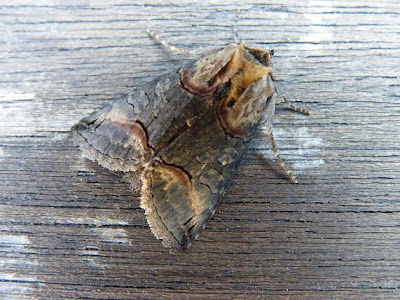
 A totally handsome brute...


 And we came acroos this Helleborine which due to its position high on the side of a dune could well be Dune Helleborine - one of the worlds rarest plants, only found at a handful of sites in the country and nowhere particularly numerous. Unfortunately this individual has had its flower buds nibbled off, probably by a Rabbit, or perhaps a Slug.


 A movement on the ground drew our attention and at first we couldn't see anything but we did notice the little hole. Then after a couple of seconds this Wasp reversed out dumped a tiny pile of sand and disappeared back down to continue digging.

 A hot sunny day with a clear blue sky and a slight breeze; the hum and murmur of bees and hoverflies were the only sounds. Couldn't hear the multitude of planes going over five miles up.
 The Blue Tails manage to breed in the pond despite the four huge Golden Orfes and the three Goldfish.




 Frank flattened the Thrift as he found the only bit of shade in the garden.
 Three Swifts screamed around overhead but I don't think they have spotted their new nest box yet. They seem to be quite scarce this year so far.
 Nicely marked with those blotches.
