Showing posts with label Common Tern. Show all posts

Wednesday, 21 August 2024

Another visit to Leighton Moss

The Safari had seen that there were big roadworks planned for this week down towards Martin Mere so with that in mind CR pointed the car  northwards, only to find that serious roadworks are planned in a couple of weeks time along our route out of town that way too. Leighton Moss was our target venue with some good sightings being reported recently on the usual social media info lines. Of most interest to us was news of a Purple Heron which had been seen a couple days earlier but had had no subsequent reports, gone or just hiding in the extensive reedbeds??? Not to worry there were Bitterns, Opsreys, Hobbys and Otters all to be enjoyed. To break the habits of a lifetime we took the long trail up to Lower Hide first, as this was where the Purple Heron had been last reported from. noting the lack of isect life on the way we were pleased to see this Migrant Hawker dragonfly perched up on the edge of the path as we neared the hide.

On entering the hide we were told that we should have been there ten minutes earlier when a Hobby shot past but hadn't reappeared, no signs of any Bitterns, Ospreys or Otters during the morning so far either - not what we wanted to hear really. Only one thing to do - sit and wait for all the action to happen, which eventually it did in the form of a Heron flying in with a big Tench.

It's tempting to think it landed on the drier ground where it could wrangle the fish into a position it could swallow it from rather than risk losing it back into the water where it had caught it. it took a fair bit of wrangling before it went down the hatch but that happened behind the intervening reeds so no photo of the dastardly deed was possible. With its belly full the Heron flew off away to our left and out of sight. It was replaced, much more distantly, by a Great White Egret arriving from the far left. That flew into the favoured roosting spot, the dead tree dead ahead of us beyond the far side of the pool. 

The field on the other side of the road was being cut, probably for silage, and gave us the opportunity to get the tractor in the frame with the egret. Two of our favourite things at the same time!!!

The egret sat up there doing nothing much for ages before dropping down into the far side of our pool, still a long way off, and stalking around slowly for a while without any success. We don't normally see herons/egrets in the water here but after a bit of a dry spell water levels across the reserve are lower than they have been for a long time.
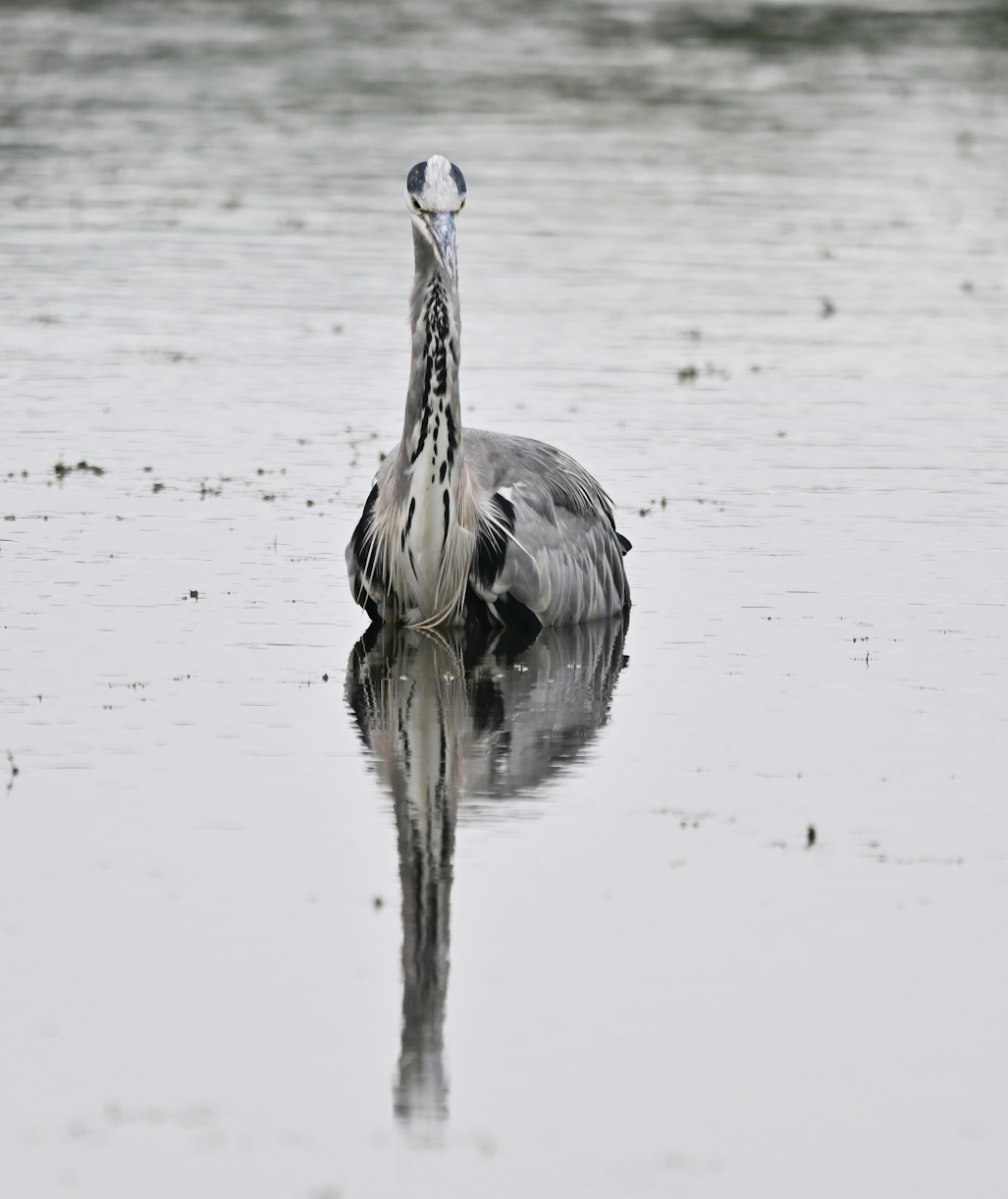
Neither the hoped for Bitterns, Hobbys, Ospreys nor any Otters showed up so we slowly worked our way back to the Causway Hide where we hoped at least one of the aforementioned species would put in an appearance for us. At least we hadn't missed any action was the essence of the news we received from the birders already present. Action was about to follow though when another Heron flew in and began to hunt.
Before long an submarine movement caught its eye and it went into strike pose.
A couple of minutes of ever so carefully adjucting its position followed then....whammmm...a splash...and...gotcha!
It had caught a small jack Pike.
Somehow we missed the action shot whereby the fish is tossed up and is swallowed in mid air. 

Time had flown even though we thought we hadn't seen much so we wandered down to Grisedale hide for our lunch, passing very little at Lillian's hide on the way. For what must be the first time ever we opened the door to find the hide empty so we went to take advantage of 'photographers corner' only to find the pool there was dry and mostly obscured by tall intervening vegetation so we opted for the right hand end instead. Good move, there were three Little Egrets and another Great White Egret stood in the water in front of us and five Red Deer hiding in the tall vegetation on the bund at the back of the pool. There were three hinds, a young stag with rather dangerous looking anters despite the fact they are still covered in velvet, and a young very spotty fawn. With no tines to interlock straight antlers become two daggers which can inflict serious or even fatal wounds on an opponent, unlikely in a proper fight with a dominant stag as our youngster would just run away if challenged but in a practice bout with a stag of similar age the outcome might not be good.

He melted into the thick vegetation leaving the hind he was with listening to our camera shutter clicking.

By this time two of the Little Egrets and the Great White Egret had also done a bunk leaving just the closest Little Egret to fish the pool alone as the  rain began to fall five minutes earlier than forecast. useless these weather forecasters, can't be trusted to get  anything right! The egret was very active, dashing hither and thither after small fish but always seemed to catch them while facing away, it had probably pinned them up in the shallows agains the roots of the reeds rather than being less able to catch them in the open water facing us. his/her need for food outweighs our need for a pic.
Eventually more birders arrived an we were able to point out one of the Red Deer hinds that had re-emerged from the vegetaation after they'd all disappeared, it's amazing how something so big can vanish without leaving a trace, you can't even see the tops of the Thistles shaking where they are moving about. This one came out had a little graze on the Reeds and then lay down in a hollow behind some very tall Water Docks and more-or-less out of sight.
That left just the egret to concentrate on. Again it was darting about after small fish.
After stirring them out of their hiding places with is shivering foot technique.
Several minutes later the Great White Egret came back, swooping in low over where the Red Deer had been stood and landing in front of us.

One of the Little Egrets also returned 

and promptly started to give grief to our resident friend who flew off in a huff.

The newcomer then took up the vacant position where the fish were - it's evil masterplan successfully carried out!
Having exhausted all the possiblities and the weather turning very iffy so no further chance of Hobby for the day we left the main reserve and went down to the saltmarshes. There was little to exhaust here, the mud in the pools was very dry and uninviting to feeding birds and some management works had recently been carried out creating a more varied topography with deeper holes and shallower areas. It'll be good when it fills with water but today the the lack of water combined with the disturbance meant that there was very little on offer. The decision was made to cut our losses and head back towards Base Camp stopping at Conder Green on the way.

From the shelter of the shelter there we had a look at the pool, again the water levels were well down. All the Common Tern nesting rafts had been vacated leaving just a coupleof pairs of Black Headed Gulls with very young fledged offspring and a solitary Avocet with a youngster in tow. In the deeper water away to the right half a dozen Little Grebes fished for 3-Spined Sticklebacks, a small flock of Tufted Ducks floated in the lee of one of the islands trying to get a bit of shelter from wind and driving rain and a couple of dozen Mallards loafed on the far bank.

Across the road the creek was as low as we've ever seen it with barely a trickly running past. There were plenty of Redshanks with a few Curlew and Lapwings but we couldn't find the Spotted Redshank that had been reprted the day before. As CR watched the pool waiting for the Kingfisher to arrive and perch on the brick drainage structure we continued to scan the creek finding a Ruff and then a Greenshank. After a while the Avocets left the pool and came over to the creek, we don't recall seeing them in there before but then there's usually too much water for them to be able to wade in it.

The rasping calls of a Common Tern alerted us to two arriving on the pool, one carring a fish. The second one was disinterested in the potential gift and soon flew off to the south. The fish carrier landed on the point of the island close to the Tufted Ducks and proceeded to eat said fish, a Sandeel, itself and then settled down for a rest.
CR was still waiting for the Kingfisher so we returned to scanning the creek for any sign of the Spotted Redshank. Still no  joy but there were now three Greenshank, one of which had come a little closer.
Back on the pool a small flock of Linnets kept datring back and forth between the nearest island and the roadside hedge to our right and then a larger bird joined them, a Collared Dove, a bird we don't see around Base Camp these days and rearely photograph anywhere so here you go...
Not sure what plant it's picking the seeds from but it certainly had a taste for them. You don't normally associate them being in any shape of form camouflaged but on that muddy background with the pebbles lying around it was quite hard to see with the naked eye from our vantage point about 50 yards or more away.
All good things must come to an end and so this safari had run its course and the time had come to hit the road back to Base Camp.

Where to next? (Minor) Car troubles transpired to us missing a couple of safaris but we'll be on the road again somewhere soon.

In the meantime let us know who's hiding in the tall grass in your outback.

Monday, 24 June 2024

Down, up, around and back - Part 2

The Safari has been to Belfast before and knew there were Harbour Seals to be found in the lough. We found a handful of distant animals hauled out on the low tide rocks but it wasn't until after breakfast while we were chatting on the phone to Wifey back at Base Camp that one came near enough for a pic.

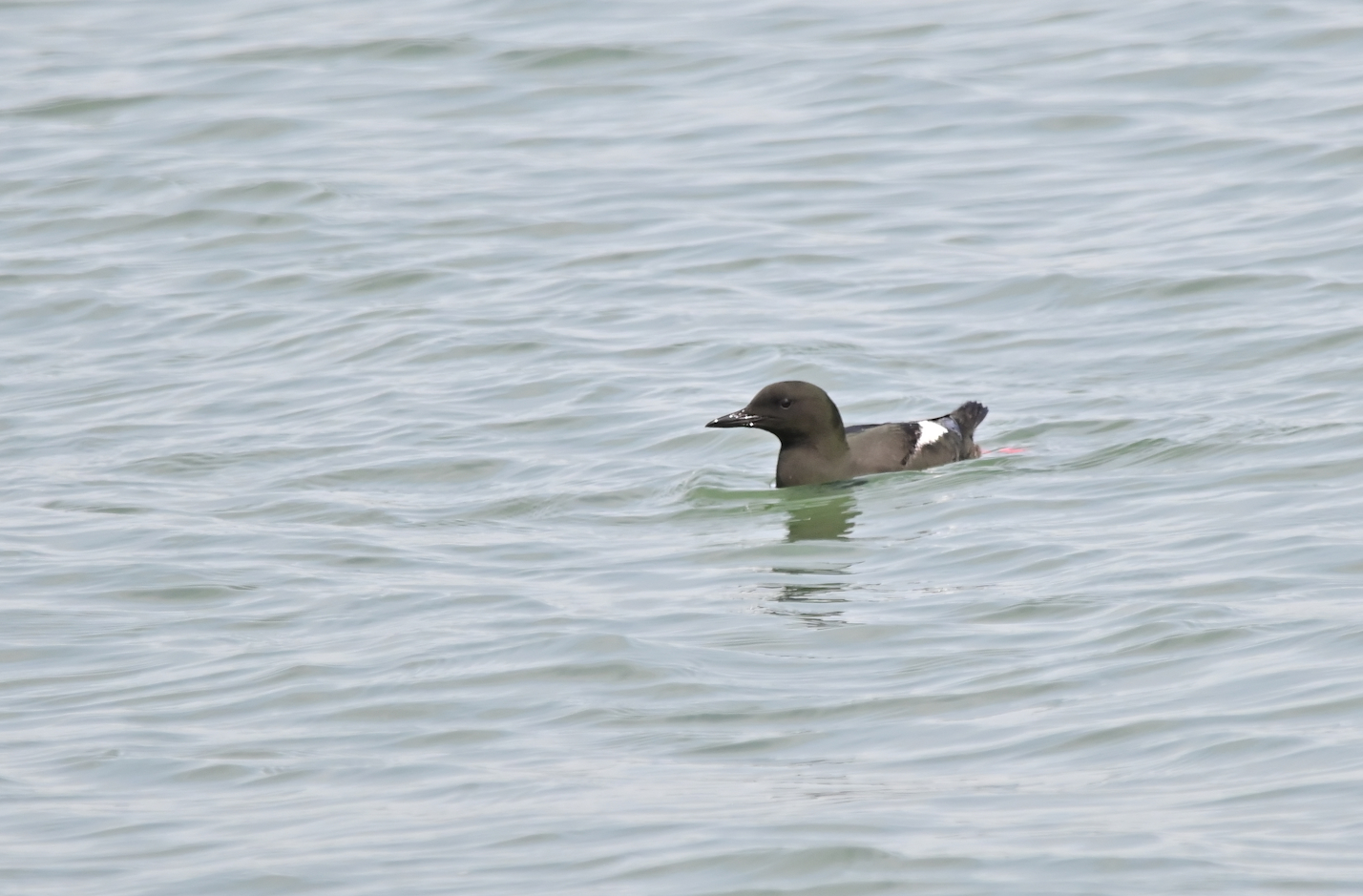
The harbour area also held numbers of Black Guillemots, several commuting between the wide mouth of the lough and the inner dockland area. A couple even perched up on the stern of the ferry docked opposite us.

After breakfast we went ashore and left the rest of the team to do whatever they had planned. We walked the few hundred yards to the RSPB's 'Window on Wildlife' reserve. We arrived before opening time and had a pleasant wait in glorious sunshine watching bees, hoverflies and a few butterflies buzzing around the flowers of the pollinators area at the entrance. After a few minutes the doors were opened and a very helpful young lady told us what had been seen recently and gave us a telescope to use, very handy seeing as how the lake we were viewing was quite large.

A Common Sandpiper appeared just inches in front of the huge viewing window but didn't stick around for a pic. The next nearest bird was this female Tufted Duck sat chiiling out in the warm morning sunshine. Now we always promise ourselves not to take anymore pics of Tufted Ducks cos we've got at least half a dozen more than plenty but as this one was doing something a little out of the ordinary - sitting still on dry land - we fired a few shots off.

The young warden had mentioned there was a nesting pair of Mediterranean Gulls on site but that last year they had five pairs, this pair being the only ones to have survived a severe outbreak of Avian Flu. After filling our SD card with sitting duck pics it took us 0.00001 of a second to find the Mediterranean Gulls among the throngs of Black Headed Gulls on the nesting rafts. Can't believe it took us that long to sniff em out, musta been because we were behind a thick plate glass window!
Out on the water there were several Little Grebes, mostly refusing to come close until one did venture just about in range.
Meanwhile a Moorhen walked the shoreline behind the still snoozing Tufted Duck.
Positioned out in the water were several posts and 'goal posts' for the gulls and terns to loaf on. At this time all the terns were Common Terns, news from the other birders who had now joined us that the Arctic Terns were very late this year with only one being recorded so far.

The window wasn't the best when taking pics at an angle but not too bad when looking square on, as when the Moorhen walked back.
Eventually one of the Little Grebes did come much closer.
Over in the far corner there was a mixed flock of Black and Bar Tailed Godwits many sporting their brick red breeding plumage. The others birders suggested we get the door code for the little hide over that way from the wardens and go round to get a closer look. It was only a five minute walk down the road then along a wooded fringe where we heard Willow Warbler and Blackcap singing as saw a family of recently feldged Long Tailed Tits. From the hide we did get closer views of the godwits but they still weren't in a good place for pics. A couple of Whimbrel were with them and we heard a Curlew too. Here the loafing posts were much closer and not through glass and although against the light at this time of day offered much better views of the Common Terns.
From the hide the path continued down to the edgse of the lough where we met a couple of guys with cameras we thought were more birders but were actually waiting for a huge bulk carrier, the Atlantic Sakura, to be tug-boated into its dock.
The tug at the back must have powerful engines as it was acting as a brake to slow the ship down.
While watching the ship shenanigans a Black Guillemot sailed past nice and close. We were getting hungry by now and with no cafe at this reserve we gave our thanks to the wardens and birders for all the info and banter, what a friendly and informative bunch, if you're ever in Belfast 'WOW' is well worth a visit, and set off on the walk back to the copious amounts of grub only a cruise ship can offer.

For our sailaway there was stiff breeze giving challenging viewing conditions in the outer lough until we rounded the headland and  headed northwards into the North Channel. Just outside the mouth of the harbour there was a small flock of Eiders A few Shags were further out on the choppy water.

As the evening progressed the sea became weirdly glassy calm and we came across groups of Kittiwake, Razorbill, Guillemot and Fulmar. Small flocks of Gannets cruised by probably on their way to the nearby colony on the tiny island of Ailsa Craig, famed for its granite curling stones. As dusk fell the conditions looked absolutely mint for a Storm Petrel or two but sadly none were found.

The day’s mammal list finished on 7 Common Seals, a single Grey Seal, a couple of unidentified dolphins and a  Harbour Porpoise.
 
Cruising up The Minch in darkness wasn't ideal for us wildlife watchers as this is where we would expect to find good numbers of marine mammals and maybe a Basking Shark or two too. Luckily for us the was some daylight before we arrived at our next port, the tiny Hebridean town of Stornoway. 45 Common Dolphins were seen in several pods, unfortunately all too distant for pics, and two of the guests let us know they'd seen four White-beaked Dolphins.   As we approached the brand spanking new Port of Stornoway cruise terminal, so new it's nowhere near finished yet we had Black Throated, Red Throated and Great Northern Divers along with a pair of Red Breasted Mergansers
Once docked we took the shuttle bus into town where House Sparrows and Starlings were seen. There's a very nice whisky shop where we could have all too easily maxed out our credit card but managed to resist the temptation. A bric-a-brak shop came up trumps with an early Slade vinyl LP for our collection but we couln't find a pub with decent beer in which to watch a footy match IH had been looking forward to so it was back to the ship. Later some guests that had been on one of the excursions told us they'd had a Golden Eagle pointed out to them by their guide - lucky devils! The nearest we got to eagle excitement was a Heron flying across a hillside from the shuttle bus into town.  
With The Minch being a cetacean hotspot we had plenty of eager guests out on deck as we left Stornoway heading for the topmost corner of the Scottish mainland, Cape Wrath.
Lady luck wasn't with us and we somewhat disappointingly saw not a lot, the highlight probably being this group of Harbour Seals by the ship's berth.
The usual seabirds included a bathing Guillemot - why does a bird that spends half its life under the waves need to bathe???
Also passing by were a Whimbrel a flock of tundra bound Sanderlings and a couple of Arctic Skuas. Over the mainland we watched the formation of some lenticular clouds. The last time we witnessed these at sea some very severe weather followed, would it be repeated?
We'll see...
Around the time our voyage began the sun had given of several coronal mass ejections directed towards
earth and it was looking like five of them had merged so were likely to generate an impressive display of the Aurora Borealis which just happened to be on the same night as a star gazing event aboard ship and many of the guests' phones were pinging aurora alerts from their Apps.  The team spent the late evening in enjoying Howard’s fabulously entertaining and somewhat tongue-in-cheek tribute to Freddie Mercury while every so often heading outside to check how dark the sky was.  As the first stars began to appear we were discussing astronomy and stargazing with guests who were still out on deck, then when we looked out again just before midnight the aurora was visible to the naked eye, directly over the ship! We were thrilled even though it 'only' appeared as a sinously moving grey swirl and not the spectacular colours you see on the telly. The colours would be revealed when we set our phone to 'night mode' and pointed it skywards. After a mind-blowing, jaw-dropping, and too many other idioms to list, experience we eventually headed to our cabins in the early hours of Saturday morning as it began to fade. Bucket list Basking Shark missed, bucket list Aurora Borealis a massive hit!
So as not lose as little daylight as possible on the way up to Lerwick in the Shetland Isles we were out on deck after barely five hour's sleep, and we weren't the first out there a few guests had already been out for an hour or so! The highlight was a Minke Whale, after seeing so many on the first morning we had expected to have seen more by now but it could be that we had got ahead of them as they migrate northwards. A couple of Fulmars took advantage of the ship slipstreaming us for several miles.
Most odd were a couple of Razorbills that decided floating with the current wasn't for them so let a plank do all the hard work.
And so on to Lerwick we steamed over a mostly quiet sea, where were all the cetaceans??? And most especially where's the 'big one', third of our bucket list - Orca.

Where to next? Ashore in Lerwick and the down the North Sea.

In the meantime let us know who's walking the plank in your outback.