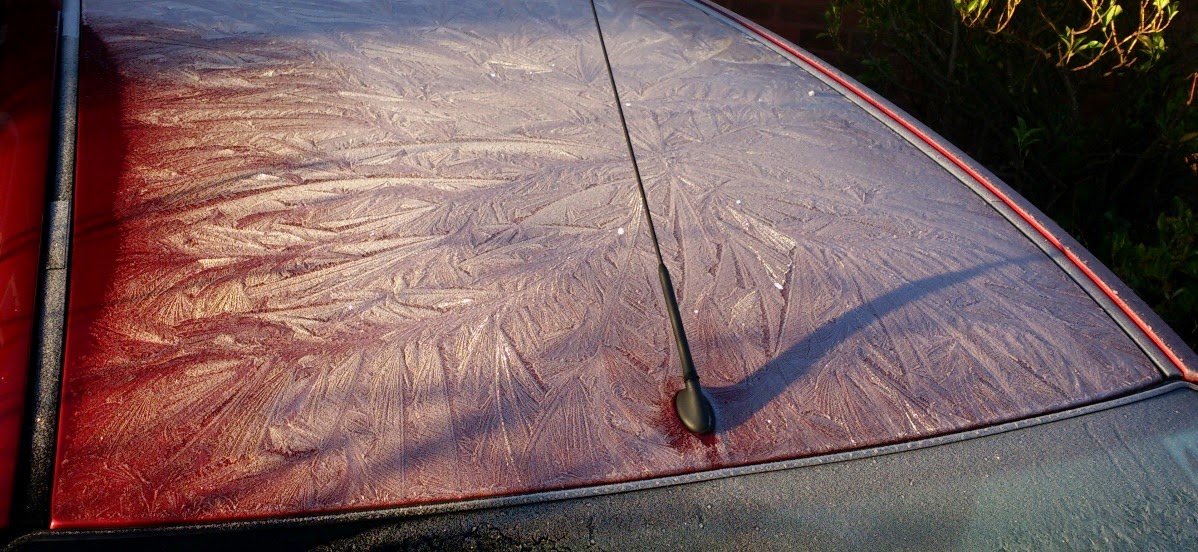
The Safari put the moth trap out for
the first time this year on Saturday night. We weren’t expecting there to have
been such a heavy overnight frost, it was frozen solid in the morning with not
a moth in sight, or inside.
Once the moth trap had been fully
inspected and a warming cuppa drunk it was time to go out to hunt down
something seasonal. We arrived to frost glinting like a myriad diamonds in the morning sun settled on the beach.
 The clear skies
meant the likelihood of grounded migrants would be just about zero and the
chances of hearing any going over was slim too as they’d be stratospherically
high and so out of earshot.
The clear skies
meant the likelihood of grounded migrants would be just about zero and the
chances of hearing any going over was slim too as they’d be stratospherically
high and so out of earshot.

As the sun rose higher the frost in
the dunes was now only holding its own in the shadiest areas and its time was now
severely limited.


Crossing the road we entered the reserve cresting the dune overlooking the big wet slack. It’s got more water in it than we’ve ever seen although admittedly we don’t go there too often and usually not in the winter or early spring when water levels are at their highest. From the dune top we could see a pair of Mallards outlined against the rising sun tucked in against the bank on the far right and a Moorhen was there too. A slight movement just beyond the Mallards caught our eye, a wader, and as we lifted our binoculars it flushed giving us good but brief views of a Green Sandpiper (136) calling loudly as it flew out of sight.


Crossing the road we entered the reserve cresting the dune overlooking the big wet slack. It’s got more water in it than we’ve ever seen although admittedly we don’t go there too often and usually not in the winter or early spring when water levels are at their highest. From the dune top we could see a pair of Mallards outlined against the rising sun tucked in against the bank on the far right and a Moorhen was there too. A slight movement just beyond the Mallards caught our eye, a wader, and as we lifted our binoculars it flushed giving us good but brief views of a Green Sandpiper (136) calling loudly as it flew out of sight.
The scrub around the slack had a
couple of singing Willow Warblers and at least three Chiffchaffs and we heard but
didn’t see, the now long staying site’s first ever, Little Grebe trilling from
the dense emergent vegetation.
A peruse of the rest of the reserve
more in hope than anticipation didn’t give us anything other than the expected
Skylarks, Meadow Pipits and Reed Buntings.
By now the sun had risen enough and the
direction our shadow was pointing indicated it was time for the main event so
back we went to the coastal dunes.
 We walked the track slowly making
sure our shadow didn’t fall on the overhanging grasses carefully inspecting all
the sunny bare-ish patches with our bins.
We walked the track slowly making
sure our shadow didn’t fall on the overhanging grasses carefully inspecting all
the sunny bare-ish patches with our bins.
It took six or seven patient passes until we found our quarry. Typically it was tucked in on the very edge of a bare patch but with enough overhanging grass to keep it mostly hidden, they rarely/never sit out in the open here.
 Great to see and we hoped to find
more but a 4x4 drove up parked right close to the bank (there’s a car park 20
feet away) and the mr & mrs hunting, shooting, fishing types got out and
let five dogs out the back, two of which ran straight up the bank into the
dunes. Marvellous no chance of any lizards being out for a good while now! Time
to head back to Base Camp and a well-earned bacon butty after a pretty
productive morning.
Great to see and we hoped to find
more but a 4x4 drove up parked right close to the bank (there’s a car park 20
feet away) and the mr & mrs hunting, shooting, fishing types got out and
let five dogs out the back, two of which ran straight up the bank into the
dunes. Marvellous no chance of any lizards being out for a good while now! Time
to head back to Base Camp and a well-earned bacon butty after a pretty
productive morning.

 |
| Basking Red Tailed Bumble Bee |
 |
| Another Red Tailed Bumble Bee - warming its bum at the entrance to a hole |
It took six or seven patient passes until we found our quarry. Typically it was tucked in on the very edge of a bare patch but with enough overhanging grass to keep it mostly hidden, they rarely/never sit out in the open here.

At lunchtime we picked up BD and
headed for the higher ground out east. Buoyed up by our reptilian Common Lizard
success on the dunes we had high hopes for more reptiles up on the lower fells.
When we arrived the sun was out and it was pleasantly warm, it was the first
safari this year we weren’t wearing a rain coat!
As soon as we were out of the car BD heard a Nuthatch - a year-bird for him and was then was crouched over a patch of Dandelions his macro lens clicking away at the tiny solitary bees feeding deep amongst the stamens. The new bee field guide has given the two of us some impetus to try to do more recording throughout Safari-land and add some records to the national distribution maps, going to be tricky though, there’s scientific jargon to learn and lots of pics from a multitude of angles of each species will need to be taken and there’s still no guarantee of a positive ID – gotta try though! Please don't destroy the Dandelions, you'll never win and they are so important to huge range of early emerging insects.
As soon as we were out of the car BD heard a Nuthatch - a year-bird for him and was then was crouched over a patch of Dandelions his macro lens clicking away at the tiny solitary bees feeding deep amongst the stamens. The new bee field guide has given the two of us some impetus to try to do more recording throughout Safari-land and add some records to the national distribution maps, going to be tricky though, there’s scientific jargon to learn and lots of pics from a multitude of angles of each species will need to be taken and there’s still no guarantee of a positive ID – gotta try though! Please don't destroy the Dandelions, you'll never win and they are so important to huge range of early emerging insects.
We were also on the look-out for
freshly opening or slightly more unusual wildflowers as Sunday evening is
#wildflowerhour on Twitter and a great way to learn what’s coming in to flower
around the country. The trackside was bedecked with Opposite Leaved Golden
Saxifrage but that’s probably peaking now. The sound track coming from the
woods around us was lovely in the sunshine with plenty of Willow Warblers in
good voice and Chiffchaffs providing the rhythm section a few Blackcaps were
evident too.
Arriving at our first reptile site we
limbed the hill to the rocky patch and turned a few likely looking stones over.
Woodlice, Millipedes, a Centipede and several Red Ants’ nests later we’d still not
found a Slow Worm, where we too early? Perhaps we were as the Bracken fronds had
barely broken the surface yet, in the past we’ve been successful when the
Bracken is in the ‘crosier’ stage. Not too disheartened, there are other places to
look we continued on the track with Lesser Redpolls circling overhead. A dip in the path held a puddle
 And the puddle held a lot of tadpoles whose days are probably numbered.
 Then we
spotted a movement on the path in front of us, we briefly lost it then it moved
again, excellent! A Green Tiger Beetle, and what a beauty, a real stunner!
Then we
spotted a movement on the path in front of us, we briefly lost it then it moved
again, excellent! A Green Tiger Beetle, and what a beauty, a real stunner!


On we went up hill and down dale passing several Pheasant skeletons and several empty shotgun cartridges - this pastime/'sport' really is just target practice with living things, no attempt to collect their kill, unless it died of injuries later or course - which is just cruel!, and no attempt to pick up the empty cases - litter!
More Willow Warblers entertained us with their singing and there seemed to be Robins everywhere.
We were still on the look-out for interesting wildflowers, bees and rocky areas with stones to turn when BD came across an interesting looking fly which turned out to be a species of Thick Headed Fly, Conopidae, possibly Myopa testacea, not something we've come across before. It's a parsasite of solitary bees and sits on flowers waiting for them to turn up, just as in the pic.

We had a look up the water board track where we've seen Slow Worms and Common Lizards in the past but they weren't playing out today. Now it was BD's turn to think he'd see a Bee Fly but like ours it vanished too quickly and he couldn't confirm his sighting.
The reservoir appeared birdless until BD spotted a small bird whizzing low over the water, a Common Sandpiper (137).
Al along the bank it was a procession of Willow Warblers, Chiffchaffs and Robins with the odd Goldcrest thrown in for good measure


The woodland ends up on the lower moors where the wet rushy fields rang to the sound of Curlews singing, Meadow Pipits flitted here and there. In the far distance over the recently patchily burnt grouse moor a Buzzard hung on the wind - it better move on before something untoward happens to it there. Running around the field just beyond the dry stone wall were three male Wheatears - lovely.


Almost back at the car we saw a recently fallen Ash tree it's roots loosened by recent heavy rain and still very hairy. Although tree planting on slopes is great to absorb rainfall to reduce the impact of floods by slowing the flow down the hill there will be casualties if the trees cant root deep enough into a hard substrate. Not that that matters it'll get covered in epiphytes which will hold water too and it all adds to a different multitude of biological niches for different animals and plants to exploit. We must be too tidy!!!

The afternoon was coming to an end but the road back to town gave us an opportunity for a quick stop at the Kingfisher/Dipper location at the main road bridge...neither was present. The roadside verge did have the most open Cow Parsley we've seen this spring though.

Where to next? Out on safari again tomorrow, this time with our best boy LCV.
In the meantime let us know who's waiting to pounce in your outback.