Showing posts with label whimbrel. Show all posts

Wednesday, 25 April 2018

Spring springs on at last

The Safari had a day out in north Lancashire with CR last week. We started out at Sizergh Castle where we (as is becoming the norm) dipped the Hawfinches. It didn't help that the place was busy and a couple of gimmers parked next to where C'd dropped the seed bait and faffed around getting their kit out of the back of the car for at least 20 minutes. Very dull cloudy conditions leading to rain didn't help the photography either. A Nuthatch flew in grabbed a sunny seed and bombed straight back in to cover.
But a Chaffinch hung around not flitting far when the faffers were moving around.
Look at its legs and feet, the poor little b*gger has Papilloma virus.
The rain sent us to Leighton Moss where there is shelter from the rain. However the rain had eased a bit and that gave us the opportunity to have a look at the Black Headed Wagtail (144, PYLC #112) that turned up a couple of days earlier.
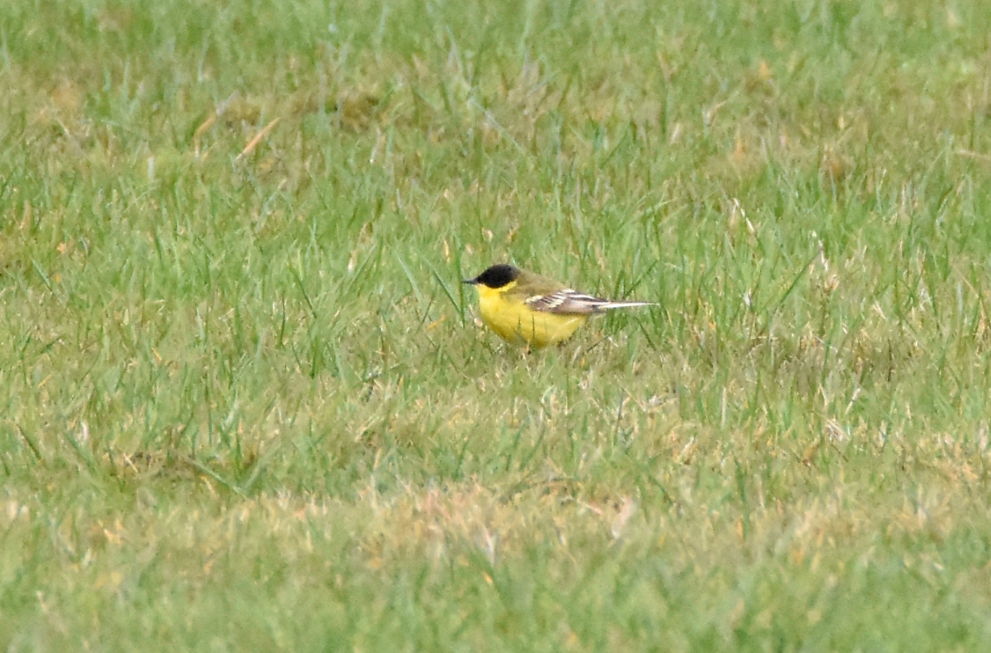
Just a little too distant given the conditions but a bright little stonker whatever the weather. We've seen them before in Greece but it's a British Isles subspecies lifer for us.
Nothing speaks of spring like the cacophony of a Black Headed Gull colony.
There's always something going on in the melee - plenty of displaying and posturing going on
Followed up by the whole raison d'etre for the whole colony

But look closely and you'll find some odd ones out, interlopers, in the colony.
Avocets are pretty aggressive to other species around their nest sites but they're also quite happy to take advantage of the 'cover' provided by the vigilant Black Headed Gulls for extra protection against marauding larger gulls, crows etc.
One of them did us the honour of coming nice and close.
A flock of Black Tailed Godwits was on the pool too, coming in to their stunning summer plumage too.
Pintail are subtle stunners too.
Back on the reserve proper the Marsh Harriers gave us a great performance including collecting nesting material from a pile of cut reed on the opposite side of the pool. Shame the light was so iffy in the rain  so the pics are a bit fuzzy and grainy.
Like the Pintails, Teal are proper little stunners too.
On the trails we came across a Marsh Tit
And a Chiffchaff or two.
At the main hide we fluked a drake Garganey (145, PYLC #113) right close to the hide window which unfortunately we later discovered it had already been seen about ten minutes before we 'found' it.
If front of the Garganey there was a Little Egret that C thought looked a bit poorly.
It did seem to perk up a bit after a few minutes
We also fluked our best pic of Snipe (PYLC #114) of the year - yes this dross is our best attempt at this fairly common species in the last 3 1/2 months, don't know how we've managed that!
Wandering down to the Causeway hide we completely emptied it by mentioning the Garganey, never has so much birding kit been packed up so quickly! Out of the window there was a good variety of waterbirds present many getting well in to their breeding cycle.
Not quite so far along the line was a flock of Pochards, sadly a rare site these days. mostly randy bachelors chasing after the few females present. 
Close up, yet another stunner.
Not a bad day out on safari considering the weather and we did actually remain mostly dry by cleverly dodging the showers and darting between the hides.
Next up was an afternoon up the top of Rossall Tower with the Wildlife Trust's Living Seas team watching for whatever wildlife showed up. A Wheatear decided to fly out across the bay but didn't go far before turning back. Where Wheatears feared to tread a few individual Swallows went willingly as did a small number of Sandwich Terns. Behind us from the golf course we were serenaded continuously by a particularly persistent Skylark. Eventually we found a distant Grey Seal out by the new island which today held only one male Eider with the usual gulls. Towards the close of play we found a second Grey Seal then found what was probably Harbour Porpoise but it never resurfaced to confirm or otherwise.
The following day we had a short jaunt Over Wyre with GB. We were on the hunt for the Water Pipits that have been frequenting a flooded field. Trouble was we'd had a couple of 20C+ days and the flood was shrinking rapidly. The field had lots of Skylarks and some Lapwings, the sound of both our youths. We could only find a single Meadow Pipit on the flood along with a few Shelducks. A Buzzard and a Raven flew over and flushed a load of Black Tailed Godwits of the marsh and a good load of Whimbrel (146, PYLC #115) too.
The warm weather brought out a good number of butterflies too, they were all Small Tortoiseshells though.

Where to next? We've been out to Marton Mere a couple of times and seen some good stuff to tell you about.

In the meantime let us know who's dropping unannounced in in your outback.


Tuesday, 2 May 2017

Somehow we missed all the Black Terns

The Safari could practically smell the Black Terns the other day. We had family matters to attend to on the South-side so wasn't able to get out early. News came in from far and wide of prodigious numbers of the wafty little waifs including not more than a mile from our destination. What better than to pop in to one of the sites before our visit to give Monty a run and fire off a few shots. But when we arrived the water was devoid of life bar a handful of gulls. We had a good walk round and still came across nothing of note apart from hundreds of people enjoying a lovely spring Sunday afternoon in the fresh air. We had to leave to go visiting and once home discovered that had we stayed another 30 seconds or so we'd have been in luck. Not only that one of our Twitter chums  @arborist2222 was watching several all the while we were there not 200 yards away but on the nature reserve the other side of the fence...Dohhh cruellll!!!
Not to worry there'd be some at 'our' nature reserve in the morning. There wasn't and somehow it must have been the only wetland nature reserve in England not to have any although a good number were close but passing along the coast.
Monday morning wasn't half bad though we added a couple of old friends to our Year List and while chatting to one of them a Whimbrel ((MMLNR #71) flew over. Talking of Whimbrel here's another coupl of shots from our visit to the dog toilet.
It wasn't a bad morning out on the reserve just not as spectacular as we'd hoped with the run of easterly winds. We did, however, add a new mammal to our list for the year, a Brown Rat stuffing its face in one of the feeders.
We don't mind Rats too much, we think they are often unfairly maligned but realise they can be a nightmare in some circumstances like on originally mammal-free islands - wouldn't really want one in the house though
Back at Base Camp after breakfast we took Monty round PAtch 1 and this was definitely more exciting. As soon as we hit the scrub we heard the 'tic'ing of a Silvia warbler and soon located the tic-er, a Garden Warbler (145, P1 #34) among the half open buds of a large White Poplar tree. Monty had a good run round the bottom fields where we heard a Lesser Whitethroat and up at the top near the road while he wqs sniffing with his new friends we heard a Sedge Warbler (P1 #35) fire up from one of the clumps of ornamental bushes - what a weird place for one of those!
On the way back we saw that the Nomad Bees were out enjoying the sun on the bank of our neighbours garden. With dog in one hand and camera in the other we took a few snaps. one had settled by the entrance to another species of bee's burrow, well they are a brood parasite of solitary bees.
Occasionally they would settle to bask on a sunny stone.
But when we dowmloaded the pics and had a proper look it seems we have two species here - who'd have thunk it!
The top one we think is Gooden's Nomad Bee and has a smooth black back with yellow spots, the lower one we think is Broad Banded Nomad Bee and has red dots and red stripes on its back. It could well be a job for those clever iSpotters to give a conclusive answer, if a conclusive answer can be given to this tricky group of species.
Later news broke of a Whinchat at the nature reserve so back we went. We walked across the side of the wetland to the hedge and ditch to scan and came across a couple of House Sparrows (MMLNR #72). Having a scan across the inaccessible area we soon found it but it was very distant across the far side of the wetland. Always good to see a Whinchat (146, MMLNR #74,, YBC #121)
Hopefully there would be a better view from the top path. On the way there was a Sedge Warbler pretending to be a Reed Warbler. And we disturbed a Meadow Pipit (MMLNR #75) from the damp grass.
The Whinchat was no nearer though.
At least it was now facing the front!
We had  a look at the nature reserve down as far as the scrape where we missed another three Whinchats because we didn't look hard enough at the bank behind the scrape - silly us...note to self - be more thorough in future.
There were Sedge Warblers aplenty, this one pretending to be a Willow Warbler.
 At long last we got a pic of a Whitethroat (YBC #122)
We like Whitethroats but went right off them a little later. We were back on the wetlands where the Whinchat was now much nearer, it was in the hedge the House Sparrows were in earlier. But the local Whitethroats weren't happy with it's presence in their territiory.
Milliseconds before the camera focused we pressed the shutter button and milliseconds after the image was taken the Whitethroats came in and saw it off their patch. Soooooo annoying to be so close to a brilliant shot of an absolutely brilliant bird only to blow it like that. And with them being in such short supply locally the chance of redeeming ourself is slim to remote at best. We really could kick ourselves and/or could cry!
Once the Whitethroats had done the dirty had done the dirty we could not find the Whinchat again and not for lack of trying, it seemed to have vanished up its own a*se.
The Whitethroats on the other hand appeared to gloat in their bullying.
While we were unsuccessfully looking for the Whinchat our perambulations around the wet grassland were stirring up little flies from the vegetation which attracted a posse of Swallows passing through. We had a few blasts at them more in hope than anything else.
Crikey they're quick! Which doesn't bode well for when we try to get some pics of the much quicker Swifts! All the time we were messing around getting these hopeless shots the reserve's most regular birder TS was behind us looking at a female Redstart only a hundred yards away - we really must swap mobile numbers! Not only that we also later learned that had we panned the camera round a bit more to the left the Whinchat was sat atop a Willow on the edge of one of the ponds on the wetland as it was seen well by LR who must have arrived minutes after we left.
Oh and if you're wondering if we can count or not or what happened to MMLNR #73 it was a pair of Stock Doves that we must have seen already on the barn roof where they always hang out but neglected to add to our reserve tally.
Today we had another Sedge Warbler shock when we heard one pretending to be a Garden Warbler - well it was warbling away in the works garden, only the second or maybe third we've heard there since 2004. Being on opening up duty we weren't able to get an early look at the sea but our lunchtime look was productive with four Whimbrels in a muddy hollow well down the beach. They then did something unexpected and a bit bizarre. They walked up the beach over a sandbank and up to the wall to feed in a runnel. how did they know it was there, the sandbanks are quite high certainly higher than a Whimbrel can see over. A very stealthy approach down the seawall steps allowed us to get almost close enough. We fired off a few shots and left them to their walk along the beach. Once back on the prom we heard their distinctive seven note whistle and then they were gone, off on their long journey northbound.
And so ends a good but Black Tern free couple of days wildlifing.
Where to next? More Patch 2 stuff tomorrow
In the meantime let is know who's doing a tern in your outback.