Showing posts with label eristalis. Show all posts

Tuesday, 7 April 2020

The second week of safaris under Lockdown

The Safari like everyone else has been stuck at home. We have been able to walk the mutt around the local fields early morning but haven't taken the camera as yet. 
The days have been cold and windy but there has been some sunshine and in those sunny spells saw some Buzzard passage, we saw several but all too far away until the last one which came right over the garden not too high up.
Overhead Buzzards we like but overhead Ospreys are better. So far everyone and his uncle around here seem to have had one or more, some people or soooo greedy, over their gardens except for CR and ourselves. We've got a hotline between us in case one ofr the other hears the gulls making a racket but so far no joy but there's still time...
The sunshine also brought out some invertebrates including our first 7-Spot Ladybird of the year.
A check of the stealth-cam left out in the garden for 10 days gave us the hoped for Hedgehog. It appeared on several consecutive nights always around the same time - until the batteries died. Hopefully it'll have been recorded since we replaced the batteries but we won't know until we bring it in at the end of next week. In the meantime we'll try sneaking out to see if we can spot it for real.
Our morning walk to the park to give the mutt a run passes a garden with a little wild patch tucked in the corner obscured from the other side by some shrubbery. A couple of Violets have appeared, not sure which species as we can't reach them to have a look at the rear of the flower and pick out the leaves from the other plants growing there. Nice to see all the same.
But mostly we have been confined to the garden and towards the end of the week the weather warmed up enough to bring out some more invertebrates and on Sunday there was an explosion in the number of Eristalis Drone Fly hoverflies, one, I presume a male, held a territory perched on the laundry drying on the washing line. From there it would make sorties after other Drone Flies chasing them relentlessly if another male or mating in flight if a female - An action packed half hour and fascinating to watch until the sun went in and they all disappeared.
They weren't the only insects soaking up the rays. There were a few solitary bees about from the 'colony' in a neighbour's dry stone bank and a couple of these big black Flesh Flies.
The feeders have been fairly busy but we've not had many photo opportunities. These Goldfinches had to be snapped while sitting at our desk at the far end of the living room from the window.
We've had the usual feeder suspects, Great and Blue Tits, the latter investigating our recently erected bird box but only from the outside so far as we know, not sure they're entirely convinced it's the 'Des Res' they're after just yet. A pair of Greenfinches are regular visitors several times a day and a Robin has a quick in an out a couple of times a day and we still have occasional visitors from the female Blackbird that thinks it's a Blue Tit but we've not been able to get a better pic than last week's.
Less welcome is this chap.
A trip to the shop was combined with a dog walk on the beach at low tide and after a bit of breezy weather we had a couple of interesting finds; our first Sea Gooseberry of the year,
and a Wentle Trap Shell, these are pretty scarce along this section of beach, this is only the second we've found here in hundreds of hours wandering along the strandlines searching for anything a little out of the ordinary.
We'll leave you with Lord Snooty looking down his beak at us from his lofty perch atop next door's chimney pot.
Woodpigeon
Where to next? More of the locked down same from from the park, the occasional visit to the beach as shopping trips allow and loads from the garden we hope.

In the meantime let us know who's up and about in your locked down outback. Don't forget it's migration time and anything could appear anywhere so eyes to the skies folks - and wherever you are Stay Safe!


Sunday, 23 July 2017

Weekend wildlife wander

The Safari has had an enjoyable mooch about across several different sites this weekend. And thankfully the weather has been quiet kind and conducive to wildlife spotting. 
Recently we've been fretting about the loss of the Sneezewort at Monty's favourite walkies site. We were worried that all the tree planting that had been done on the site had shaded it out. Luckily it turns out it's still there and we'd been looking in totally the wrong place, those trees had changed our point of reference. Not only was it still there but there seemed to be more of it than we've seen in the past.
Sneezewort - phone pic
Well that was a relief! It was also a bit of a relief when we were allowed to go out to the nature reserve for a couple of hours with CR and without Monty.
We had three 'B's on our hit list. First was a Blackcap - yes we're still missing this on our Year Bird Challenge. No sight or sound of them on the walk in at all. Our first stop was at the Viewing Platform where we hoped a/the Bittern might be stood out in plain sight - it wasn't but four Herons were. Scanning round the water three Wigeon were a bit of a mid-summer surprise.
At the nest hide Reed Warblers flitted around teasing us as always.  Never giving us a clear view unless they hopped up to the top of the reed stem but when they did that they flitted off the instant the camera was raised towards them.


Still no Blackcaps were seen or heard in the scrub as we walked further down the trail...neither were any Bullfinches although to be fair this would be a corking bird to get a pic of at the reserve. We managed it once - just!  Annoyingly we had a cracking male in our sights once too but it was flushed by a dog on the 'wrong' side of fence a billi-second before we pressed the shutter button - grr grr and double grrr.
CR's sharp eyes picked out a couple of intriguing insects along the track. Some dark shiny black flies revealed bright yellow abdomens with a dark stripe.
Identified later in the day by GB by simply just using Google - now why didn't we do that? Sciara hemerobioides, a Fungus Gnat. Not knowingly recorded in our local area before.
CR also picked out a small micro-moth resting on a Black Knapweed head. This one took a little more persistence to get ID'd...eventually those clever local lepidopterists on Facebook provided an answer - Eucosma sp they weren't able to get it down to species level.
Whilst CR was loking for Common Blue butterflies we spotted a Whitethroat checking out a ripening Blackberry.
I found it - it's mine - now get lost!!!
No butterflies for CR unfortunately, it was a bit overcast and cool to be honest - the forecast was for all day sun.
Back at Base Camp the sun did come out and with Wifey out for the day we were in for the duration looking after Monty so we spent the time in the garden trying to get some pics of the insects that were buzzing around the Oregano plants.
Ersitalis tenax - a fluke the real subject had done a bunk from the flower
Myathropa florea - the 'Batman' hoverfly
Marmalade Hoverfly
Scaeva pyrastri
Great Pied Hoverfly - Volucalla pellucens
Look at those feathery antennae - almost moth-like
This morning we were out earlish with Monty, there was a mist lying over the low ground between us and the high ground of Bowland. Ah Bowland - where in a months time thousands of Red Grouse will be used as target practice and to provide the ridiculously large numbers of surplus Red Grouse the habitat is 'altered' dramatically to suit them and them alone and anything and everything that might prey on them is 'removed' legally or illegally as in the case of the Hen Harrier and other birds of prey. It's time for for things to change in our uplands...please get yourselves along to one of the Hen Harrier Days coming up soon and find out what really happens in our 'lovely' uplands.
Yesterday on Patch 1 we missed a Blackcap by seconds in the gloom under the trees, this morning there was lovely sunshine but no sign of any Blackcaps. Bizarrely there was a Moorhen poking around on the lawn by the pond, they are usually on the smaller but much more densely vegetated top pond.
A wander round the fields with the dog walking crew in the sunshine gave us a glimpse of the male Whitethroat and a soaring male Sparrowhawk and not a lot else.
Later in the morning we set off with Wifey and Monty for a wander in the dunes to the south. Mostly throwing a ball for Monty and supervising his meeting n greeting but we did have the camera with us on the off chance of something interesting. There's always something interesting in the world of wildlife!
Sea Bindweed
Common Centaury
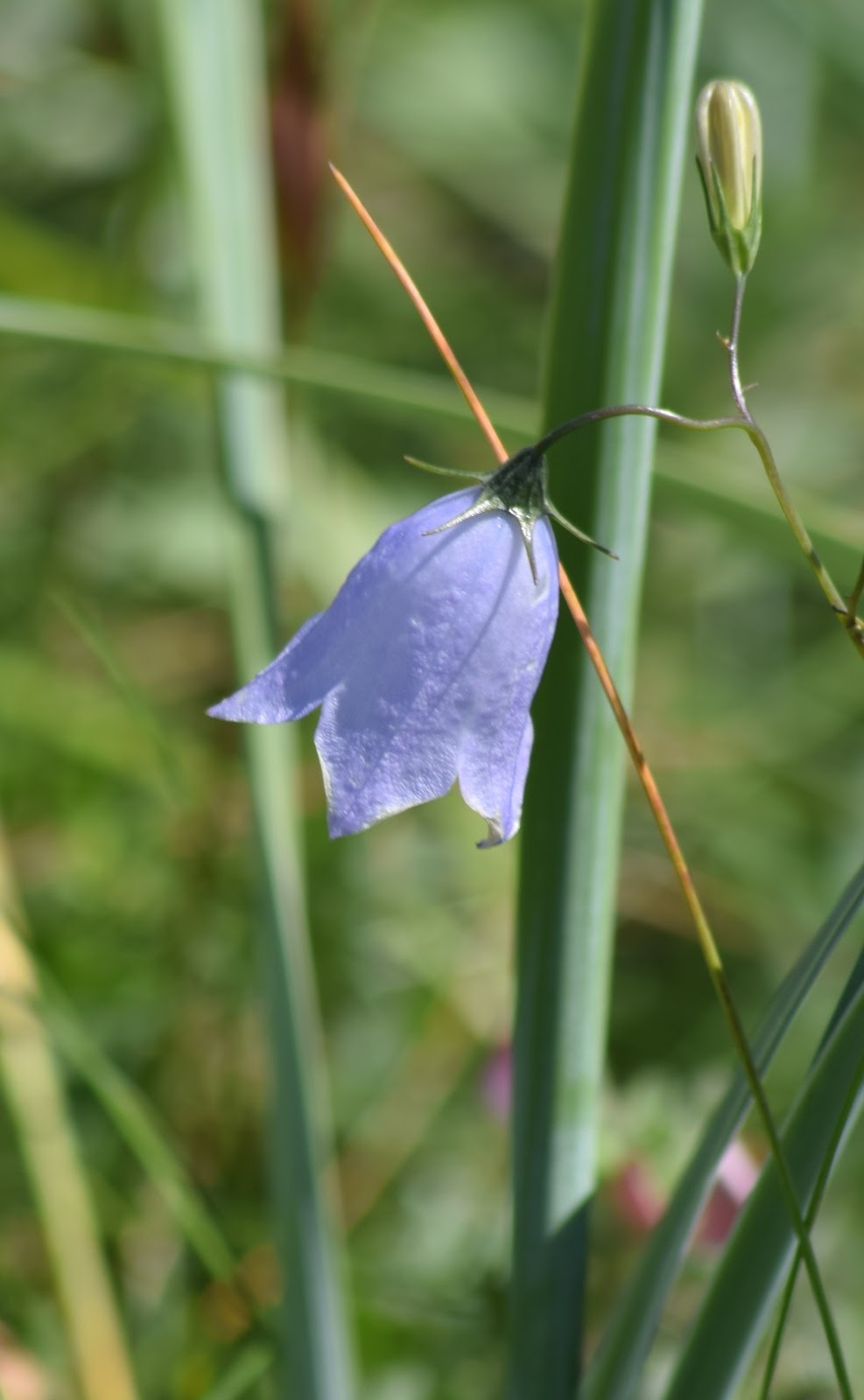
Harebell
We were hoping for the uncommon Grayling butterfly to put in an appearance. It didn't but yesterday's missing Common Blues were on the wing today.
As were several Gatekeepers.
Butterflies we would expect and we saw a few Burnet moths flying around but perhaps the most unusual find of the trip was this Smoky Wainscot moth - what was that doing out during the day - other than nectaring on Yarrow of course.
And so ended a pretty good wildlife filled weekend.
Where to next? Next weekend is National Whale and Dolphin Watch and we have a full programme of watches lined up for you to join.
In the meantime let us know who's put past their bedtime in your outback.

Thursday, 3 November 2016

Some more ticks on the bird lists

The Safari is still struggling to get out much although we have added a few more birds to our various lists.
First up was a Great Spotted Woodpecker (Garden #30) flying up the street while putting Monty in the car for a trip somewhere or other. We haven't seen one round these parts for a couple of years, the numpty that cut down the big Sycamore because he didn't like sweeping up the autumn leaves didn't help matters! Next up was a Cormorant (Garden #31) flying inland quite high up, another species that isn't quite annual at Base Camp and again Monty was involved, we were out in the back garden giving him a work out with a flattened water bottle - yes we've spent a fortune on toys but his favourite is a squashed old plazzy bottle. Our final addition also involved Monty, this time a late night out before bed-time. A flight of 13 Whooper Swans (Garden #32) were heard long before they were seen passing right over heard eerily illuminated from beneath with an orangy glow from the street lamps. Bizarrely we had another two before dawn the following morning. Whooper Swans have been annual over the last few years after no records between 2010 and 2013.
This morning the recently rubbish Patch 2 came up with a new species for the year when a flock of 27 Wigeon (P2 #77) flew by just behind the  light surf, best of the rest was a single Dunlin which flew in to join a small number of Sanderlings scampering around dodging the incoming waves.
Yesterday there was a bit of a sunrise going on so we took the camera out to try to do a bit of art but were just a tad miffed by the number of plane con-trails.
Pick a favourite
Later we had another short session while the last of the day's warm sunshine was shining brightly on the Caster Oil plant's flowers. 
Lots of these Drone Flies were slurping up nectar.
There were a couple of other species flying around too but we only managed a snap of one of them.
Any one any ideas? CR may well know, he's pretty clued up on hoverflies.
Where to next? Still in the throes of some pretty stressful family stuff so the weekend might not provide as many opportunities for safari-ing as we might like.
In the meantime let us know who's slurping up the last of the nectar in your outback.


Wednesday, 19 October 2016

Big influx

The Safari didn't manage to get out yesterday, totally thwarted by adverse weather early morning and at lunchtime. In between we were working in the garden with our volunteers but neither heard nor saw owt of note or interest other than a few chunky Eristalis tenax hoverflies still taking advantage of any sunshine on the Caster Oil plant flowers.
If there were any passing Leach's Petrels, as there was across the bay, we had no chance of getting out to look for them in the driving rain and high tide sploshing over the wall. The Black Browed Albatross seen 'just round the corner' the other day turned south rather than north ending up doing a tour of the Scilly Isles and far west Cornish coast. B*gger!
This morning was much brighter and our quick visit to the sea wall gave us a horde of Lugworm diggers down at the low tide. We do worry about the amount of worms these guys take. One took eight in five minutes which works out at 96 an hour or nearly 200 in the two hours the tide is that low and he was one of a dozen diggers which is nearly 2500 worms and they and others will have been out on other low tides this week so x7 is getting on for the best part of 20000 worms lost out of the ecosystem. How sustainable is this considering it is now spawning season for them? Indeed there is a survey for you to get involved with going on right now! Is there any regulation by anybody, has anybody ever even considered any regulation? However, it would seem that they have a high capacity for recovering this amount of loss and the beach here is huge so there will be plenty of unworked areas with worms but it does beg the question how does removing this amount of food from the ecosystem affect other species, for example the rapidly declining Curlew, not to mention the impact of disturbance from several humans in (often) bright clothing on birds that need to feed during the low tide period. Having said that the gulls, which admittedly are much less bothered about humans than many other species, approach quite close but ignore the buckets full of worms preferring to find their own food. The Oystercatchers too, although much more wary than the gulls, don't seem to be over bothered by the presence of people, perhaps it's because they don't move quickly or far and have apparently predictable movements.
Talking of Oystercatchers this morning there were a lot more than we've seen in recent weeks, well over 500 within our patch and many more further south towards the river. Sanderlings too were numerous with at least 300 of them with about 50 Dunlin mixed in with them. By far the most waders we've seen for a long time.
The sea was choppy so getting an accurate estimate of the numbers of Common Scoters out there was impossible and other than a small flock of Cormorants we didn't see anything else.
This afternoon we were able to grab a few minutes and have a bash at getting some pics of the hoverflies before the sun went round and cast the bush in to shade.
Where to next? More Patch 2 gawping tomorrow, the wind should have died down a bit by the morning so searching through the Common Scoter flock for an odd one out might be a bit easier.
In the meantime let us know who's ransacking your outback without a care in the world.