
The Safari has been wanting to do counts for this summer's Big Butterfly Count but the weather has been constantly putting the mockers on proceedings so much so that we've only managed a couple of counts over the last fortnight and they haven't revealed prodigious numbers of butterflies. Meadow Browns have been the most numerous but well below what we would normally expect on our rough fields, followed by the not counted for the Count Small Skippers.

Only a handful of other species have been seen, a couple of Red Admirals, a few Gatekeepers and a Common Blue on our second visit not many Large or Small Whites and a single very fresh Small Copper on our first visit.
But where are the Small Tortoiseshells? Are you seeing any round your outback? Maybe all that mowing and weedkillering of the Dandelions is having an effect on the early emergers and they aren't able to get into good enough condition to lay lots of eggs and even if they do the 'Tidy Brigade' lay waste to the all important Nettle patches destroying eggs and/or caterpillars in the process. Or maybe it's just bad luck with weather conditions and parasitoids?


 |
| Small Skipper |
 |
| Small Copper |
But where are the Small Tortoiseshells? Are you seeing any round your outback? Maybe all that mowing and weedkillering of the Dandelions is having an effect on the early emergers and they aren't able to get into good enough condition to lay lots of eggs and even if they do the 'Tidy Brigade' lay waste to the all important Nettle patches destroying eggs and/or caterpillars in the process. Or maybe it's just bad luck with weather conditions and parasitoids?
Like the butterfly counting opportunities to put the moth trap out have been sadly lacking too and when it has gone out the catches have been nothing to write home about, mostly a few Large Yellow Underwings with fewer Dark Arches, Common Rustic aggs and Uncertain/Rustics - doubt we'll ever get the hang of separating those too despite watching videos and reading articles on how to do it.
We did get one good night though and that produced the best catchy of the year so far with no less than 53 moths of eight species although 37 of them were Large Yellow Underwings. Pick of the bunch was a nice Iron Prominent.

 |
| Iron Prominent - don't you just love that furry face |

We took the chance on the weather and did an on-line booking for a visit to Martin Mere WWT and was lucky enough to send round our Scouse mates for JG to also get a place before the day booked up so a great opportunity for a meet up.
The day was a little cool and windy but at least the rain held off. The morning started well with a Common Sandpiper appearing in front of the Discovery Hide.

There were plenty of other birds about to keep us on our toes too. Lapwings appeared to have had a good season with a sizeable flock already building up.
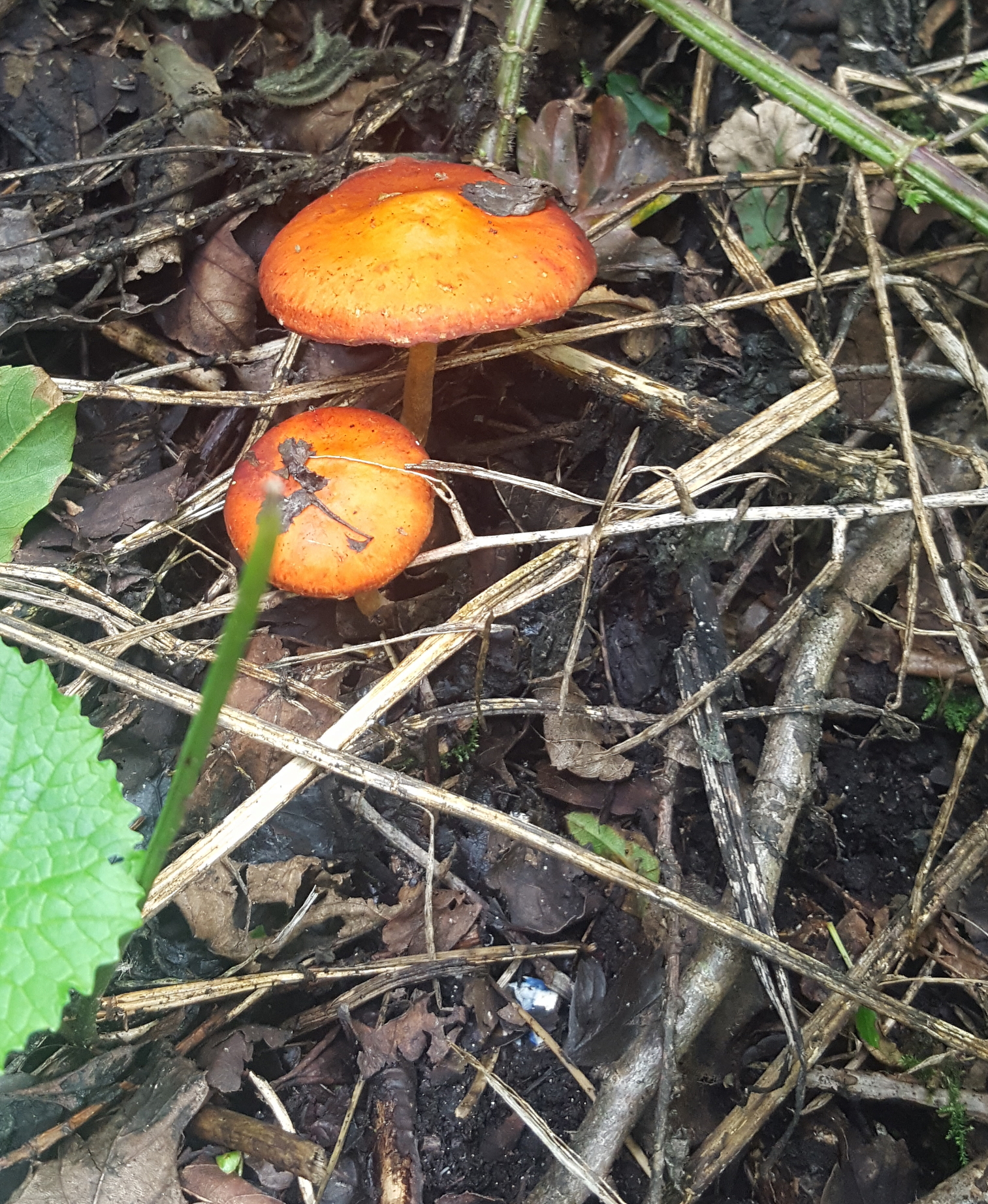
 A flock of settled Black Headed Gulls held a fair proportion of juveniles but despite scanning through them repeatedly we couldn't find any Mediterranean Gulls lurking. Over in the distance the Black Tailed Godwits looked resplendent in their bright golden summer garb. Buzzards sat on posts and we had a couple of distantish views of a hunting Marsh Harrier. Our next stop was all the way round to the far side of the reserve to the recently opened Gordon Taylor hide stopping at the feeding station on the way. That was really busy there were birds zooting here there and everywhere. All tyhe common feeding station birds, pick of the bunch being a really bright male Greenfinch. The Brown Rats were fun to watch too until a drake Mallard appeared and shooed them off the fallen seed. At the Gordon Taylor hide we had a short wait outside for people to leave before we could enter socially distanced from the other birders already in there. Everything on view from here was a bit distant, more stunning Black Tailed Godwits and Lapwings, a few moulting Teal but no Avocets, they've already left for pastures new. More birders arrived so no wanting to 'hog the hide' we moved on umming and erring as whether or not to do the Reed Bed Walk time was getting to wards butty time so we opted for the return to the car park option where our butties were still in the boot of the car. A stop at the Unitied Utilities hide was fairly quiet until someone mentioned they'd not seen a Peregrine on site for quite a few weeks and no sooner had they got the words out of their mouth than one appeared - how often does that happen - - it's spookey!!! We got some more Marsh Harrier action too. Moving on we passed a nice bright largeish orange fungus - we're useless at fungi so if anyone knows what it might be please let us know.


We decided on a quick peek from the Harrier Hide and bumped into KL looking to get to some pics of any butterflies that might be about in the warmth of the sheltered flowery dip behind the hide but he was having little success chasing the few Gatekeepers that were flitting around. There wasn't a great lot to be seen from the hide, best being a pair of Little Grebes, a new species for the day.
A very brief look at the Feeding Station gave us the Mallard still keeping the Brown Rats at bay.
With our butties retrieved from the car we made our way to the relative comfort of the Raines Observatory. Never really understood a hide without opening windows but the full height glazing does give a panoramic view of the site and keeps the wind out, you don't half get a crinkle cut ar*e off those wooden seats though. Anyway while butties were being munched a tractor working in the distance came in for lunch and as it got closer flushed a Heron from the water's edge.  Now as you're probably aware we have a penchant fro agricultural machinery, for more so than the average Joe...but certainly not as much as this odd chap
We're loathe to admit it but Masseys and John Deeres are our faves too, but NO we haven't got anything like 5000 images of tractors on our PC! 3000 maybe but none are in provocative poses.

 |
| Stolen from Twitter with apologies to the original poster |
Agricultural excitement over our window seat then gave us some avian excitement in the form of a Green Sandpiper landing close by but mostly obscured by a large fence post. We had to wait for it to wander a little further away along the bank of the pool before we could get anything like a decent pic - not that that's possible through the glazed window. Photo Year List Challenge #164.
 The glazing also prevented any pics of a really close Marsh Harrier, the third different individual of the day and a very well marked one at that.

After lunch we moved on to the Kingfisher hide where we had superb views of very lively Tree Sparrows at the feeders but unfortunately the light was poor for getting any pics so not waning to hog the best seats we moved on to the Ron Barker hide where little was happening until after a few minutes the lady to our right heard a Kingfisher and then briefly saw it. Not long after it flew to a favoured perch, a branch deliberately poised over the brook. We filled our boots as it repeatedly dived, not for fish but to bathe.


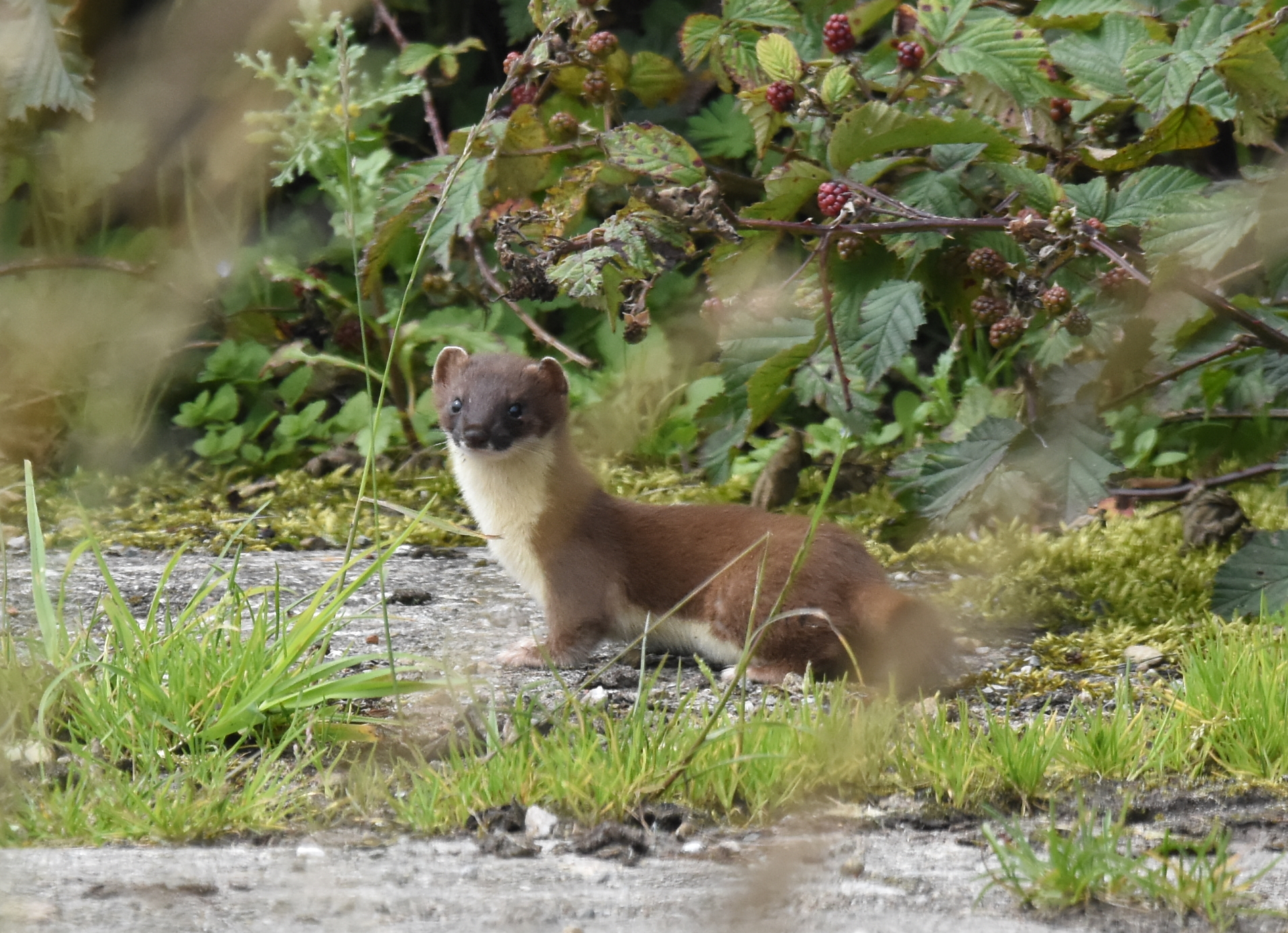
While intently watching the Kingfisher said lady called out a Stork on the bridge. We'd not seen that fly in and only a few feet from the Kingfisher lifting our eyes from the camera's viewfinder we could see no Stork, how did we miss that??? Happens she's said Stoat and we'd misheard here accent. then she called it out again and there it was a Stoat on the bridge and the first we've seen for a couple of years - can't believe we didn't see one at all last year.

 We were relieved when it stood still long enough to fire off a few snaps but it soon disappeared under the Bramble bush never to be seen again. Photo Year List Challenge #165.
Then the Kingfisher put in another appearance, a little further aay but did catch a fish which we missed wit the camera as it flew off with it just as we were about to press the shutter...so annoying. Having a look what else was about we checked through the gull flock as always especially when a large number of Black Headed Gulls flew in from the neighbouring fields, nothing out of the ordinary was with them this time. It was nice to see some July Whooper Swans, obviously not fit enough to make the flight to Iceland back in the spring. We'd have loved to have seen them on their breeding grounds this summer but that darned virus thingy put paid to plans of an Icelandic adventure.
 Returning to the Discovery hide we had a few minutes in there seeing another Common Sandpiper
 Also close by were two broods of very young Mallards and a well moulted drake Teal.


While intently watching the Kingfisher said lady called out a Stork on the bridge. We'd not seen that fly in and only a few feet from the Kingfisher lifting our eyes from the camera's viewfinder we could see no Stork, how did we miss that??? Happens she's said Stoat and we'd misheard here accent. then she called it out again and there it was a Stoat on the bridge and the first we've seen for a couple of years - can't believe we didn't see one at all last year.


Then the Kingfisher put in another appearance, a little further aay but did catch a fish which we missed wit the camera as it flew off with it just as we were about to press the shutter...so annoying.


The waders were having a bit of sticky time wading through the thick soft sticky peaty gloop.


 And then a last look at the Feeding Station where we saw our first Green Veined White of the year - how come it's taken so long to connect with one of these very common butterflies?
 And with that it was time to say our goodbyes to JG and thank her for the great day out before heading back across the river to Base Camp.
A sunny afternoon in the garden gave us the chance to have a go at getting some bee pics. We've been doing our best to get to grips with solitary bee ID this season and hoped the much needed sunshine might have brought some out but we only saw a female Blue Mason Bee sunning itself on the garage roof and out of range of the macro lens. All the other bees we saw were either bumble bees or Honey Bees.
The cliffs on our dog-walks have given us a stonking juvenile Willow Warbler and a couple of juvenile Wheatears. We've also done four, or more accurately 3 1/2 as one was abandoned due to atrocious weather, watches for National Whale & Dolphin Watch. Sadly due to inclement weather the only blubber we got were a couple of Grey Seals and a very brief view of a Harbour Porpoise. The birds weren't too brilliant either, a flock of over-landing Common/Arctic Terns at the very start of the final watch was the best sighting among distant Manx Shearwaters, mostly distant Gannets and a couple of Little Terns and Fulmars. Annoyingly the weather on the Friday and Monday around both weekend's watches was much better tha nthe weekend s themselves - isn't it always the way! On the first saturday we left the watch with the car's heated seat on and the heater set to 25C we were that cold - it's the end of July for crying out loud that shouldn't be necessary!!!


A sunny afternoon in the garden gave us the chance to have a go at getting some bee pics. We've been doing our best to get to grips with solitary bee ID this season and hoped the much needed sunshine might have brought some out but we only saw a female Blue Mason Bee sunning itself on the garage roof and out of range of the macro lens. All the other bees we saw were either bumble bees or Honey Bees.
 |
| Honey Bee |
 |
| Believed to be Bombus terrestris |
 |
| Male Common Carder Bee |
A sunny morning the other day saw us meet up with CR and young EM to see if we could find any lizards on the dunes at St Anne's. The promised sunshine was actually a bit better a bit earlier than forecast and that had warmed the sand up too much before we got there and so we couldn't find any Common Lizards but it did mean that the butterflies were on the wing ready for our arrival. the site speciality here are the Graylings and this morning they were out in force - don't think we've ever seen so many in an hour or so before, they were everywhere we turned. Fantastic!
 One thing you never see are the upper-wings of the Graylings, they never sit with their wings open. We tried a bit of a trick and very nearly succeeded and almost got to show you the unseen but it just needs a bit more perfecting in both camera settings and technique.


Another feature of the morning was the large number of Dune Robber Flies, like the Graylings they were everywhere.

We might get another bash at our tricky trick on Sunday when we have a short window of opportunity to get down to the dunes again, lets hope the sun is shining and the butterflies are out on the wing.
If you fancy a giggle have a watch of us doing our Attenborough impersonation on the beach for a virtual beachcombing kids event. https://www.facebook.com/
Where to next? After Sunday's short safari there may be the chance of longer further flung safaris later in the week if the promised weather holds out.
In the meantime let us know who's been keeping their wings folded in your outback.
Enjoy your local wildlife - Stay safe stay socially distanced.


