Showing posts with label spider. Show all posts

Wednesday, 3 June 2020

Highlights from Weeks 9 and 10 of not-really-lockdown-at-all-anymore

The Safari has spent a little more time away from our immediate area now that travel restrictions have been lifted but we've still not bit the bullet and ventured very far away from the Fylde coast. With summer-like weather conditions many places have been bombed out by 'Covidiots' getting far too close to one another in huge numbers so we've played it safe and kept well away, we're quite happy not to risk becoming a statistic in the Second Wave.
A pleasant morning on the dunes early in Week 9 had us looking for lizards, only two very brief sightings, and butterflies which were more obliging in that the few we saw did actually keep still.
Common Blue
While we were there the biggest butterfly in the world turned up and flew directly over our head as it did a few training passes practicing almost landing at our small airport.
RAF A400M
In recent years we've not been seeing many Small Heath butterflies at all an it's been several years since we last got a pic of one so we were especially grateful to see a good few today particularly this one that settled long enough for a quick snap.
Back on the cliffs one morning we watched an angler bring in a Bass, too small to keep so had to be returned to the sea. However, his treatment of his catch was abominable. He left it flapping around on the concrete for nearly five minutes while he faffed around getting a new rig back in the water. Surely as an angler your first responsibility is to your catch whether you're going to take it homer for tea or release it back to the water.
Bass vertebrate photo challenge #149
But this chap seriously abused the fish while trying to unhook it. There's a cloth there could he not have held the fish to get a good look at what his disgorger was doing rather than trying to flick the hook out while the fish was in mid-air with the inevitable gravity-induced consequence when the hook did eventually dislodge.
The poor fish's traumatic time wasn't over even then. It was dropped over the wall probably onto the sloping concrete apron below as the tide was on the ebb, the guy never bothered to check never mind walk the 15 yards to the nearest steps and gently let it swim off. Disgraceful behaviour and sadly he's not the only one to act like that.
Fortunately the fisherman who caught this Lesser Spotted Catshark had it unhooked and back in the sea within two minutes.
Back at Base Camp it was good to see a brood of two recently fledged Greenfinches in the garden. This one hasn't quite got the hang of feeders but you'll be pleased to know it sussed how they work not long after the pic was taken.
A safari to Marton Mere gave us the opportunity to take about 300 snaps of the Swifts cruising around about double tree-top height just to get this one almost usable shot. We've hardly seen any Swifts this year and it's fair to say we've seriously missed the screamy sky-scthyers.
Photo Year List Challenge #150
Another bird we've not seen many of is the Kestrel so it was nice to have one fly past us quite low down, might have helped the composition of the pic if it wasn't quite so close and was coming towards us instead of going away but hey-ho a little stunner whichever way they're going.
Not far away deep in the undergrowth a Wren blasted out his song and for a few brief moments sat out in the relative open. It always amuses us that something so small can produce so many decibels.
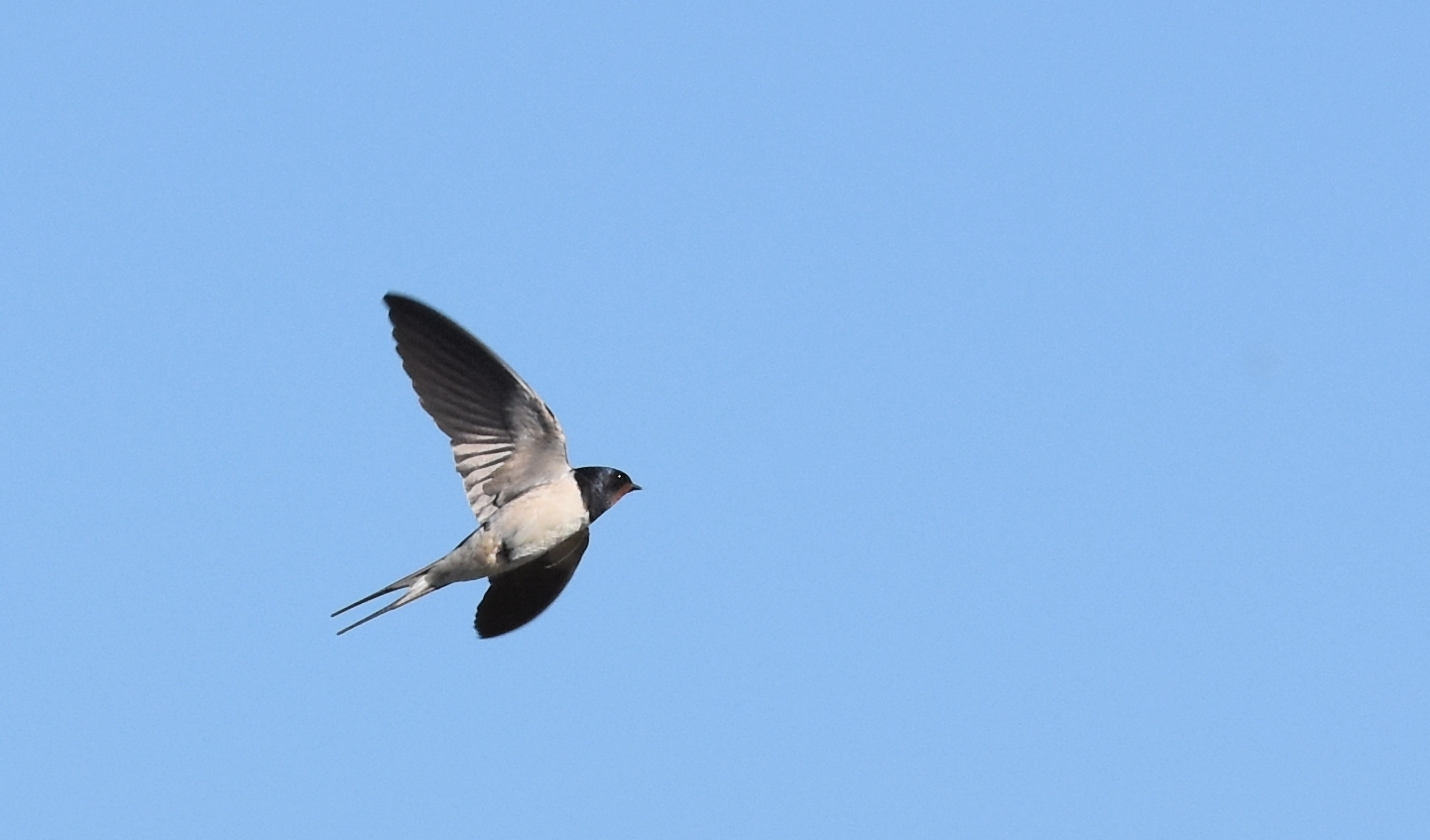
Getting back towards the car the farm buildings had a few Swallows and House Martins tazzing about, trying to get one in good light was another matter
House Martin PYLC #151
During week 10 we spent more time in the garden watching the bee hotel where the Blue Mason Bees are still active. The males hang around resting on the nearby plant pots in the sunshine 
waiting for new females to emerge, like this one that's pushing a blob of the mud seal of its cell in front of it.
The Red Mason Bees are still busy too. So busy they have to cleave their growing brood cells backwards and upside down.
Beneath the bee hotel our God-only-knows-where-they-came-from Madeiran Orchids have come into full bloom.
Back at the bee hotels there's been a lot of interest in them from this parasitic wasp, Sapyga quinquepunctata. We've seen it several times hanging around on the sides or tops of the hotels, it seems to be waiting for the right moment to make its dastardly move.
Always keeping an eye open for other stuff around the garden we saw this Sawfly land on a nearby rose leaf where it appeared to be ovipositing on the top surface of the leaf - we'll have to keep an eye on that particular leaf to see what, if anything, transpires...
lso creeping around was this Zebra Spider, one of several in the garden now.
And noticing a flutter had us chasing this pristine only just emerged Mint Moth round the plant pots beofre it finally settled in a suitable spot for a snap.  Who said moths are just butterflys' boring cousins, this one would knock many butterflies into a cocked hat if only it were 3/4/5x bigger.
In the heat we decided to take the mutt round Heron's Reach where he could stay a little cooler in the shade of the trees. We were surprised to see so few bees and butterflies around the flowers - has the very dry weather affected nectar production? There were some good sightings though including our first Emperor dragonfly which flew off as soon as we lifted the camera - many thanks to the photographer who pointed it out to us. We did get the lens up in time for our first Azure Damselfly pic of the year.
Chiffchaffs were singing all over the shop, by the time we'd realised we'd heard about half a dozen we thought we really should have been counting them - similarly the Blackcaps too, just how many are there round there these days?
Back with the invertebrates we saw this damselfly in somewhat lumbering flight and once it settled could see it had captured a rather substantial prey item.  Once stationary we could see it was a Common Blue Damselfly and not another Azure Damselfly.
We'd seen a Large Skipper butterfly sitting on a small patch of Nettles and while trying to get a pic managed to disturb it and then not be able to relocate it. But while trying to re-find it we spotted this unusual beetle. We managed a couple of half decent phone pics and later discovered it to have the rather long winded name of Golden Bloomed Grey Longhorn Beetle and that it could be the first record of the species in the Fylde.
Further on a Song Thrush sat up nicely for us.
A very good morning's walk but the mutt did get too hot despite being in the shade of the trees most of the time - it was a very warm day!
Back at Base Camp the Sapyga quinquepunctata was still to be seen lurking furtively around the bee hotel.
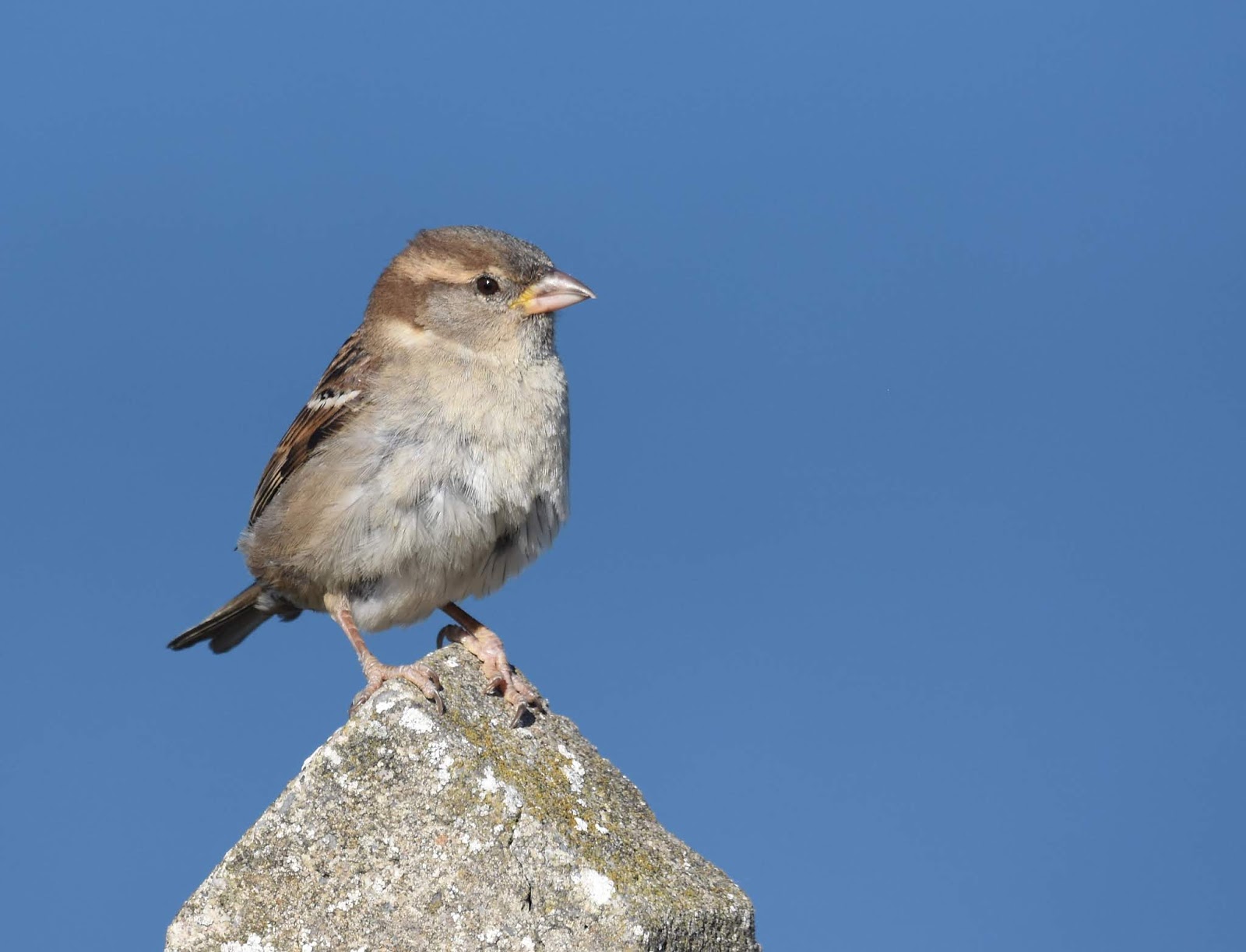
Bottlenose Dolphins had been seen a couple of morning's on ther trot down at the coast so we gave that a go knowing full well that if we took the big lens they wouldn't show. You guessed right they didn't. At least the local House Sparrows aren't so camera shy. This one has seen something moving in the grass and was about to fly down to snaffle it up to take back to its nestlings across the road. Their eyesight must be phenomenal because what ever it was was too small for us to make out in its beak as it departed - how on Earth did it spot something so small tucked up in the grass from about five metres away?

There wasn't much else about although one of the local Pied Wagtails was very confiding and allowed close approach and for us to get down low for an eye-to-eye shot.
On our return, almost back to the start, we spotted a black dot in the water a long way down towards the pier. We knew what it was and wished it was neared, Our first Grey Seal along this section of the prom of the year - can't believe they've been so few and far between, we would have expected to have seen a t least a few by now given that it's the end of May. But at least it's blubber even if it;s not a dolphin.
Grey Seal PYLC #152
The bee hotel is now under constant attack from the wasp and it's venturing across the front inspecting the holes.
Elsewhere in the garden the pond has been very quiet this year until the last few days when we've been seeing Bumble bees dropping in for a drink...what was that we were saying about the dry spell and nectar production earlier...
We've not had any Blue Tailed Damselflies emerging yet, really hope they've not become extinct in there at the hands of the fish - or should that be mouths of the fish?
The garden did turn up this rather wonderful Red Legged Robber Fly which we though tat first might be one of the Spider Hunting Flies. Turns out it could be another first record for the Fylde although having said that the NBN maps we check on can be notoriously out of date for many species.
Much bigger than the tiny Zebra Spiders that scurry around the trellis is this Tegenara Spider that has set up home in one of the plant troughs by the garage wall.
While looking at more bees coming in to the pond fro a drink we spotted this larva moving around, we guess it's some kind of hoverfly larva but could be horribly wrong.
Another fruitless dolphin search did give is a female House Sparrow to compliment the male from a couple of days earlier.
And finally we managed, or nearly managed, to get a pic of the parasitic wasp leaving one of the active nesting holes in the bee hotel, Blue Mason Bee is the victim in this case.
This type of parasitism is the reason why bee hotel tubes should be at least 10cm deep and preferably 15cm. The females bees are produced at the back leaving the males at the front much more vulnerable to attack but the females are much more valuable to the population as a whole, one male can fertilise several females so it doesn't matter if many/most get parasitised. On the other  hand if most of the females get parasitised because the holes are too short then the bee population will start to decline. So take care when buying bee hotels from the likes of supermarkets and garden centres, make sure they are at least that important 10cm deep. Better still make your own but again you'll need long enough drill bits or bamboo tubes.

So there you have it, plenty has been happening almost far and wide.

Where to next? The weather has taken a big turn for the worse so some of our favourite places further afield may be less busy and we can give them a try.

In the meantime let us know what's been seen in your locked down outback.

Stay socially distant - stay safe.


Tuesday, 12 May 2020

Lockdown week 7 brings a real treat

The Safari took a wander along the North Blackpool Pond Trail on a warm Monday morning. At the reedbed through the gate a pair of Dunnocks were busy looking for nesting material, one disappeared into the thick Brambles with a feather while the other was on the look out for more.
We had no luck getting a pic of either of the two Sedge Warblers that were singing at each other from further back in the reeds. 
Mooching slowly on listening to Robins, Blackcaps and Wrens we came to the Community Orchard where the alarm calls of the gulls had us looking up. A Buzzard came into view coming our way mobbed by an entourage of closely following gulls.
 It dropped a bit lower to avoid the worst of their attentions and came directly overhead skimming the tree tops - awesome view!
We wonder how it came by the damage to its wing, hopefully not from gunfire - can't believe in the 21st century there's still far too many people think these birds pose a threat to them and still persecute them all too often.
 In the field a few yards further on a pair of Jackdaws searched the dry ground for something to eat.
At the Black Pond the family of Mallard ducklings were busy hoovering up invertebrates dropping of the Marsh Marigold flowers above their little heads.
After the close Buzzard encounter in the morning the afternoon provided another at Base Camp when again the gulls alerted us to a bird of prey. Looking up we watched three Buzzards circling tightly in a 'kettle' gaining altitude and drifting towards the coast right over the garden.
Moth trapping has been a dead loss so far this year with our efforts being thwarted by clear skies, the bright moon and mostly cool temperatures. However some warm calm days brought hope but it wasn't to be as our neighbours have installed a floodlight in their yard worthy of a football stadium so even more light pollution to contend with along side all the garden destruction being wrought by folk stuck at home suddenly discovering their gardens and wanting to 'improve' them which basically seems to mean ripping out all the shrubs and felling all the trees - we've got real eco-anxiety this week with all the deforestation going on. If you think the Amazon is bad Blackpool is worse and we have far fewer trees to lose.
Tuesday saw us back along Chat Alley. Not a lot going on down there although we weren't expecting to see a rather late skein of Pink Footed Geese heading out to see on route to Iceland.
A Great Crested Grebe was sat on the sea some distance out, secretly we were hoping the white dot we could see was a Red Throated Diver we could add to our 1 mile bird blitz but it wasn't to be. 
We spent the afternoon watching the Red Mason Bees around the Bee Hotel
and spotted a tiny fly lurking furtively around the entrance holes and occasionally sneaking in - what is it and what's it up to?????
The compost heap was also worth watching with all the spider activity but above it a small Crane Fly caught our attention. Quite a bonny one compared to most of the other members of the family.
The Wolf Spiders on the compost heap were in fine form but getting them to sit facing the light was an issue - they're not the most obliging of models.
Then we noticed a pair on the edge of the pond. These two allowed us to approach quite closely and watch their mating ritual. Lots of pedipalp waving and while the is was going on the front legs were also beating a rowdy tattoo on the wood. he inched closer, mate or death were the options...until the female scuttled away unimpressed.
Disaster happened when we missed a call from CR that would have told us another Osprey was coming our way. By the time we'd called back we'd missed it.
A Grey Squirrel was in the garden under the feeders early morning on Wednesday, probably looking for spillage. The first we've seen at Base Camp for a few weeks.
Our walk was again along Chat Alley where there were no chats but a few Swallows zooming up and down along the the cliffs kept us entertained trying to get an in-focus pic. 
We totally missed the late Sand Martin that zoomed through, wasn't expecting that! Nor were we expecting the at first unidentified bird coming towards us from way out to sea, it turned in to a Wood Pigeon as it drew closer - where'd that come from???
The fine afternoon meant the garden was lively. 
Not sure what species this Club Horned Wasp is. Last summer we had a 5 spotted species, Sapyga quinquepunctata, this one appears to have only four spots but could it be a male? They prey on solitary bees especially Osmia Mason Bees.
The little Longhorn Beetles Grammoptera ruficornis were out again, at least three of them including a mating pair - We reckon they are fairly well established round here despite not being previously recorded.
The warmth brought a good number of Honey Bees to the garden too.
Solitary bee sightings included this tiny wee shiny metallic one which we've been told is one of the  Lasioglossum morio agg. species
Another small wasp/sawfly thingy remains unidentified.
A Speckled Wood butterfly was the first of the year in the garden - butterflies have been very thin on the ground (or even in the air here so far this year) and while having a brew we got buzzed by a large ladybird flying round us and later found a second much smaller 7-Spot Ladybird up by the compost heap. 
Our best record of the day wasn't a sighting but a 'heard only' SWIFTS screaming way up high overhead - so glad they're back!
At last the moth trap had something in it when we opened it on Thursday morning. Not much - just one Tachystola acroxantha - but better than all the blanks we'd drawn recently. 
Very close to the trap we disturbed a male Light Brown Apple Moth. 
Yet another mooch along the cliffs gave us some wader movement perhaps due to the high tide washing them off a roosting site. We had some Oystercatchers on the move
as well as some new species for pur 1 mile bird blitz whe na mixed flock of Dunlin and Ringed Plovers came past for number 63 and 64.
And they were followed by another addition, a Cormorant, which was good as we'd missed one flying past a couple of days earlier. #65
More sunshine at Base Camp in the afternoon gave us the chance to get a phone snap of this parasitic wasp that's been seen most days but until now hasn't really posed nicely for a pic.
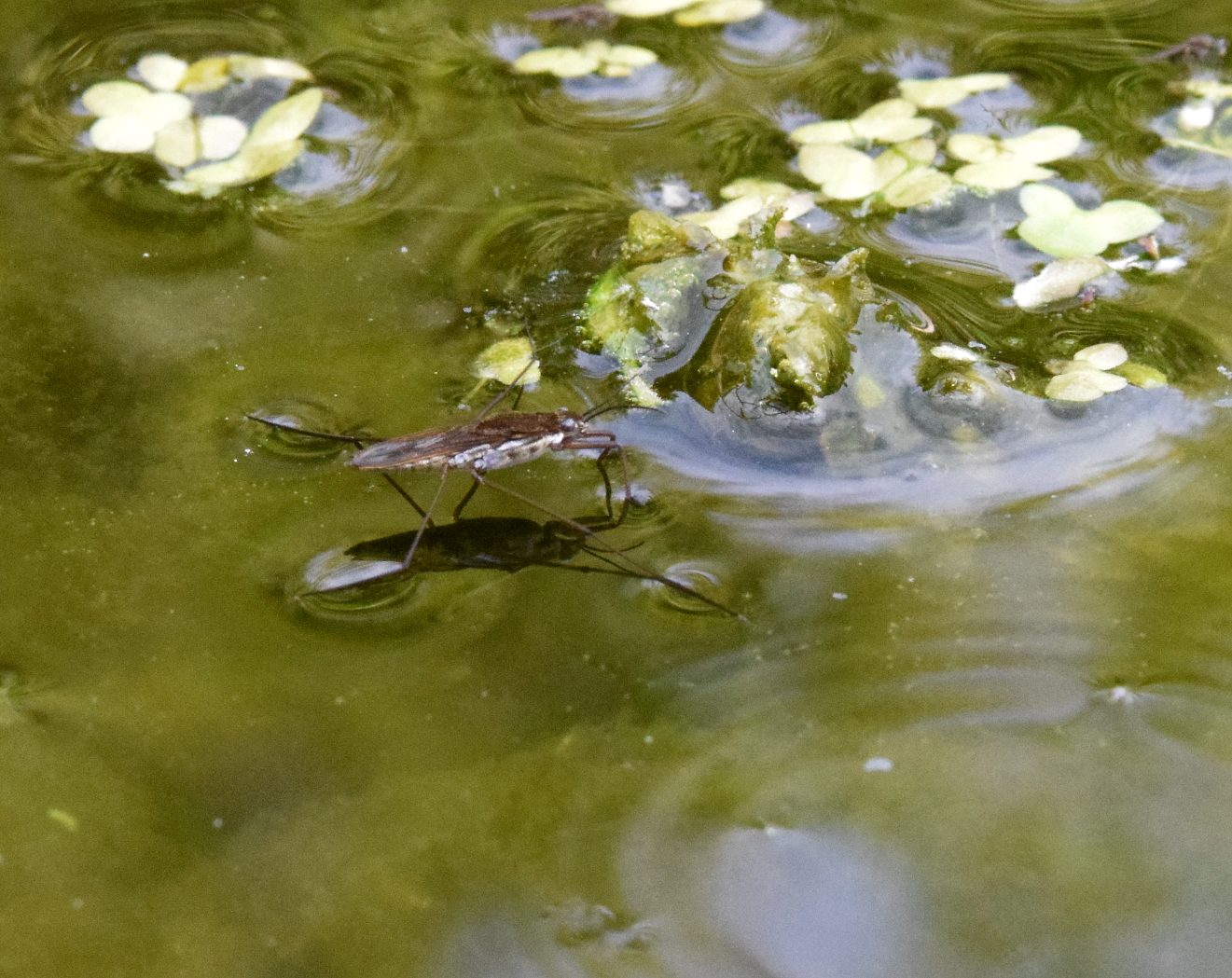
A Pond Skater was on the pond which is quite an unusual occurrence. If any aquatic life arrives the fish soon gobble it up but it seems the fish or at least almost all of them are no more - we think we've had nocturnal visits from a Heron that has taken advantage of the bright moonlit nights and scoffed all but the very biggest fish in the pond. Well we always wanted a wildlife pond but now we have to break the bad news to Wifey who won't be happy she's lost her fish.
Not long after that another unusual visitor to the garden was found. We saw it struggling in the water and hoiked it out to dry off. It was only then we saw that it was a St Mark's Fly - don't think we've ever seen one in the garden before.
Friday's moth trap was successful - just. A female Light Brown Apple Moth and a small brown Caddis Fly were secreted in the egg boxes. Are things looking up at last?
There's nothing to reprt from our morning walk. Back in the garden the Lasioglossum bee was back this time nectaring on the Aubretia flowers.
A fly landed on a nearby leaf - it looks like a Yellow Dung Fly if it is one it's the first record for the garden. e normally see them not too faraway in the horse fields along the North Blackpool Pond Trail where they are associated with - yes you've guessed it! perhaps blown our way by the run of easterly winds.
Saturday was forecast to be the last day of fine weather but overnight no moths had found their way into the trap. We had a change of scenery for our morning walk heading out early to the park passing this small wood, it's only about 20 x 30m in area, on the way. We affectionately call it Magpie Wood as it holds a roost of about 50 or more Magpies over the winter months.
In recent days just outside our 'comfort zone' there's been a flurry of decent scarce migrant birds including Redstart, Whinchats, Spotted and Pied Flycatchers which we would have loved to have seen but couldn't. However, this morning passing this scrap of woodland we thought we heard a Wood Warbler, listening hard we heard the trilling at the end of a Wren's song among the songs of Blackcap, and Chiffchaff and put it down to our aging ears playing tricks and the unlikeliness of the habitat on we went to the park where there is much better habitat for a grounded Wood Warbler. 
Despite the warning and the proximity of other recent good species we didn't even check the park but walked the rough fields as usual with our eyes and ears open just in case.
There wasn't much happening there just the usual two Whitethroats, a Lesser Whitethroat in the old  hedge and Blackcaps and Chiffchaff singing in the scrub. A Sparrowhawk called from there too.
On the way back we definitely heard a Wood Warbler both calling and singing. Putting the news out more for folks' information than anything else as no-one should be twitching at the current time we were surprised to get a txt from SD who just happened to be passing the top of the road on his way to the prom. Minutes later he arrived and was able to get this pic. Many thanks to him for letting us use it.
We had an errand to run later in the morning and called in with the big lens hoping it was still there. After a few minutes it sang to reveal its presence, but it was right at the top of the trees. We did get a bit of a pic  for #66 of of 1 Mile Bird Blitz and #146 of our Vertebrate Challenge.
What a great little bird to turn up on our local patch and what a weird place. It just goes to show that during migration time anything can turn up anywhere you've just got to keep your eyes and ears open - which we nearly didn't!
Back in the garden we spent yet more time with the Longhorn Beetles
Also in the garden was another (or perhaps the same although we'd nor  see nit since despite lots of looks) Pond Skater.
After tea it looked like a bit of a sunset was shaping up so we persuaded Wifey to turn the telly off and we took the mutt for a short walk along the cliffs. It as so clear we could almost see the sheep grazing the hills on both the Snowdonian mountains and the Lake District fells, shame the Isle of Man was lost in the low cloud. It as just that low cloud that gave the sunset its colour though.
Looking north to the Lake District
Well worth going out for the last of the day's sunshine.
The week ended on a moth high. The forecast was slightly wrong and we got another night with the moth trap in situ. Sunday's trap held easily our best catch yet and increased our year's tally by almost 50%. There were five moths in the trap; that shows just how poor this year has been. two Heart & Darts was our first multiple catch of a single species!
The others were a White Shouldered House Moth looking nice and fresh.
A female Bee Moth and another Tachystola acroxantha were the other two. here's hoping 'moffing' picks up soon!
The weather changed to bally chilly and we have nothing else to report from Sunday.

Where to next? More of the lockdown same we suppose.

In the meantime let us know who's turned up unexpectedly in your locked down outback

Stay safe - Stay physically distant - keep watching that wildlife, it's good for you you know.