
The Safari took a wander along the North Blackpool Pond Trail on a warm Monday morning. At the reedbed through the gate a pair of Dunnocks were busy looking for nesting material, one disappeared into the thick Brambles with a feather while the other was on the look out for more.

We had no luck getting a pic of either of the two Sedge Warblers that were singing at each other from further back in the reeds.
Mooching slowly on listening to Robins, Blackcaps and Wrens we came to the Community Orchard where the alarm calls of the gulls had us looking up. A Buzzard came into view coming our way mobbed by an entourage of closely following gulls.


It dropped a bit lower to avoid the worst of their attentions and came directly overhead skimming the tree tops - awesome view!

In the field a few yards further on a pair of Jackdaws searched the dry ground for something to eat.

At the Black Pond the family of Mallard ducklings were busy hoovering up invertebrates dropping of the Marsh Marigold flowers above their little heads.

After the close Buzzard encounter in the morning the afternoon provided another at Base Camp when again the gulls alerted us to a bird of prey. Looking up we watched three Buzzards circling tightly in a 'kettle' gaining altitude and drifting towards the coast right over the garden.
Moth trapping has been a dead loss so far this year with our efforts being thwarted by clear skies, the bright moon and mostly cool temperatures. However some warm calm days brought hope but it wasn't to be as our neighbours have installed a floodlight in their yard worthy of a football stadium so even more light pollution to contend with along side all the garden destruction being wrought by folk stuck at home suddenly discovering their gardens and wanting to 'improve' them which basically seems to mean ripping out all the shrubs and felling all the trees - we've got real eco-anxiety this week with all the deforestation going on. If you think the Amazon is bad Blackpool is worse and we have far fewer trees to lose.
Tuesday saw us back along Chat Alley. Not a lot going on down there although we weren't expecting to see a rather late skein of Pink Footed Geese heading out to see on route to Iceland.

A Great Crested Grebe was sat on the sea some distance out, secretly we were hoping the white dot we could see was a Red Throated Diver we could add to our 1 mile bird blitz but it wasn't to be.
We spent the afternoon watching the Red Mason Bees around the Bee Hotel 
and spotted a tiny fly lurking furtively around the entrance holes and occasionally sneaking in - what is it and what's it up to?????

The compost heap was also worth watching with all the spider activity but above it a small Crane Fly caught our attention. Quite a bonny one compared to most of the other members of the family.


Then we noticed a pair on the edge of the pond. These two allowed us to approach quite closely and watch their mating ritual. Lots of pedipalp waving and while the is was going on the front legs were also beating a rowdy tattoo on the wood. he inched closer, mate or death were the options...until the female scuttled away unimpressed.


Disaster happened when we missed a call from CR that would have told us another Osprey was coming our way. By the time we'd called back we'd missed it.
A Grey Squirrel was in the garden under the feeders early morning on Wednesday, probably looking for spillage. The first we've seen at Base Camp for a few weeks.
Our walk was again along Chat Alley where there were no chats but a few Swallows zooming up and down along the the cliffs kept us entertained trying to get an in-focus pic.
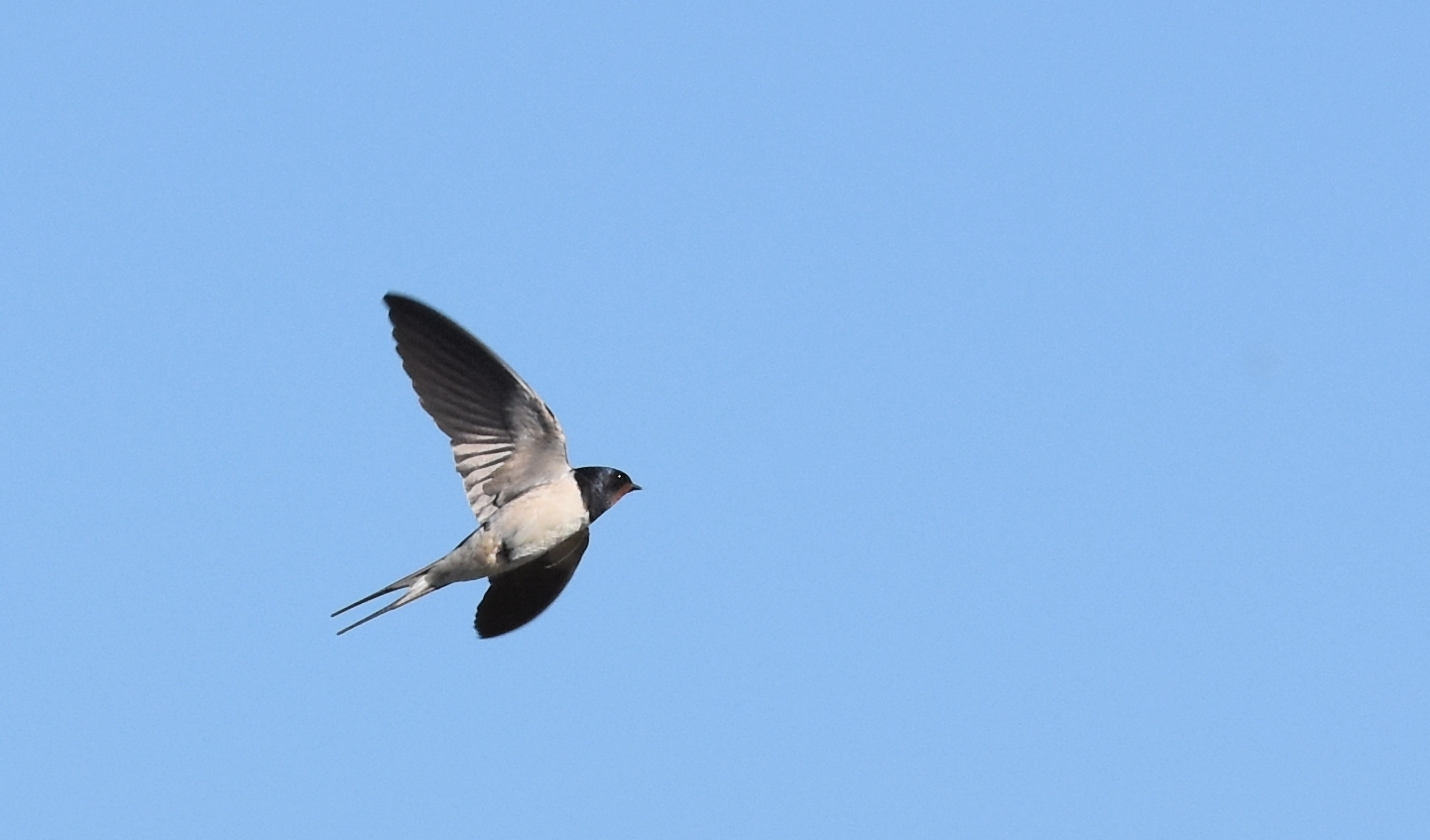
We totally missed the late Sand Martin that zoomed through, wasn't expecting that! Nor were we expecting the at first unidentified bird coming towards us from way out to sea, it turned in to a Wood Pigeon as it drew closer - where'd that come from???
The fine afternoon meant the garden was lively.
Not sure what species this Club Horned Wasp is. Last summer we had a 5 spotted species, Sapyga quinquepunctata, this one appears to have only four spots but could it be a male? They prey on solitary bees especially Osmia Mason Bees.

The little Longhorn Beetles Grammoptera ruficornis were out again, at least three of them including a mating pair - We reckon they are fairly well established round here despite not being previously recorded.


Solitary bee sightings included this tiny wee shiny metallic one which we've been told is one of the Lasioglossum morio agg. species


A Speckled Wood butterfly was the first of the year in the garden - butterflies have been very thin on the ground (or even in the air here so far this year) and while having a brew we got buzzed by a large ladybird flying round us and later found a second much smaller 7-Spot Ladybird up by the compost heap.
Our best record of the day wasn't a sighting but a 'heard only' SWIFTS screaming way up high overhead - so glad they're back!
At last the moth trap had something in it when we opened it on Thursday morning. Not much - just one Tachystola acroxantha - but better than all the blanks we'd drawn recently.

Very close to the trap we disturbed a male Light Brown Apple Moth.
Yet another mooch along the cliffs gave us some wader movement perhaps due to the high tide washing them off a roosting site. We had some Oystercatchers on the move

as well as some new species for pur 1 mile bird blitz whe na mixed flock of Dunlin and Ringed Plovers came past for number 63 and 64.


And they were followed by another addition, a Cormorant, which was good as we'd missed one flying past a couple of days earlier. #65


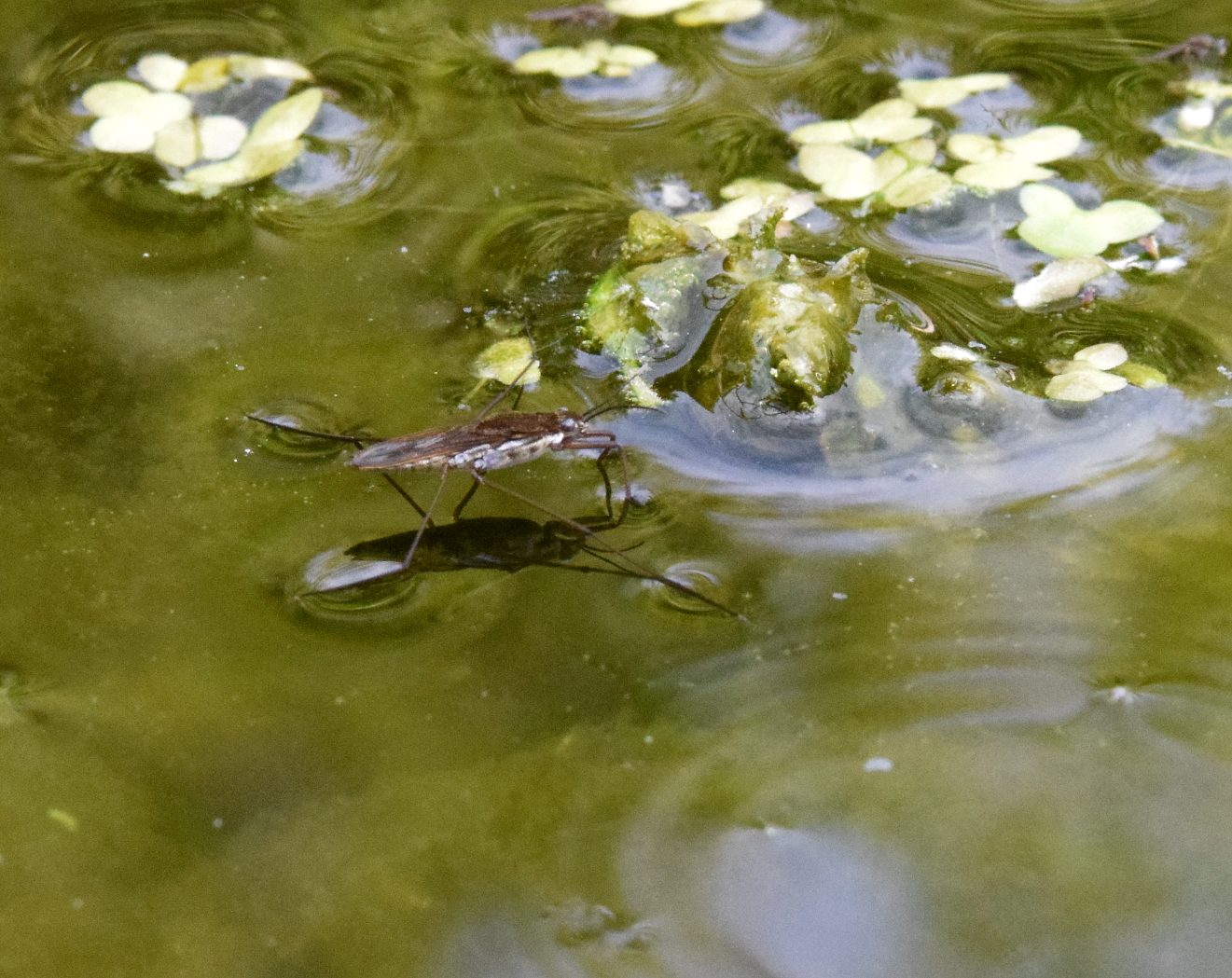
A Pond Skater was on the pond which is quite an unusual occurrence. If any aquatic life arrives the fish soon gobble it up but it seems the fish or at least almost all of them are no more - we think we've had nocturnal visits from a Heron that has taken advantage of the bright moonlit nights and scoffed all but the very biggest fish in the pond. Well we always wanted a wildlife pond but now we have to break the bad news to Wifey who won't be happy she's lost her fish.
Not long after that another unusual visitor to the garden was found. We saw it struggling in the water and hoiked it out to dry off. It was only then we saw that it was a St Mark's Fly - don't think we've ever seen one in the garden before.

Friday's moth trap was successful - just. A female Light Brown Apple Moth and a small brown Caddis Fly were secreted in the egg boxes. Are things looking up at last?
There's nothing to reprt from our morning walk. Back in the garden the Lasioglossum bee was back this time nectaring on the Aubretia flowers.


A fly landed on a nearby leaf - it looks like a Yellow Dung Fly if it is one it's the first record for the garden. e normally see them not too faraway in the horse fields along the North Blackpool Pond Trail where they are associated with - yes you've guessed it! perhaps blown our way by the run of easterly winds.

Saturday was forecast to be the last day of fine weather but overnight no moths had found their way into the trap. We had a change of scenery for our morning walk heading out early to the park passing this small wood, it's only about 20 x 30m in area, on the way. We affectionately call it Magpie Wood as it holds a roost of about 50 or more Magpies over the winter months.

In recent days just outside our 'comfort zone' there's been a flurry of decent scarce migrant birds including Redstart, Whinchats, Spotted and Pied Flycatchers which we would have loved to have seen but couldn't. However, this morning passing this scrap of woodland we thought we heard a Wood Warbler, listening hard we heard the trilling at the end of a Wren's song among the songs of Blackcap, and Chiffchaff and put it down to our aging ears playing tricks and the unlikeliness of the habitat on we went to the park where there is much better habitat for a grounded Wood Warbler.
Despite the warning and the proximity of other recent good species we didn't even check the park but walked the rough fields as usual with our eyes and ears open just in case.
There wasn't much happening there just the usual two Whitethroats, a Lesser Whitethroat in the old hedge and Blackcaps and Chiffchaff singing in the scrub. A Sparrowhawk called from there too.
On the way back we definitely heard a Wood Warbler both calling and singing. Putting the news out more for folks' information than anything else as no-one should be twitching at the current time we were surprised to get a txt from SD who just happened to be passing the top of the road on his way to the prom. Minutes later he arrived and was able to get this pic. Many thanks to him for letting us use it.
We had an errand to run later in the morning and called in with the big lens hoping it was still there. After a few minutes it sang to reveal its presence, but it was right at the top of the trees. We did get a bit of a pic for #66 of of 1 Mile Bird Blitz and #146 of our Vertebrate Challenge.

What a great little bird to turn up on our local patch and what a weird place. It just goes to show that during migration time anything can turn up anywhere you've just got to keep your eyes and ears open - which we nearly didn't!
Back in the garden we spent yet more time with the Longhorn Beetles


Also in the garden was another (or perhaps the same although we'd nor see nit since despite lots of looks) Pond Skater.
After tea it looked like a bit of a sunset was shaping up so we persuaded Wifey to turn the telly off and we took the mutt for a short walk along the cliffs. It as so clear we could almost see the sheep grazing the hills on both the Snowdonian mountains and the Lake District fells, shame the Isle of Man was lost in the low cloud. It as just that low cloud that gave the sunset its colour though.
 |
| Looking north to the Lake District |

Well worth going out for the last of the day's sunshine.
The week ended on a moth high. The forecast was slightly wrong and we got another night with the moth trap in situ. Sunday's trap held easily our best catch yet and increased our year's tally by almost 50%. There were five moths in the trap; that shows just how poor this year has been. two Heart & Darts was our first multiple catch of a single species!


A female Bee Moth and another Tachystola acroxantha were the other two. here's hoping 'moffing' picks up soon!
The weather changed to bally chilly and we have nothing else to report from Sunday.
Where to next? More of the lockdown same we suppose.
In the meantime let us know who's turned up unexpectedly in your locked down outback
Stay safe - Stay physically distant - keep watching that wildlife, it's good for you you know.


