Wednesday, 20 July 2016

Hotter than hell...well maybe not quite

The Safari was out early for a tots event up at the top end of the North Blackpool Pond Trail with the Early Years Team. While we were waiting for the little ones to arrive we had a look at what was about to show them. There is a friendly Heron, or it's well habituated to people on the other side of the fence.
It does allow closer approach if your careful and don't startle it but it does have a limit you can't cross before it walks on a few paces.
On the had rail we spotted a small fly dining on a blob of bird poo - an excellent photo opportunity, brilliant! But maybe not to the taste of our colleagues.
Look at the length of that labrum
The little ones turned up and we had a close look at the Heron, which was considerably taller than most of them.
And of course being by a suburban lake there were plenty of ducks and geese to collect moulted feathers from. Being in charge of all things wildlife we gave RK our camera to do the pic thing.
We did a bit of pond dipping finding the children lots of Water Boatmen and a small 3-Spined Stickleback. It was still before mid-morning but it was getting seriously hotter by the minute. Time to move on and find some shade round the corner. Here we found lots of Hedge Bindweed flowers for the kiddies to play parachutes with.
We also showed the youngsters some Sycamore 'helicopters' and had a play with those, far from ripe but they still worked. While we were enjoying the whirlies lots of butterflies were fluttering around and a Brown Hawker dragonfly flew over us. RK was still in charge of the camera and had turned all arty with this cobweb shot.
And then was seen looking intently in to the long grass by the side of the path, she'd found several tiny Froglets.
We were looking for some more when we found a full sized adult which was eventually successfully wrangled into our pond dipping tub.
By now it was scorchio and getting far too hot for the little ones so it was back to base and a very refreshing ice lolly.
We had a short time to get through the traffic and back to work to set up for Yr 4 and their final pond dipping study.
They did their science quickly in the now 30C+ heat, it had become one of the top 10 hottest days ever for here, but 'sadly' fell short of the 33.7C record set in the July heatwave of 1976.
Their nets were in the water as soon as possible and they started to pull out some good finds. Tiny Pea Mussels aren't netted very often from our pond, only about 2mm across.
Blobs of snails eggs were found and some of them were seen to be just about to hatch.
There was nothing sinister about the damselfly nymph, it was just resting there. Like it is here on an adult Wandering Snail.
Other snails included large Ramshorn Snails
And the much smaller and skinnier Keeled Ramshorn Snail
Many of the old favourites were found like this rather large Water Boatman, yesterday's group didn't catch any anywhere near this big.
An animal we see on most pond dips in the warmer months but have never photographed before is the Bloodworm, the larva of a Non-biting Midge.
Soon an excited voice called out "water spider, water spider!" asking them to count the legs had them working through the key to find it was a dragonfly nymph.

With all the 3-Spined Sticklebacks in the tubs it wasn't long before we heard the cry "it's grabbed a fish!!!!!!!"
We brought the group round one by one to see predation in action. Then in another tub we were able to watch a nymph attacking the fish, its mask darting out at the blink of an eye, if it wasn't for the shadow we wouldn't have been able to see it. It took several attacks before another Stickleback was captured. We could see the fish being hit by the strike but the nymph wasn't able to make the attack stick until...
What an awesome experience for the kids. We've never seen this before, well that's not unexpected as it usually happens in the bottom of the pond well out of sight! Amazing to witness for real rather than on a YouTube clip or even a David Attenborough documentary.
So how hot did it get in the end? Too hot for working outside all day probably but don't tell that to GB down in the South West forests of Western Australia.
Where to next? Back to Patch 2 if there's no torrential thunderstorms to contend with.
In the meantime let us know who's enjoying the hot heat in your outback.


Monday, 18 July 2016

It's hotting up so that means invertebrates

The Safari wasn't able to get out on Saturday until late afternoon. The sun was shining and it wasn't too windy so we smothered ourself in Clegg repellent took the short walk round to Patch 2. Insect repellent is the best thing to wear if you want to get close to insects! but it is essential if you don't want to be eaten alive by the little horrors.
We were immediately on to butterflies, there were Meadow Browns all over the grassland and nectaring on the few remaining Bramble flowers.
One pair were getting on down in the long grass


A little further on we came across an Early Bumble Bee which seemed to be a little worse for wear despite the warm sunshine.
It wasn't these low down insects we were there to see. We were looking up, high into the canopy where our quarry watches for rivals and drinks the honeydew. They were very active with two presumed males spiraling high above the tree in a dizzying battle before splitting apart and settling back down on their favourite leaves.
We watched and waited but they never dropped any lower - just as well as our first Brown Hawker dragonfly of the year was patrolling just above the Bramble thickets. Frustrated we wandered down to the rough field where there were many more Meadow Browns, a few Small Skippers and our second first of the year, three Gatekeepers.
We found one Large Skipper too and a fairly fresh one at that rather than an aging tatty one,
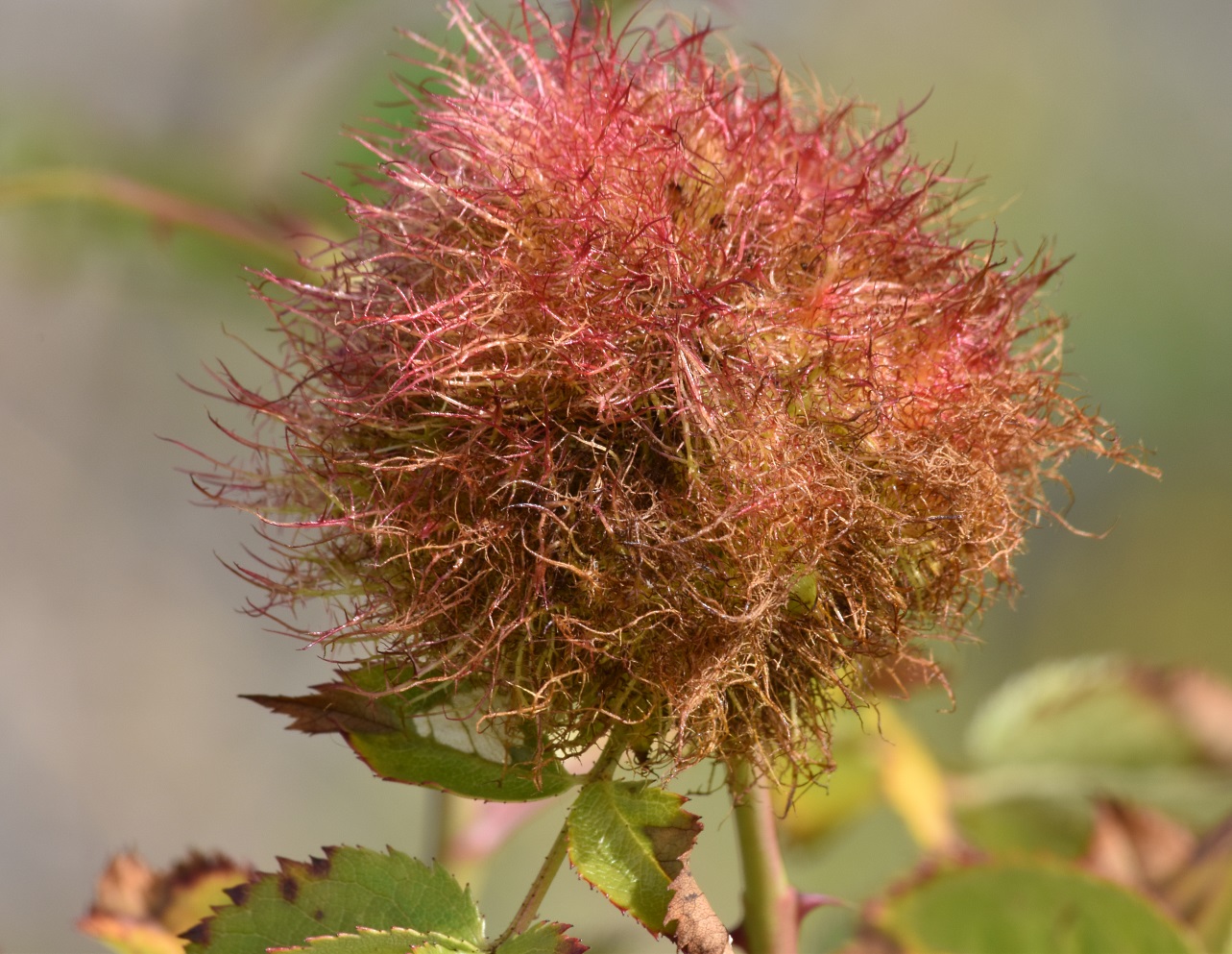
At the very bottom of the field there are a couple of scratty Dog Rose bushes, one of which was showing a good growth of Robins Pin Cushion Gall, made in response to a tiny wasp.
Time to return to the scrub for another neck craning session, but this time we were in luck. Almost straight away a movement on a flower caught our eye that wasn't bee-like. We moved in for a closer look and flushed the tiny butterfly. Thankfully it didn't go back up to the canopy but landed on a nearby leaf.
After a while the White Letter Hairstreak decided it was dinner time and more nectar was needed.


Once it was settled it gave us some good photo opportunities.
Phone camera
The White Letter Hairstreaks are a sign of hot summer days but all around were the  ripening signs of autumn.
That night we put the mothy on. Not a great catch 11 moths of seven species.
Chrysosteuchia culmella - again
Bramble Shoot Moth - New for garden
Dark Arches - quite a pale one
Dotted Clay
Dotted Clay - with tufts
Marbled Beauty
 At work we've had a school group investigating the pond.
Ramshorn Snail
Water Boatman
And the best if the lot several of these monsters, the children witnessed one catch and eat a small 3-Spined Stickleback fry and another eating an unfortunate damselfly nymph. Horror, shock, incredulity that that could happen to a fish, glee, the emotions and comments were quite revealing.
Common Darter nymph
So there you have it some brilliant bugs, far more brilliant than any Pokemon character and with more impressive REAL super-powers too.
Where to next? Just two children's groups tomorrow at different locations so there should be something fascinating to find.


Thursday, 14 July 2016

More gore

The Safari took a call while setting up on the morning of the family event mentioned in the previous post. It was from British Divers Marine Life Rescue local contact TH telling us there was a Long Finned Pilot Whale washed up dead on the beach to the south of Patch 2. It had been all over social media earlier in the morning but being busy we'd missed the news.
Not sure who's pic this is - lifted off Facebook, apologies to the photographer
Look at those scratches, is it a Risso's Dolphin, they get tooth rake marks from their social interactions or are they marks of aggression from a Bottlenose Dolphin or scratches from netting or ropes? TH sent some close ups later.
The teeth are inconclusive, if there are any (or if there are tooth sockets if the teeth have fallen out) in the upper jaw then it is a Long Finned Pilot Whale, if there never were any teeth up there then it would be a Risso's Dolphin.
The tangled fishing gear around the pectoral fin is a bit ominous but could have become attached after death.
We didn't get to see it in the end as it was removed from the beach to landfill. 
TH also told us she'd seen a pod of Bottlenose Dolphins not far off the prom earlier in the week too and has some pics looking back towards town we hope to be able to share with you soon. not only that she made a very generous offer to find out more keep an eye on our social media posts there may be the chance of some exciting opportunities coming up.
In other news on Tuesday we didn't see much from Patch 2 but that little was pretty good, a Little Tern (166, P2 #65) flew north dropping to catch fish occasionally with five Common Terns, a good find for our short visit  as they aren't guaranteed along our coast.
Our evenings have been taken up leading Brownie groups on bug hunts and pond dipping. The first night one of the Brownies came up to us saying she'd caught 'Stripe'. We lifted the pot and saw nothing! And then it moved - tiny! About the size of two large Springtails we could hardly see it without our specs on, and not much clearer with them on and the magnifier on the pot's lid. We'd no idea what it was, it ran rather than hopped. We tried to get a photo which was nigh on impossible with the wrong lens on a gloomy evening while being hassled from all sides by a gaggle of inquisitive Brownies and the darned thing just wouldn't keep still.
The pot is 5cm diameter and the line it's on is about 1mm wide
To be honest we don't even know which group of insects it belongs to, bugs, beetles or something else. Whatever it is it's distinctive so has anyone else ever seen anything like it before? There was enough sunshine to bring some other insects in to play too.
Small Tortoiseshell
And again
Small White
Common Wasp on Figwort
Red Tailed Bumble Bee on Ragwort
The following night wasn't quite so productive for bug weirdness but the Brownies did pull three Common Darter nymphs from the pond. It's not a species of dragonfly we see very often around the work's pond.
They also found a couple of damselfly nymphs, probably Blue Tailed Damselfly
We saw a nice grass that wouldn't have interested the Brownies. We think it could be Small Timothy, it does look pretty delicate compared to 'normal' Timothy even where it's growing quite tall.
While we were trashing the pond the green was being used for a most unusual sport, well a most unusual sport for round these parts. We see footy every day, cricket quite often, rounders fairly frequently but never have we seen hurling - until now!
Patch 2 gave us a distant Grey Seal today but not a lot else other than a nice fly past of four Manx Shearwaters together.
After work we had a quick nip down to the marine lake where we dipped a female Mandarin Duck that's been seen a few times since the weekend. Don't know where it was hiding this arvo but we sure couldn't find it.
There was some other interest though, we particularly liked seeing the family of Tufted Ducks, would have been better had they come a little closer.
Resting on the lawns were plenty of Canada Geese, Mallards and many Black Headed Gulls.
Away over on the edge of the island we spotted a Lesser Black Backed Gull poking at something. It turned out to be an almost fully grown ex-Cootling. It took a while but it went down whole in the end!
The feet are on their way down!
Where to next? We've got another children's event tomorrow, hope it doesn't rain.
In the meantime let us know who's got the brightest stripes in your outback.