The Safari left you on a high last time with the news that we'd hit the dizzy heights of 100 species of birds photographed in January. Well, as we alluded to then, things slowwwwweeeddd right down in February. We set ourselves a rather weeny target of just 15 new species to get during the extended month. How have we got on?
Our first safari of February saw us head up north to a rather soggy Leighton Moss where it didn't take long to find the long staying female Ring Necked Duck, as is usual for us it was away across the far side of Lillian's pool. But hey near or far if they're identifiable they all count for our Challenge - #101.
Our attention was soon drawn away from it by a well marked male
Marsh Harrier.] quartering the reeds over the far side of the pool.
After a while we'd exhausted the possibilities at Lillian's and wandered slowly down to the Grizedale Hide where the water before us was largely bird free, in fact we don't think we've ever seen it so birdless. A shout from CR pointed us in the direction of a very distant
Great White Egret, just about photographable beforee it banked and dropped into a distant channel btween the reedbeds\ #102.
With so little happening there we didn't stop long and retraced our steps past the deserted
Bearded Tit grit trays to Tim Jackson Hide. Again high water levels meant the pool was lacking in our feathered friends but at least there were a few more than at the Grizedale Hide including several sleepy
Snipe, #103, a species we just couldn't connect with in January.
Once again though we soon exhausted all the possibilities and headed back towards the Causeway Hide where pies would be consumed passing the Feeding Station as we went. Not as busy as it can be there but a Marsh Tit is always a good spot here.
Lunch was eagerly consumed while watching
Cormorants coming and going.
And a pair of
Teal did us the favour of foraging right under our noses.
Butties and pies scoffed it was time to head along the causeway to Lower Hide. The booming of
Bitterns was our soundtrack of the day, we could hear them both sides of the track, at least three and probably four we thought. Four booming males, it's not that long ago there were only 11 in the whole country! Just shows what a bit of positive habitat management can achieve - "Build it and they will come" as they say. Along the causeway we got waylaid by a gang of
Siskins feeding on
Alder seeds that had been washed out of their cones by wind and rains and floodwaters had accumulated them at the edge of the path.
It's not often you see them on the ground as they usually prefer to feed acrobatically high in the tree tops. A
Lesser Redpoll was seen with them but easily eluded our lens. Half way down the wooded path to the Lower Hide is a small bridge and that was a bridge too far for CR and his ankle high boots. WE carried on with IH in our wellies and did managed to get to Lower Hide after an intrepid journey through hell and high water - cold high wtaer at that!
And sadly a bit of wasted journey - the very high water levels meant no birds to be seen apart from a few
Mute Swans so back to rejoin CR we slopped. Back on terra-firma we went to Lillian's Hide again passing a far-to-quick-for-us
Water Rail and a couple of frustratingly invisble
Cetti's Warblers. A stationary
Snipe on the tern nesting platform was easier.
A little more
Marsh Harrier action coincied with the
Ring Necked Duck coming a bit closer.
Not the most productive day for our Challenge but a good day on safari with good friends never-the-less and that's what it's all about.
A few days later our next safari took us along the icy lanes of Over Wyre. Passing a car that had slid off the road through a fence and into a field had us taking extra care on the narrow ditch-sided roads. We struck lucky in Eagland Hill, spotting the Little Owl we've not seen there for several years - #104.
It's a pity that it was on the wrong side of the tree and facing away but you can't have everything. Further down the lane we couldn't stop at the first Farmland Birds Feeding Station so motored on down to the next one where a
Corn Bunting , #105, flitted in and out of the large anti-
Pheasant/
Grey Squirrel cage.
Obviously we'd have preferedv a pic of it in the tree away from the ironmongery but every time it flitted it flut behind the tree truck and out of sight - the pesky so-n-so! Not much else doing there so it was back to the first Feeding Station which was alive with birds, mostly
Chaffinches and
Tree Sparrows. Luckily there was a pair of
Yellowhammers too, our target species, unfortunately it was right at the front of the viewing area with lots of twiggery in the way so our pic is a bit (well a lot) hmmmm, but you can tell what it is so it's (just about) good enough for our purposes. #106
We met a couple of birders on the drive back to the main road and told them how to find the
Little Owl which they'd not seen, we hoped they did find it as it wasn't where we'd spotted it when we drove past.
From the farmland mosses we headed further north for another attempt at the Bewick's Swans. We soon found the flock of Whooper Swans they were probably with but it was so far away across the fields we needed the telescope that we didn't have with us today. With that disappointment we went further up to Plover Scar where another birder was just leaving and told us of a Barn Owl that had been hunting the ditches - we didn't see it but the sound of singing Skylarks in the frosy morning air was glorious. The tide was dropping as we went for a mooch along the seawall to see what we could see. Curlews, Oystercatchers and Redshanks were the most numerous birds but a duck on the water was more interesting...an Eider #107
The following day we were out with t'mutt for his late afternoon walk and what an awful afternoon it was, reet dreich as a Scots person might saw, dark, grey, dingy and raining. Perfect conditions for spotting the
Snow Bunting that's been kicking around the cliff/dunes/prom close to Base Camp. We've been seeing it fleetingly about once every 10 days but today it sort of hung around even if a little flighty. No-one in their right mind would carry a camera on a day like that but then everyone has a phone in their pockets these days...The
Snow Bunting continued to flit about on the grass bank not too far away from us so ever so cautiously the phone cane out of the pocket. Full Zoom was selected and we held it in the direction of said bird...
Maybe we should have used Night Mode??? Hopefully optomistic we asked our fellow Challengers if they could identify what was in the picture, if they could we could count it towards our tally. The answers came back...a 'shriky thing', nothing, even a
Weasel was touted by wildlife savvy IH! So, no we can't count it but would we be able to get a much improved pic before it heads northwards, that was going to be another challenge.
Our next safari saw us with CR and IH at Martin Mere WWT reserve again. It was another grey and drizzly day. Our first port of call was the feeders, on the way we spotted a Brown Hare in the distance guarding the entrance to the Harrier Hide, a nice way to start the day!
 The feeders were unusually quiet but as it was raining we stuck it out just in case something of note should show up. Eventually the rain eased and that was our cue to head round to the opposite end of the reserve...the thinking being if we've had at least 60 hours of miserable weather the Barn Owls will be hungry and needing to hunt, the break in the weather is going to bring them out. the hunch was right and we didn't have long to wait. #108 - over half way to our target of 15 for the month now.
After a while hunting the bull's field it swept in front of us and moved over towards the mere to our left.
It then disappeared, possibly circling behind us. Our attention was then turned to the pools in front of us to check all the
Teal for any
Green Winged Teal that may have secreted themselves among the many hundreds of their Old World counterparts...that's got to be done at this time of year. We couldn't find any, if indeed there were any to be found, We did however find an unexpected quartet of
Avocets, a nice little bonus towards our February target. #109. They didn't do much just stood in a line up to their bellies in the water chilling out all day.
Two
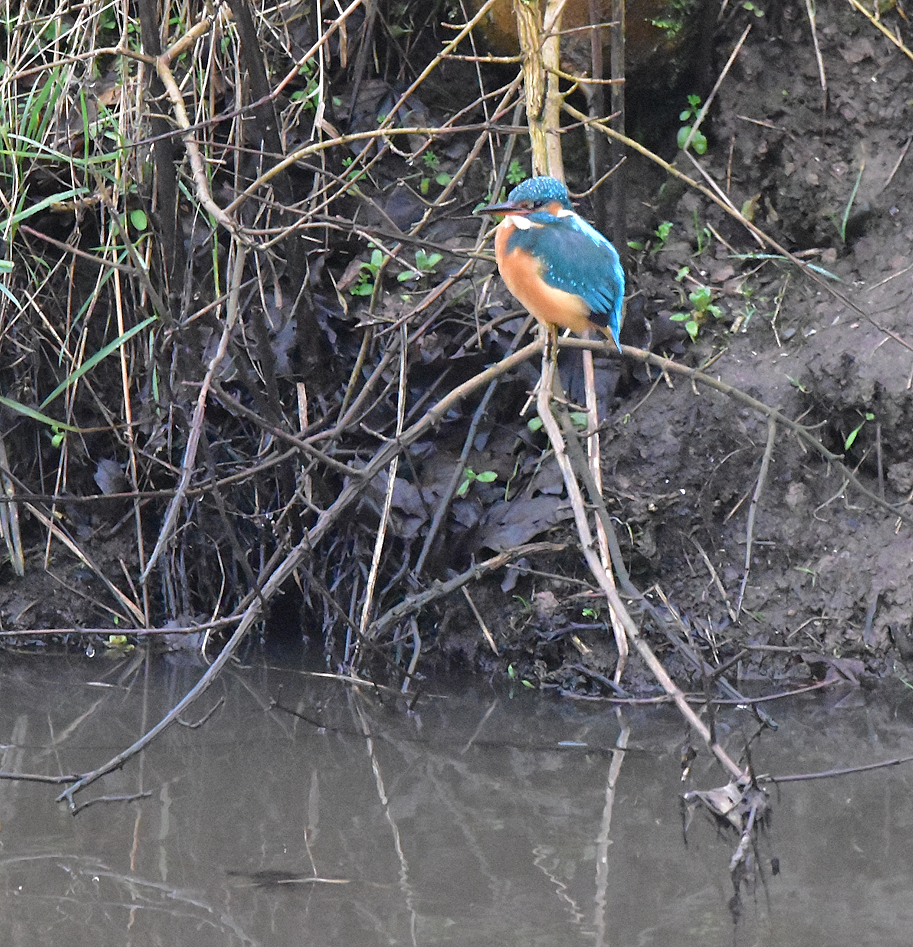
Kingfishers were also seen but neither were in a photographable location. A shout went up in the hide - someone had spotted the
Barn Owl again, only this time there were two. One of which was a little closer than the earlier one.
It even thought about trying an impression of a Cattle Egret at one point; either that or its eyes were much much bigger than its belly!
But soon it was back to business as usual quartering the fileds for voles.
We hoped one of them would land on a nearby post but neither did, rather they both took themselves further and further away from us across through paddocks. So we took our leave of them and headed back towards the feeders. On the way we called in at the little hide and watched this
Little Egret doing its foot-stirring thingy
With little to show for its efforts it decided to swith opools and went for an overland wander rather than take to the wing.
Having a little shimmy on the way.
A brief stop at the Discovery Hide gave us a very close fishing
Cormorant. We didn't see it catch any fish but they do swallow small prey items underwater.
For some reason we gave the feeders a miss and continued round to the UU hide where we were kindly shown a
Kingfisher. Was this a third one or one of the two we'd seen earlier?
Along the dyke from the
Kingfisher and on the opposite side was this bedraggled male
Kestrel sat atop his lookout post.
His eyesight must be phenomenal as after a few minutes he swooped down 30 odd yards to nail a worm or other small invertebtrate in the grass
Time for the feeders! The
Reed Buntings have found they can collect seeds fallen from the bird table without having to take part in the hustle and bustle that goes on above them.
A female
Chaffinch has learnt the trick too.
There was a rattle of camera shutters when a male
Great Spotted Woodpecker turned up.
A woodpecker eating
Millet - what's that all about? Then a female arrived,
There was a second female too, this second one was a leucistic individual with very pale brown wings, somehow we didn't get a pic of her. We did get the obligatory pic of the pools resident Moorhen though, it's just got to be done; no ifs, buts or maybes.
In the distance we could hear that it was getting near time for the mayhem to begin...otherwise known as the afternoon swan feed. Off we went to the Discovery Hide to get our ring-side seats.
While the Ranger got herself organised we fired off some point blank shots at the usual suspects.
You can't beat a bit of vermiculation and those found on
Pintails and
Pochards are exquisite.
The Ranger went out with her barrow of grain, the decibels rose, a flurry of scattering wings soon returned when she threw the first couple of scoops of grain.
After the third scoopful was launch the scrummage began in earnest.
Birds arrived from further out on the lake pitching in wherever there was a few square inches to get they feet onto - it was bedlam, a seething mass of forward moving feathers...unstoppable in their quest for the free grub.
In the thick of the ducks was a wader, a Black Tailed Godwit with a horrendous looking injury.
Look closely at the foot on the damaged leg, it's horriblby swollen and has lost the claws - yuk!
Then we spotted what we'd been hoping for, a Ruff had joined the party #110
It was now just about time to leave but we couldn't go without a couple more
Pintail shots - what a bonny duck.
We were now at two thirds of our February target for the Challenge and only one day into the second week, things were going well but could they/would they continue???
Where to next? There's little change in the local bird world at this time of year, would the water levels in our favourite wetlands remain (too) high, could we get those next five species?
In the meantime let us know who's doing the scrummaging in your outback.


 The feeders were unusually quiet but as it was raining we stuck it out just in case something of note should show up. Eventually the rain eased and that was our cue to head round to the opposite end of the reserve...the thinking being if we've had at least 60 hours of miserable weather the Barn Owls will be hungry and needing to hunt, the break in the weather is going to bring them out. the hunch was right and we didn't have long to wait. #108 - over half way to our target of 15 for the month now.