Sunday, 17 January 2016

Oh to be in Ireland now the winter's here

The Safari wouldn't have minded a trip over the water to have a gawp at the Glaucous Winged Gull and the Vega Gull that turned up recently, not to mention the five Ring Billed Gulls at the famous Nimmo's Pier in Galway - saw one there on our only visit many years ago to see the Double Crested Cormorant.
This morning saw last night's snow still lying on the ground but the local Magpies were busy building up their new nest some of it being scavenged from last year's nest.
After our Sunday morning traditional big bacon butty breakfast it was time to have a chilly wander round the nature reserve. One the way we counted three big snowmen and saw sledging fun being had on the slopes of the golf course near the hospital. The park lake was nearly all frozen over so we hoped there's be plenty of ice on the reserve too.
We started at the FBC hide where the water was far from frozen, the approach to the hide gave us our first Song Thrush here (MMLNR #56). There were a decent number of water ducks and a few gulls to look at. Always hopeful of a good gull we set about checking them over. Eventually something a bit different dropped in, a Herring Gull with a bit too much white in its wingtip and worthy of closer inspection.
After a while it was disturbed by another gull landing too close and we were able to get a bit of an open wing shot. Looks like a Scandinavian bird but not from too far north. Long white P10 tip big mirrors on P9 no mark on P5 and small 'pearls' on P6, 7 and 8. The mantle wasn't appreciably darker than the normal 'argenteus' Herring Gulls.
A Great Crested Grebe (MMLNR #56) was on the water with the other waterfowl. Time to move on and see what else we could find. The only frozen water was in the corner where there were a few Black Headed Gulls roosting.
We're sure you'll find the odd one out
From there we crossed the bridge and saw a Buzzard (MMLNR #59) sat in the Hawthorn bushes at the end of the dyke. The fields still had a smattering of snow and the large puddle/flood was frozen solid, the only things moving were a few Carrion Crows and a couple of Jackdaws. In the far distance there was a decent flock of gulls but too far away to do any justice too.
Continuing our stroll we left the reserve passing calling Water Rail and Cetti's Warbler on the way, but we still can't find a Reed Bunting.
We can't go to the reserve and not have a look at the Long Eared Owls, today we could only find one of them. While we were watching it doing nothing as usual we were able to be able to show it through the scope a couple of families out enjoying the wintery conditions.
Phonescoped
Retracing our steps back into the reserve (the owl is in the reserve but you have to view it from outside over the fence) we passed the reedbed on our left to the sound of a calling Chiffchaff (93, MMLNR #60). We couldn't see any more owls from this side either.
Looking up the main north path. The owls are slightly behind and to the right of this pic
A heavy and cold shower came down so we moved on quickly to the Feeding Station. At the feeders it was busy due to the cold weather, the two Coal Tits were top of the list here, still no Reed Bunting for us though.
Once the rain had stopped we continued our circuit looking over the mere from the 'Bramble Patch' - needs a bench here (hint hint!) but almost all the ducks and gulls were down the far end so we didn't stay long and went back to the Bird Club hide where MJ and EP were already counting the waterfowl.
There were at least 400 Teal, 50 Wigeon, 75 Mallards, 33 Gadwall, 50 something Tufted Ducks, 4 male Pochards and a female and a pair of Goldeneyes, Coot numbers were up around 100 possibly swelled by birds forced off the frozen park lake. We stayed a while enjoying the spectable.
As we left we saw a Blackthorn coming into unseasonal flower.
Another excellent mooch round the reserve and a few more species for our Patchwork Challenge.
Where to next? Back to Patch 2 tomorrow - weather permitting.
In the meantime let us know who's being unseasonal in your outback


Friday, 15 January 2016

Short but sweet

The Safari has had a little bit of luck on very short cold windy visits to the sea wall and a fluky pre-dawn Wren (P2 #27) by the work's car park. Over the wall yesterday we had a couple of Pintail  (P2 #28) go south and this morning a nice male Eider (92, P2 #29) over the water's edge. Not much else apart from lots of gulls and Oystercatchers feeding on the shellfish wreck and no chance of any pics.
Where to next? It's the weekend so we'll be out n about wildlifing somewhere and if there's a sunset the Starling murmuration has got to be in with a shout.
In the meantime let us know who's got wrecked in your outback.

Thursday, 14 January 2016

And off we go again

The Safari heard from Monika this morning asking what our final tally of birds was for last year. She'd not done quite as well as hoped but then again spent lots of time out on the water in her new boat getting absolutely awesome sightings and photos of her beloved Orcas - we'd trade several bird species from our list for a glimpse of an Orca off Patch 2 any day of the week!
So the competition sets off again with us slightly in the lead but that can all change at the drop of a hat with a trip here or a trip there depending on which one of us is tripping.
If anyone else would like to join in and has an expectation of getting about 200 species for the year mostly found in your local county but with a few trips further afield and a twitch or two. Get in touch with either or both of us if you fancy a bash at in. If in the British Isles make sure your regular Patch is registered on Patchwork Challenge and you upload your records to Birdtrack.
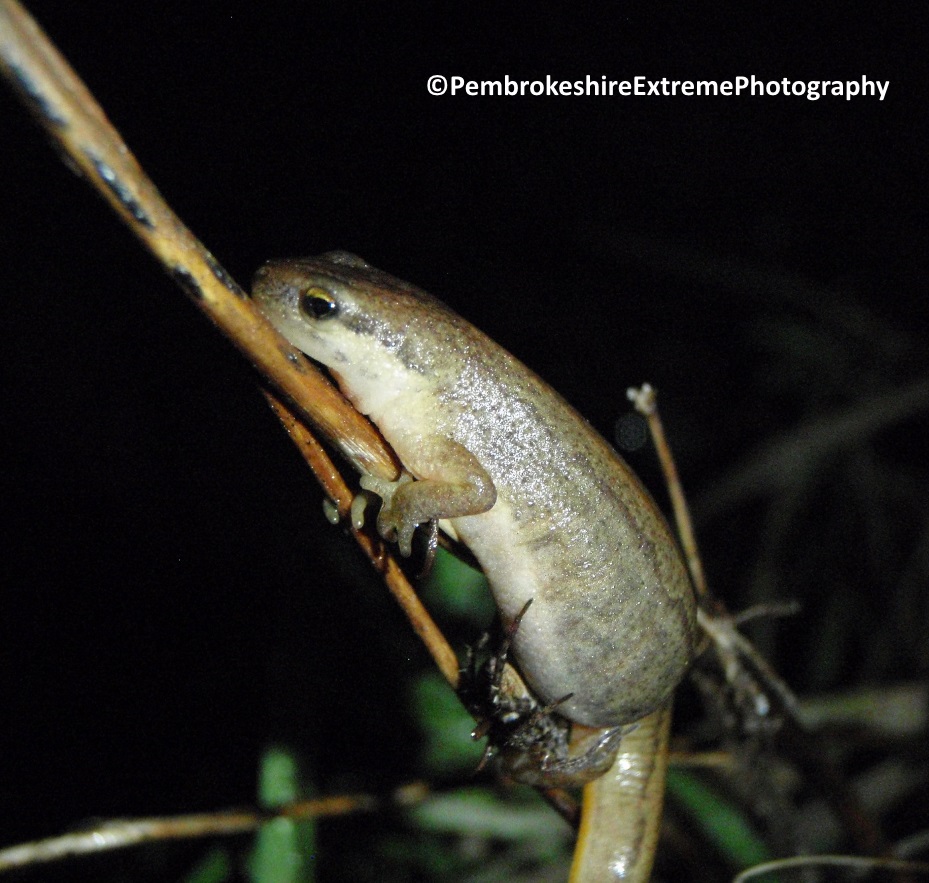
In other news our Extreme Photographer has had interweb problems and was hoping to have been able to send these pics of his New Year's Day newts in his garden - no, you're right newts should really be hibernating by the end of the year.
We had our first school group pond dipping today. Crikey it was cold and the little ones really felt it but they got the job done. Indeed they recorded the temperature of the water at 3.3C and the air 5.2C we wrongly assumed the water would have been warmer than the air - Rule 1 Never assume anything unless told to in a maths or physics exam!
Their nets brought up some surprises too, they couldn't avoid the 3-spined Sticklebacks but they also pulled out Front and Back Swimming Water Boatmen and a Pea Shell, not seen one of those come out for a long time! Our fingers, being wet, were too cold to get the phonecam out...brrrrrrr.
Where to next? Hopefully we'll be able to brave the weather on Patch 2 tomorrow.
In the meantime who's stayed up past their bedtime in your outback.


Tuesday, 12 January 2016

Just like buses

The Safari was in a quandary this morning without LCV - what to do? Should we go back to work and recoup a day's leave in case we need it later or should we take it and go wildlifing anyway? Well it wasn't much of a decision to make. A quick look a few weather websites had us choosing north over south as that would give us the driest day and perhaps a slightly higher chance of some sunshine.
It took almost as long to do the four and a half miles to the motorway through the rush hour traffic as it did to do the 40 miles on the motorway to our destination - what a traffic nightmare and good early morning boiding time wasted!
We parked up ate a butty, picked up the optics and wandered off down the causeway. Out in the sticks it was a very peaceful morning only bird calls and cattle lowing broke the silence - beautiful. We'd not gone more than a few paces when we heard a Nuthatch (77) calling from the woods behind us, a little further a Cetti's Warbler fired up as explosively as they do but we weren't hearing much in the way of ducks from the lake the other side of the reedbed to our left but we did hear  a Great Spotted Woodpecker drumming from the same direction as the Nuthatch, the first time we've heard that this year.
Arriving at the hide we saw we couldn't go round to the next hide without wellies as the water level was well over the causeway down there and we weren't shod in our wellies just our not so very waterproof trainers.
The view from the hide was nothing we'd seen the like of before, the island that many birds usually loaf on was gone! A Mute Swan and a couple of wet footed Lapwings (78) made the most of the shallow water.
Other than a small flock of Tufted Ducks and a few Coot it was deadly quiet, not even the Otters were putting on a performance today.
Unable to any further and nothing happening we retraced our steps to the road and turned towards the visitor centre passing the not quite finished new boardwalk on the way - that should make life a lot easier by a) not having to walk on the road at all and b) you'll be in the habitat so more chance of seeing/hearing something interesting.
At the entrance we met a local birder who was having a good look at the feeders and spotted a stunning male Bullfinch (79) perched nearby, sadly it didn't stop long and was the only one of its kind we saw all day. Membership cards shown we were into the inner sanctum of the reserve, first stop the very lively feeding station. All the usual suspects were here except Bullfinch and Greenfinch. After a couple of Coal Tit false alarms and double checks to make sure a Marsh Tit (80) did come in for a sunflower seed. As is often the case around feeders there were several lively and aggressive Robins and skulking around keeping well clear of the argumentative Robins were a couple of Dunnocks. We weren't prepared for what happened next, one of the Dunnocks flew from the ground to the lower branches of a nearby shrub and then on to the feeder - well know us down with a Dunnock feather we weren't expecting that, what's going on with this species???
A Jay (81) tazzed through putting the smaller birds to flight so we took our leave and made for the nearest hide.
Again the water level was very high and most of the ducks were sat in the edge of the fringing reeds, Mallard, Teal, Gadwall and some Tufted Ducks on the open water were seen as well as a Water rail being heard. Away in the distance large numbers of Lapwings, Mallards and Teal kept flushing, keeping a close eye on them soon revealed a female type Marsh Harrier (82) cruising inches over the top of the reeds. After a while it settled on the top of a bush but far to distant for a pic. Above it a kettle of raptors appeared almost spontaneously pout of the woods on the hillside opposite, in our field of view we had four Buzzards (83), a Raven (84) and a Sparrowhawk (85) circling together - three species all year birds...bonkers!
Time to move on again but again we couldn't get to the next two hides due to inappropriate footwear, why didn't we put our wellies on they were there in the boot of the car. A look along the path as far as we could get gave us a small flock of Long Tailed Tits, several more Robins, Chaffinches and Blue Tits and another Jay and Marsh Tit.
By now we'd just about exhausted the possibilities for our footwear and also realised the tide was rising down the road so off we went passing fields full of Lapwings, Curlews and Grey Lag Geese all in single species flocks, whatever the conditions were in each field they only suited one of those three species.
Ignoring the first hide we went straight to the second and found a few birders unsure of the identity of three small waders tucked in among the Lapwings on a distant island in the pool, Dunlin (86) we told them and they returned the favour by pointing out a Greenshank (87) partially hidden in a group of Redshanks. They also told us that only a few minutes prior their arrival another birder had seen the Kingfisher so we were hopeful it would put in another appearance before too long.
On the other pool there were lots, and we mean lots, of Teal, Wigeon, Lapwings and a good number of Shovelers roosting up and a small number of Little Egrets scattered across the marsh. Another flock of Dunlin flew round but found it not to their liking and didn't settle.
Lapwing - phonescoped
Sleeping Shovelers - normal camera
Despite the huge duck numbers we only found five Pintails (88) sleeping together on one of the muddy islands. From time to time the ducks would be woken from their slumbers by something usually unseen, once we thought the culprit was a couple of low flying Cormorants, once a marauding Great Black Backed Gull although this and a another did several more circuits of the pool with causing any consternation, another time it was these two monsters.
 And yet another flush was caused by this female Red Breasted Merganser (89) coming in to land.
The hoped for Kingfisher never did show but a Little Egret came close to the hide giving us our best photo opportunity of this recent(ish) arrival we've had - with the numbers here now we can't believe we saw a couple of Pectoral Sandpipers here well before the then almost unthinkable arrival of Little Egrets.
It half walked half fluttered down the bank and began to use those huge yellow feet to stir up the mud in the same way gulls do on grassy fields and roadside verges.
The ploy worked too but we couldn't tell what species of fish it was as it disappeared all to quickly.
After a couple of beakfuls it hopped back up the bank and then must have seen or heard us move as it stared straight at us waving its head like a snake to get a proper look at what was causing the disturbance.
Approaching weather made us call it a day and head back to the car passing a Reed Bunting (90) on the way and then something caught our eye in the thick vegetation on the side of the railway embankment, stopping to check another movement looked very much like a pair (or simply two) Cetti's Warblers but they vanished before we could confirm the glimpse. If they were Cetti's Warblers we've never seen/heard one in this part of the reserve before.
The rain arrived but was only light when we got half way down the motorway and as we were making good progress we thought we ought to pop in to the nature reserve for half an hour before hitting Base Camp. We did but didn't stay long, it was very windy, much windier than up north, the rain was heavier and it was cold. A quick look from the hide gave us a good number of Coots and some Grey Lag Geese and Cormorants but not a lot else so we only stopped a few minutes. Once back on the main road we recalled that someone had reported a Peregrine sitting on the ledge outside their office building adjacent to the nature reserve, sure enough once through the traffic lights we cast our eyes up and right and there was the Peregrine (91, MMLNR #56) clinging to a very narrow ledge out of the wind, happy days!
We mightn't have had the enjoyable company of LCV but we did have a good day out after all.
Where to next? All good things come to an end and so it's back to work tomorrow. All being well Patch 2 should be back in play, what will we find?
In the meantime let us know if those Hedge Tits or Dunfinches whatever they're called have learned to ransack the feeders in your outback.

Monday, 11 January 2016

Disaster strikes

The Safari was all over excited that LCV was driving up to take us out for two days non-stop dawn til dusk birding.
We got up about an hour before he was due to land to have some brekkie and make butties for the forthcoming adventures. Picking up our phone to catch up with the morning's news headlines we noticed we'd missed a call from him, not to worry just letting us know he was setting off, then we saw there were two txts too. Opening the first was a shock - he'd been involved in a collision on the motorway, the car in front had spun and he'd hit the central barrier trying to avoid it...fortunately the next txt said although the car was a write-off he was OK and (thankfully) totally unhurt but wasn't going to be able to make it to ours.
After a  bit of to-ing and fro-ing on the phone we eventually got out about two hours after the planned time. Right by the car a small fungus has popped up through the mulch on the flower bed.
We decided to go south and see if the Scaup and Shag that had been reported yesterday were still on the marine lake.
It didn't take long to find a Little Grebe (68) but other than plenty of Mallards and Canada Geese there didn't appear to be much about. We walked round the seaward side of the lake to see if anything was hidden behind the islands - it wasn't but at the far end of the far island we did see the Shag (69). With nothing else in the large open eastern end of the lake we climbed the bank to look over the sea wall, the sun was low and right in our face making the glare off the water almost impossible to contend with - all we could see where the silhouettes of several gulls. The tide was well in and had completely covered the mud flats so there was no chance of waders either.
Looking back at the lake we found five male Pochards which will be recorded on this winter's Pochard Survey. It's a shame, and perhaps a damning indictment of man's activities that such a once  'common' duck should now need a continent-wide survey to assess the nature of its decline. There was a Great Crested Grebe and several Tufted Duck but no sign of any Scaup.
FB arrived and we had a chat seeing a Little Egret (70) fly by as we talked.
Tarmac works were going on by the cafe and the footpath was out of action so we had to retrace our steps, seeing the now sleeping Pochards once again. A Pied Wagtail (71) flew over our head while we were taking pics of the Pochards.
Both pics phonescoped at range
We had a look at the shaded side of the islands but finding no Scaup we called it a day there and wandered back to the car wondering where to go next. A call from FB alerted us to a ringtail Hen Harrier a mile down the road where he had mooched off to so loading the gear into the boot we headed in his direction.
It was the first time we'd been to this location and getting out of the car it seemed quite alien to be dressed in our birding scruffs parked up next to exotic looking million quid plus houses. There's not many miles between the almost destitute and the filthy rich round these parts.
Walking round the corner to the footpath where FB was stood we instantly added Curlew (72) (another species really starting to struggle in the face of our onslaught on the natural world - who'd want to live on a planet without the incredibly evocative sounds of Curlews?) and Skylark (73) to our notebook.
We set our scope up and asked FB for directions to the Hen Harrier only to discover we'd set the scope up only fractionally off it. It was sat on a fence post or old log washed up by a high tide and spent some time looking around and preening before setting off on a hunting mission - spectacular to watch as it half floated half wafted over the increasingly wet marsh. Brilliant to get Hen Harrier (74) so early in the year but a shame there aren't more of the here - there's still a few days to sign this government petition to get driven grouse shooting banned, illegal persecution by them is main cause of the lack Hen Harriers on our estuarine marshes in the winter. Lets get the debate raised and the issue of continued criminality aired for all to hear, especially those who've never even heard of a Hen Harrier never mind seen one, at least they should be given the chance to see one fairly easily should they so wish but at the moment others are denying the thrill of seeing these superb birds.
As we watched it cruise effortlessly over the marsh it flew over a flock of Whooper Swans (75), unseen in a creek til they lifted their heads in alarm as it went over them. Other birders had joined us by now and MJ called out he'd seen and lost a Merlin. Luckily we refound it and were able to get the others on to it just as it flushed a second out of the grass - any day with two Merlins (76) and a Hen Harrier is a good day - we've still not seen a Sparrowhawk this year!
The tide wasn't quite high enough to push any pipits right to the edge of the marsh as it had done yesterday bringing a Water Pipit into view, once the tide turned and the pipits were still well out of range the gang started to drift away and we headed up to Chat Alley.
The sea was flat calm today in total contrast to yesterday's raging tempest which is probably what pushed the tide high enough in the estuary to flush the pipits off the marsh. There was a roost on the go-kart track wall but it was at the furthest point away from us. impossible to see anything other than a few of the Redshanks' heads unless we could commandeer a boat to view the roost from the seaward side, so once again no Purple Sandpiper for us.
From there we went back to Base Camp for a bite to eat and while there it went as dark as the obs of hell and the heavens opened. By the time the rain had eased it was too late to go back out.
After a very worrying start we eventually had a half decent day out birding although it would have been so much better had LCV been with us.
Where to next? With a second day off planned we could end up going here and/or there tomorrow depending on what the weatther has got in store for us.
In the meantime let us know who's spinning around in your outback.

Sunday, 10 January 2016

A new species of bird! But is it a Hedge Tit, Dunfinch or summat else?

The Safari was gazing out of a rain sodden kitchen window yesterday while making Wifey's breakfast. The feeders were lively and we quickly added several species to our garden year list; Great Tit (Garden #10), Dunnock (Garden #11), Greenfinch (65, Garden 13), Long Tailed Tit (Garden #14) and fly over Feral Pigeons (Garden #15). What a difference being at home when it's light makes!
While wrangling with Wifey's marmitey crumpets we saw a strange thing clinging onto the wire sunflower feeder which required a dash to the sitting room for the camera, fortunately the crumpets hadn't burnt and the bird was still there.
Not the best of pics hastily snapped through a very wet window but what is it? Maybe a Hedge Tit or perhaps a Dunfinch, even Hedge Bunting has been suggested. 
Has anyone else observed this behaviour? It's odd in that only inches away there is a standard feeder with the ports and perches filled with dried mealworms that it might be expected to favour over seeds but that one is being regularly ravaged by a Woodpigeon - shouldn't they be eating seeds rather than insects? Is this change in behaviour 'learning', the starts of 'evolution' or just fluke?
Our main reason for looking out of the window was to do the weekly Goldfinch survey for the BTO, once again the appointed random hour came round and as usual not a single Goldfinch was seen all morning.
After breakfast Wifey asked to be dropped in town to attack the January sales and we were allowed a good couple of hours at the nature reserve while she rummaged out the best bargains, so arrangements made off we went meeting up with CR again who was already snapping away at the ducks at Ice Station Zebra (sorry - Dragonfly Hide). We had a look at the Feeding Station where we met the youngest birding expert we've ever come across - young JC; how many six year olds do you know who know what a Nightjar is? But he's never been able to spot any of the reserve's famous Long Eared Owls, time to change that! 
We'd heard that one was 'showing well' in a former favoured location so that one was the one to show young J. On the walk round we saw a Greenfinch (MMLNR #53) sat high in the topmost twigs of a Poplar tree but as is to be expected in the middle of the day there wasn't much else moving around on view. We soon reached the owl's tree and putting our bins up found it in about 10 seconds flat but it wasn't showing as well as we'd hoped it was quite far back in the tree and obscured by twigs and dead vegetation even getting the two adults on to it proved tricky with CR failing all together.
Little JC couldn't see it either so we knelt down in the mud to get to his height, sadly it was even more obscured from only three feet off the ground. Even if we'd had the scope for him to look through we don't think he'd have been able to see the owl, even as low as the tripod would go it may well have been too tall for him; that's the trouble with six year olds - they're just too short!. 
All was not lost as there are some others to have a look at, off we went to find them and hopefully they'd be easier for JC to see. 
At the place to look from we found a Goldcrest flitting around close to the path and soon found another quite well hidden Long Eared Owl, once again JC proved to be too short to be able to see it - it's hard when your not as tall as the fence. This time CR was able to get a few photo's off and show them to young JC but it's not the same as seeing the bird in the flesh (or feather) for yourself.
By chance we were stood in exactly the right place to see another extremely well hidden deep in the bush - sadly there was no way JC was going to be able to see this one but somehow we managed to get a pic of it and remarkably despite shooting through hundreds of twigs it's almost in focus!
Retracing our steps we returned to the reserve and continued on the full circuit passing a large flock of mixed corvids in the fields. Stopping to admire them we saw another flock of small birds with them, about a dozen or so Linnets (66, MMLNR #54). Listening out JC heard (and identified!) Cetti's Warblers and a Water Rail - no way we could have done that when we were six!!! We were still struggling to ID House Sparrows from Starlings taking Sunday lunch scraps off the lawn at that age. We pointed out two Snipe that had risen from the cover of the reedbed and were flying around over the water to him.
We left JC and his dad enjoying the plastic fantastic Bar Headed Goose that has appeared in the last couple of days and aimed back towards the car to await Wifey's call to say she was ready to be collected from town with her ill-gotten gains.
Back at ICZ we hoped to get some pics of the large number of Tufted Ducks that are present but they must have got wind of our intentions as they'd all sailed out of range or out of sight. The light was poor by now anyway. There were plenty of other species to enjoy but again out of range of our lens, Wigeon, Goldeneye, Teal, Wigeon and Mallard making up the bulk of the numbers.
Time was running out, CR left to get his chores done and we trotted quickly off to the car stopping at the wetland to see if we could find the Stonechat, we'd not seen it on the walk in but not spent too long looking to be fair. Inside info from PE was that he'd seen it not long since so we were quite hopeful. It took a few stops and scans but there it was sat atop a Typha head half way down the 'field', Stonechat (67, MMLNR #55) on the list after a few dips.
This morning we were on breakfast duty again but today there was a big change at the feeders - Goldfinches (Garden #16), four of them! Later, after we'd been down to a very stormy and more or less birdless Chat Alley for an hour, there were nine of the little rotters on the feeders - do they know when survey day is and deliberately stay away? No sign of the Dunfinch/Hedge Tit today. Well you can't have everything all the time can you.
Where to next? Exciting times tomorrow, LCV is coming to visit and take us out for two whole days dawn til dusk birding/twitching - he's a good lad.
In the meantime let us know who's behaving like they shouldn't be in your outback.

Friday, 8 January 2016

Nearly a murmuration

The Safari wasn't able to get out early doors with the horrid weather this morning but at lunchtime were able to have a few minutes but there was very little out there on a very choppy sea.
Going home time drew near and looking out of the office window we saw that a sunset was developing so we gave CR a txt to see if he fancied a go at the Starlings at the pier. He did and a little later we were camered up waiting on the chilly prom for the Starlings to start arriving.
The sunset was lining up nicely but unfortunately it failed to get any better than this and as the Starlings began to appear so did low cloud on the horizon so any murmuration would have to be high to be against the pale sky to be able to see it well.


It wasn't long before flocks began to arrive, some only about 50 strong others with a couple of thousand or more members. This lot were part of one of the larger flocks.
Most didn't go to the pier but landed on the beach down at the water's edge - what do they do down there, some were wading like Dunlin or Sanderlings but they weren't feeding. Is it some kind of terrestrial murmuration although they don't seem to move round much. It's difficult to tell what's happening cos if you get close enough to watch you'll flush them so totally defeating the object. 
It wasn't just the Starlings going to roost, there were loads of gulls passing overhead too beneath an impressive glowing cloud.
The dropping light was the cue for the Starlings to start leaving the beach but rather than one huge impressive mass it was like they left in the flocks on the order they arrived in.
The murmuration started but didn't amount to much, plenty of birds but they didn't really start bunching up and whirling around.
It didn't get spectacular but never-the-less it was great to be out to witness the arrivals and the enigma on the beach, which we reckoned judging by our guestimates of the arriving flocks was in the region of 20 - 25000!
Where to next? maybe a guided walk to lead tomorrow round the nature reserve but there's some dissent in the ranks about a trip to the far south-side instead - watch this space.
In the meantime let us know who's doing the unexpected in your outback.