Monday, 20 June 2016

What's a blue tit?

The Safari was able to get the moth trap out the other night. Again it was only with the 'little' lamp and brought a total of just eight species and 26 individuals of those 16 were Heart & Darts! But there were a couple of new ones for the garden this year.
Chrysoteuchia culmella
Small Magpie
Clouded Bordered Brindle - nearly escaped!
Common Marbled Carpet
One of the Heart & Darts was almost melanistic, one of the darkest we've ever seen and another was extremely well marked
The well marked Heart & Dart
Dark Arches
Just after lunchtime we headed for the coast to look for the Bottlenose Dolphins again but the rain started half way there and got heavier and heavier so we aborted and returned to Base Camp to watch the feeders for the rest of the afternoon.
This morning started cool, cloudy and rather windy but at least it was dry. From the bathroom we could see a small dark blob on the water tower up the hill we've not seen for a long time, a check with the bins and hey presto - it's back after a very long absence, so long it must be nearly or even over a year since we last saw it up there.
Peregrine in the early morning gloom
We gave our-self two targets a particular species and an individual bird. We wanted to get a better pic, or pics, of the Greenfinch's ring. It came in briefly while we were occupied doing something away from the camera in the kitchen and we only managed a few shots that didn't capture the ring, the camera was only inches away set up on the kitchen counter looking through the window. Later it came back, this time once the sun had come out but again we were doing something else and totally missed it this time.  
It was very lively at the feeders all day, the other family of Greenfinches coming and going regularly.
This is how we want the ringed one to pose for us
A family of recently fledged Great Tits was also doing a circuit although we only saw the adults feeding the youngsters early in the morning, by the afternoon the youngsters were far more independent but no less noisy - we could hear them coming from a couple of gardens away.
Our regular male House Sparrow who's not been so regular of late also decided to pay us a visit, very nice to see him back. It would be even nicer if he brought friends and family with him, we've plenty of food for them.
As ever the Blackbirds jostled for position around the suet feeder, we've got three males, at least one female and today discovered there are two well grown juveniles.
The species we really wanted to get a  pic of was the Blue Tit. They can be tricky just darting from cover on to the feeder pulling out a seed and darting back into cover to eat it in relative safety all in the blink of an eye - they don't tend to hang around for long!
We wanted to get a pic to show young O who lives down our street who doesn't know what they are. How many thousands of other kids are out there that can't put a name to a bird in the top five most common species in the country and a regular visitor to almost every garden with a tree or a shrub in it. How can we hope to protect Hen Harriers if the general public has no idea what a Blue Tit is? how can the next generation protect their environment if they are so far removed from it they can't identify the commonest species' in their local area. We desperately need better environmental education. But bear in mind 'they' don't want you to know too much about your environment because knowledge is a dangerous thing to them, if lots of people have ecological and environmental knowledge it may well prevent 'them' making money at the expense of the environment so best not have the plebs too informed. So really it's up to us that do know and do care to spread the word as best and as often as we can to ensure todays' nine year olds (and younger) become competent naturalists well before they're 19! All youngsters have an inherent interest in the natural world we mustn't let it get stifled as they get into school. OK so we don't expect them to be able to identify the moths by the time they leave primary school but they should be able to identify the birds and many more besides those few too long before they come to leave Yr 6. Go on get out there and inspire some kids!
Where to next? Family stuff tomorrow but we may be able to get a visit or two on route.
In the meantime let us know who's not showing their legs in your outback.


Saturday, 18 June 2016

Great way to christen the new scope

The Safari was up and at em early this morning to open the moth trap. Once again we could only use the 'little' lamp but what would we find within?
Not a great lot was the answer, 13 moths of seven species of which six were Heart & Darts. Pick of the bunch had to be the first Bright Line Brown Eye of the year.
There were only three micro-moths today, one of which was this very tatty Brown House Moth which despite their name do live outside too.
 The sun began to peak over next door's roof illuminating this prickly Herb Bennet seed head.
Close by we spotted a female Blue Tailed Damselfly basking in the first rays of morning sunshine to reach the pond edge.
The sun also brought the males out.
We carefully tried to get a bit closer and flushed it, or did we? We were sure we'd not moved in too close yet and had been making sure our shadow was nowhere near it but off it went. It settled again close by after flitting round a couple of other leaves looking like it was sussing them out for angle of inclination to the sun - but we were wrong we hadn't noticed it had picked off a tiny insect...Breakfast!

By now the sun was shining on our patio table so we made a cuppa and had a sit down to catch up on the overnight news.
Somewhere in the blue above us a Curlew (Garden #27) called. A little later from somewhere down the bottom of the garden we heard the first 'autumnal' peeep calls from a Dunnock...surely it can't be autumn already we haven't had the summer solstice yet!
After a hearty breakfast we had another look at the garden before Wifey had to go out. A Greenfinch was at the feeders.
This was the particular Greenfinch we wanted to get some pics of, it's ringed. Unfortunately it wasn't really playing ball not showing its right leg well at all. But we rattled off several volleys of shots as it shuffled round and got almost enough pics to get the code but not quite.
Looks like it might be ?T?0599? not sure how many digits there might be before the T and after the second 9. Any of the local ringers recognise it? We've got four mornings left before going back to work to nail it, providing it's bright enough to warrant getting the big lens out.
Once Wifey was out with Eh-up Muvver we were allowed a short drive. We had a tough choice of where to go but decided on the prom a little to the north of the northern end of Chat Alley where the cliffs are pretty high and there's an more uninterrupted view than Chat Alley.
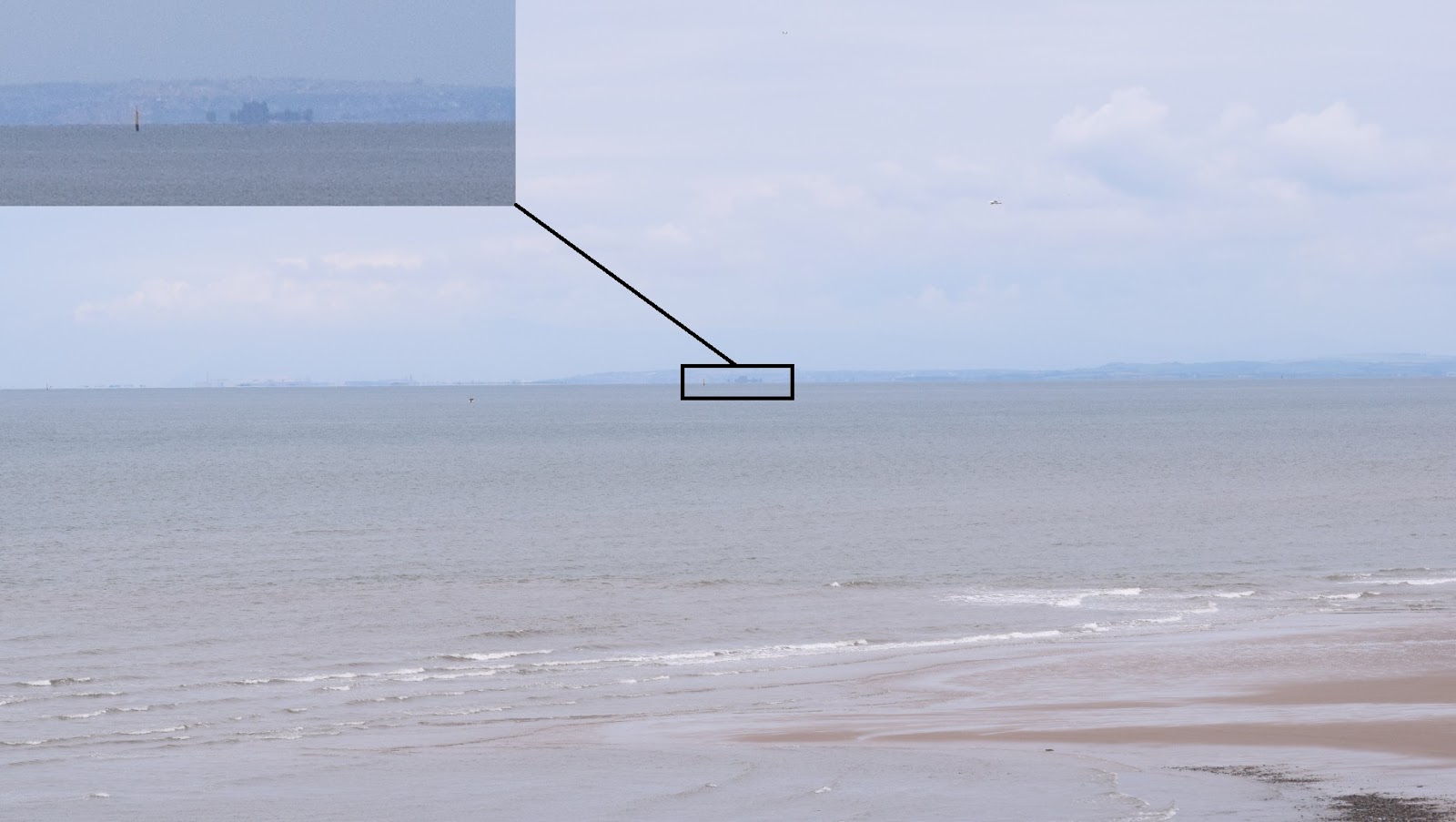
Looking north towards the Lake District
Piel Island and Castle - where Bottlenose Dolphins have been seen earlier this week
We took Wifey's new little scope and sat on a bench enjoying the wide open vista of the seascape. It was warm in the sun but the wind could have a bit of chill on it from time to time, visibility was quite good, not too hazy. We planned to sit there for a couple of hours and in that couple of hours we only saw a couple of Gannets and a couple of Common Scoters other than the local Starlings and gulls. The Starlings were collecting food for their nestlings from the grass verge but every time they came close enough for a pic someone came along and inadvertently flushed them. The gulls were a bit easier, some cruising along the cliff edge only a few yards away.
Great Black Backed Gull
Herring Gull
Herring Gull again
We weren't really looking for birds but concentrated on searching for marine mammals, particularly a Grey Seal or two (or more) and perhaps if we were lucky a Harbour Porpoise. An elderly lady came past and told us 'someone' had seen a whole big "shoal" of dolphins at 10.30, which would have been just about high tide. We hadn't got out for two hours after that so weren't really expecting to see any and with this news our expectations were realised - we'd missed them. After about a couple of hours on the bench a couple who'd recently moved into a flat on the prom came up for a chat asking what they might see from their balcony - other than superb sunsets. We told them the Bottlenose Dolphins were in town for the summer but we'd missed them today. After a good old chinwag they wandered off back towards home and we put our eye back to the scope to see a huge splash and then another in the far distance in the general direction of Walney Island. They hadn't got far so we called them back and let them have a look through the scope but they didn't see anything other than some large white horses on the edge of the tidal rip - had we made a schoolboy error? Off they went after a few more minutes of chattting and once again we put our eye to the scope. They'd gone out of earshot this time when we saw another, slightly nearer splash and two fins, we'd most likely been right first time! There were at least three and perhaps five or more Bottlenose Dolphins out there - well we hadn't really expected that at this stage of the tide! Over the next half hour or more we were able to get another couple and a lad with a broken bike on to them and had some pretty spectacular views even if they were quite a long way off shore. They were deffo feeding, again maybe somewhat unexpected as all the angling boats were coming back in as the tide ebbed quickly - just goes to show dolphins are more cleverer than anglers when it comes to knowing when the fish are going to appear.
To say we're well happy with the result for the little scope's debut venture into the big wide world would be the understatement of the year! Chuffed to little mint-balls!!!
Where to next? More mothing tonight and tomorrow we may well try to get out for the high tide and give it the whole afternoon on the cliffs. Might have to give the big lens an outing and hope the blubbery ones come in close.
In the meantime let us know who's turning up at the wrong time in your outback.


Friday, 17 June 2016

Bits from Base Camp and lots from Pembrokeshire

The Safari has been plagued by heavy thundery rain showers for a couple of days, so much so that it's been too dull to get many pics.
And we've had slight interruptions to wildlife watching due to the footy.
We did get one dry night and were able to put the moth trap out although could only use the 'little' lamp. Only 14 moths of 12 species were in the trap in the morning.
Barred Fruit Tree Tortrix
Diamondback moth
Marbled Beauty
Marbled Orchard Tortrix
A couple of Caddis Flies and a small 'Front Swimming' Water Boatman were also in the trap.
The birds have been fairly quiet, the male House Sparrow being noticeably absent in the back garden now but we;re continuing to hear the cheery cheeps from the street, the ringed male Greenfinch and juvenile Starling keep appearing from time to time but refuse to show their rings to the camera (can you say that!).
Yesterday we had a not so well grown fledgling Great Tit with an adult and later a couple of very young fledgling Blue Tits came into the garden but not onto the feeders. A new juvenile Greenfinch was being fed from the feeder though.
ISO stupid through dirty kitchen window
Luckily for you our Extreme Photographer has been able to get out n about around some of his local sites looking for rare and exotic invertebrates and he's come across some beauts. Don't ask us where he's been as we can neither pronounce nor spell any of the places he visits, apart from St Davids.
Banded Demoiselle
Fly killed by fungus
Ruby Tailed Wasp
Scarce Blue Tailed Damselfly
Small Pearl Bordered Fritillary
Small Red Damselfly
Hypera sp Weevil larva in its case
Zebra Spider with prey
Where to next? We're into our last week off work so will be continuing to keep an eye on the garden and maybe try some driving a little further a field...weather permitting .
In the meantime let us know who's extreme in your outback.


Wednesday, 15 June 2016

There's always summat to moan about

The Safari has been mostly stuck indoors watching the feeders through the kitchen window. Nothing overly exciting but the unringed male Greenfinch put in an appearance after several days AWOL and where have the Jackdaws gone? Not even heard them for a good few days now.
Nice to see a young Blackbird learning the ropes
This is the only time we've seen a Starling on the seed feeder
The Starling above is doubly unique, not only was it on that feeder it was also ringed. A look at SE's blog showed that the Fylde Ringing Group had only ringed two Starlings this year to the end of May, so not a species they come across very often and don't target specifically at this time of year so where had it come from. Further inquiries suggested it may have been ringed well to the south of us in a trainee ringer's garden but that location does seem too  far away from Base Camp we'd expect that it was a much more local bird, but who knows? There's one way to find out, hope it comes back and hope we've got the big lens ready when it does.
We had the big lens on whilst sat outside once the rain had stopped when a big dobber of a Tree Bee flew past us and landed on the Northern Marsh Orchid and stated to crawl about. We fired off a few shots at 600mm; it was about 18ft (6m) away from us.
OK so they show a bee crawling up a flower, nowt special about that. But look closer at the two side shots, in the top one you can see the proboscis going into the flower but what's that yellow stuff. One shot we weren't fast enough on the shutter button to get but saw through the viewfinder was the bee leaning right back as though it was pulling something from the flower - was it the yellow 'stuff' are they stamens? We didn't notice the yellow stuff til we downloaded the pics.
We put the pics on Twitter asking for opinions and got a 'like' but not an answer from a Steven Falk - we wonder if it was this Steven Falk???
A little later another bee was seen visiting flowers in the same tub, this time an Early Bumble Bee with some hitch hikers.
Not the best of pics but you can clearly see the mites on the bee's back
The Foxgloves are ever popular too.
Other than these goings-on not a great lot was happening out there although a bit of warm sunshine brought some Blue Tailed Damselflies out of hiding.
Later on in the afternoon we spotted this story in the local newspaper, the 'Tidy Brigade' strike again in big contrast to this much more positive offering from the other side of the border.
Pic belongs to Cugel Phandaal Law originally posted here and stolen from him by all and sundry - hope he doesn't mind us adding to that list
The comments section in the newspaper article show the fear of the natural world, people have become so used to dominating and controlling vegetation they're now frightened of it and will use any excuse to regain control. Those children shouldn't be pulling faces they should be getting down amongst the grass and looking for beetles, snails and the like, chasing the butterflies that will now abound (at lest the skippers will abound), getting mud on their knees, getting stung by Nettles, scratched by Brambles, accidentally putting their hand on an ant's nest- it won't kill them!!! Don't panic about it it's not the end of the world there's far more things to worry about like why there isn't the money to continue cutting the grass aka destroying the biodiversity. And hey (hay?) exposure to all that grass of a multitude of species might actually help them not contract hay-fever in the first place as some studies are suggesting that it is our under-exposure to a variety of chemicals and compounds that are the cause of so many people having immune deficiency/over-reaction disorders.
Blaming litter is out of order - long grass does not produce litter, lazy litter louts make litter whether there's long grass or not. We reckon it looks good and because the path edges are mown it looks managed and supposed to 'be like that'. The doggy do-do they're whinging about should be less of a problem too, the slugs and snails will eat it overnight provided some charming person hasn't bagged it and chucked the bag; although it does add unwanted nutrients to the eco-system. And anyway you should be keeping your mutt on a lead until it's done its business and  you can see it to tidy away into a bin not letting it run rampant and squat 'unseen'...we can only dream......Don't know about London but the street on our walk to the shops certainly isn't paved with gold, brown yes, gold no!
Trouble is the areas that really do need to get cut and raked/collected like both the rough and smooth fields at Patch 1 and the grassy area in the scrub that is so good for invertebrates unfortunately will never be cut as they aren't seen as a 'tidy' priority when in fact they should be the top priority.
Hopefully these numpties will get used to the long grass in a couple of years and by then there might even be some orchids and other spectacular (and not so spectacular) wildflowers growing in the verges, parks and open spaces too. It all goes to show yet again that we desperately need some serious environmental/ecological education right through the school curriculum system so these elementary mistakes and fears can be done away with once and for all.
Where to next? We put the moth trap out last night so there should be some mothy news for you next time.
In the mean time let us know who's hiding in the long grass in your outback.