
The Safari was supposed to be leading a Moth and Bat Night last night but all day rain and increasing wind meant we were forced to pull the plug on it early evening. We got a txt from our co-host saying she was going to go down to the meeting point at the appointed time just in case anyone hadn't got the cancellation message and turned up to find no-one there. The rain had eased off and although tche wind was still raging we decided to skip the start of yet another series of Strictly Come Drivel take out the bat detector and join her.
It wasn't long before a lady with a torch bearing small boy arrived then another and regular Friend of the NBPT N turned up too saying he'd just seen a bat on his walk down. All was not lost, we'd get half an hour out of the evening at least even if it was way to windy and the ground far to wet to risk the electrics of the moth trap on.
It was too dark to see any birds but the quacking of the Mallards as they settled down for the night on the islands could be heard and above them an indistinct pale blob in the tips of the overhanging trees was likely to have been the resident Heron.
With the small group in tow we walked round to the far side of the lake where the taller trees should provide a bit of shelter from the wind should any bats be out. On the way we heard a couple of quiet hits on the detectors so there were bats flying around, all we needed to do now was catch up with them. And that's exactly what we did near the little bridge. N was in front by a good few yards when even from that distance we all heard his detector blast out a long series of clicks...we were in luck!
A small clearing in the canopy gave all the group reasonable sightings of the bats passing across the paler sky but they were high up at the top of the canopy.
We crossed the bridge to a more open grassy area and tried the bat attracting grass trick which worked a treat. Everyone got superb views of the Pipistrelle Bats. That was the only species we could identify from the bat detectors, the site also has Soprano Pipistrelles, Daubenton's Bats and Brown Long Eared Bats. At one time we had five in view whizzing low over our heads. We saw some behaviour we've not seen before when two bats turned off their echo-location clicks and had a bit of a chase-me chase-me barney over the best place to hunt. We stayed out well over an hour longer than we had planned, the bat action was exceptional but we only saw a small number of micro-moths and just one large macro up in the tree-tops so it was probably just as well we didn't put the trap on.
Not long before we finished we realised the battery compartment cover of our bat detector had dropped off. It was going to hard to find it among the fallen leaves from the White Poplar trees which were about the same size and once fallen, black too. We'd have to go back in daylight for a proper look.
In the morning it was obvious were we'd been stood as the ground was well and truly muddied up. There was also a huge number of blackened White Poplar leaves on the ground and despite quartering the ground in a logical manner we couldn't find our missing piece of plastic. Beneath our feet were hundreds of medium sized Craneflies and dozens of yearling Frogs.
The most memorable aspect of our visit was the enormous number of Speckled Wood butterflies, don't think we've ever seen so many in one place before, they were uncountably everywhere!

 |
| Both phone pics |
After a late breakfast we had a mooch round the garden at Base Camp. Invertebrates were what we were after but there weren't too many about and we had to work hard to find any. We looked in all the sunniest nooks and crannies finding the following.


 |
| Common Carder Bee |
 |
| Marmalade Hoverfly |
 |
| A tiny spider |
 |
| A different tiny spider with a greenfly - the action was very fast, the greenfly was injected, wrapped, removed from the web and taken in to cover in the blink of an eye |
There's still a few plants in flower including some Willowherbs


After a quick lunch we decided to have a wander down the hill to the North Blackpool Pond Trail to see if we could find any butterflies to point the lens at in the pleasantly autumnal sunshine.
The best wildflower area is just about finished now with only a few heads of Red Clover and some Ragwort offering much in the way of nectar. We didn't see any butterflies at all but did disturb a Silver Y moth which tried unsuccessfully to hide from us in the long grass.

The nice stand of Fleabane along the edge of the ditch often attracts butterflies but there were none there today.
Up the steps the remnant ancient hedge was in sunshine but catching the wind making it tricky to get these small metallic bronze flies in focus on the wildly dancing leaves. They are very eye-catching though, well worth a closer look.

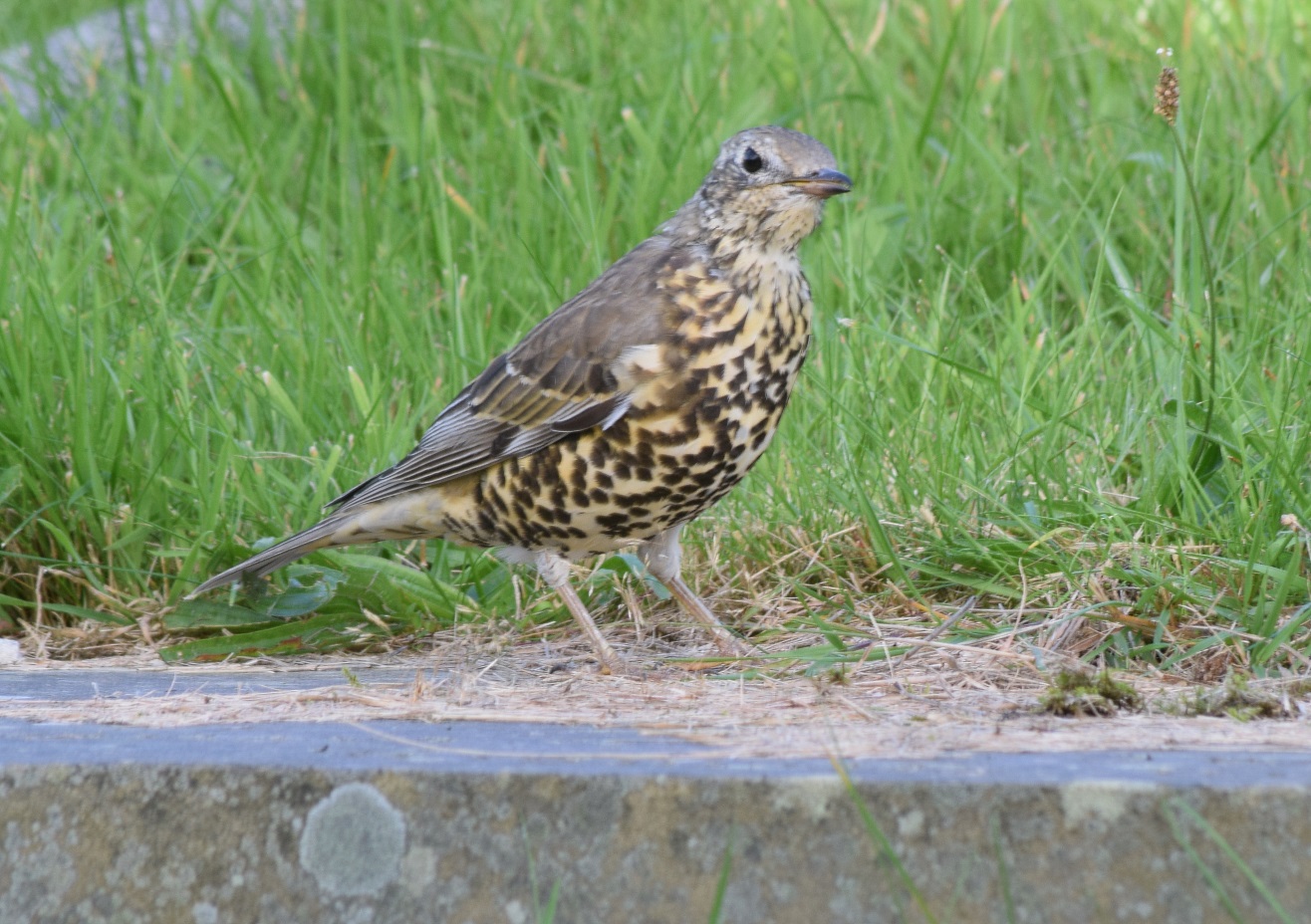
There were people faffing around at the pond we wanted to look at for some dragonflies so we had to give it a miss. We carried on to the cemetery having a look at the corner pond but it was devoid of life. Further on a family of Mistle Thrushes were pulling worms out of the moss at the edges of some of the older stones.

There are two sort of out of sight ponds, but not out of sight enough too many fishermen visit and one of them has found a rather large Swan Mussel and broken it open for bait - what a waste!


The other pond is less visited and normally very clear. It wasn't today there was a horrible algal bloom.

What's going on there??? And then we saw it, or was it them? Bally fishermen have released a/some big Carp in there, we saw at least one stout back break the surface. They must have been rummaging around in the sediment recycling all the nutrients that had been locked away for decades. Not food for any of the other wildlife in this pond and they'll be impossible to get out, sadly the pond is pretty much wrecked by our friendly neighbourhood environmental vandals. Very disappointing and only a brief and distant view of a Brown Hawker - where are all the other dragonflies today, they should have been out in force.
At the furthest point of our walk we didn't take enough notice of a falcon that went high over our head. We're not sure why we dismissed it at first but then turned for another look but by now it was much further away. It did look a bit slight and small for a Peregrine and was too short in the tail and not 'flying right' for a Kestrel - did we just ignore a Hobby???
We wandered back towards the pond we couldn't visit earlier to find it empty now. There were just a few Moorhens on there, count them and there were a few more scattered around the far side out of shot

Turning to leave we saw a movement over the grass below us, a smart looking parasitic wasp - probably a female Ichneumon deliratorius. A fine looking beast.

A few yards further on a bit of a surprise awaited us. We thought we heard a Rook calling, odd because we can't recall ever seeing them here before and they are as rare as rocking horse do-do over Base Camp only a few hundred yards away. And there away across the horse field there were indeed a couple of Rooks.


In the meantime let us know who's dumped what in your outback


