Showing posts with label small white. Show all posts

Sunday, 4 September 2016

Bats and back

The Safari was supposed to be leading a Moth and Bat Night last night but all day rain and increasing wind meant we were forced to pull the plug on it early evening. We got  a txt from our co-host saying she was going to go down to the meeting point at the appointed time just in case anyone hadn't got the cancellation message and turned up to find no-one there. The rain had eased off and although tche wind was still raging we decided to skip the start of yet another series of Strictly Come Drivel take out the bat detector and join her. 
It wasn't long before a lady with a torch bearing small boy arrived then another and regular Friend of the NBPT N turned up too saying he'd just seen a bat on his walk down. All was not lost, we'd get half an hour out of the evening at least even if it was way to windy and the ground far to wet to risk the electrics of the moth trap on.
It was too dark to see any birds but the quacking of the Mallards as they settled down for the night on the islands could be heard and above them an indistinct pale blob in the tips of the overhanging trees was likely to have been the resident Heron.
With the small group in tow we walked round to the far side of the lake where the taller trees should provide a bit of shelter from the wind should any bats be out. On the way we heard a couple of quiet hits on the detectors so there were bats flying around, all we needed to do now was catch up with them. And that's exactly what we did near the little bridge. N was in front by a good few yards when even from that distance we all heard his detector blast out a long series of clicks...we were in luck!
A small clearing in the canopy gave all the group reasonable sightings of the bats passing across the paler sky but they were high up at the top of the canopy.
We crossed the bridge to a more open grassy area and tried the bat attracting grass trick which worked a treat. Everyone got superb views of the Pipistrelle Bats. That was the only species we could identify from the bat detectors, the site also has Soprano Pipistrelles, Daubenton's Bats and Brown Long Eared Bats. At one time we had five in view whizzing low over our heads. We saw some behaviour we've not seen before when two bats turned off their echo-location clicks and had a bit of a chase-me chase-me barney over the best place to hunt. We stayed out well over an hour longer than we had planned, the bat action was exceptional but we only saw a small number of micro-moths and just one large macro up in the tree-tops so it was probably just as well we didn't put the trap on.
Not long before we finished we realised the battery compartment cover of our bat detector had dropped off. It was going to hard to find it among the fallen leaves from the White Poplar trees which were about the same size and once fallen, black too. We'd have to go back in daylight for a proper look.
In the morning it was obvious were we'd been stood as the ground was well and truly muddied up. There was also a huge number of blackened White Poplar leaves on the ground and despite quartering the ground in a logical manner we couldn't find our missing piece of plastic. Beneath our feet were hundreds of medium sized Craneflies and dozens of yearling Frogs
The most memorable aspect of our visit was the enormous number of Speckled Wood butterflies, don't think we've ever seen so many in one place before, they were uncountably everywhere!
Both phone pics
After a late breakfast we had a mooch round the garden at Base Camp. Invertebrates were what we were after but there weren't too many about and we had to work hard to find any. We looked in all the sunniest nooks and crannies finding the following.
Common Carder Bee
Marmalade Hoverfly
A tiny spider
A different tiny spider with a greenfly - the action was very fast, the greenfly was injected, wrapped, removed from the web and taken in to cover in the blink of an eye
There's still a few plants in flower including some Willowherbs
and this lovely florescent Dianthus.
Best of all was this fly of which there were a few buzzing around the sunny side of the back gate.
After a  quick lunch we decided to have a wander down the hill to the North Blackpool Pond Trail to see if we could find any butterflies to point the lens at in the pleasantly autumnal sunshine. 
The best wildflower area is just about finished now with only a few heads of Red Clover and some Ragwort offering much in the way of nectar. We didn't see any butterflies at all but did disturb a Silver Y moth which tried unsuccessfully to hide from us in the long grass.
The nice stand of Fleabane along the edge of the ditch often attracts butterflies but there were none there today.
Up the steps the remnant ancient hedge was in sunshine but catching the wind making it tricky to get these small metallic bronze flies in focus on the wildly dancing leaves. They are very eye-catching though, well worth a closer look.
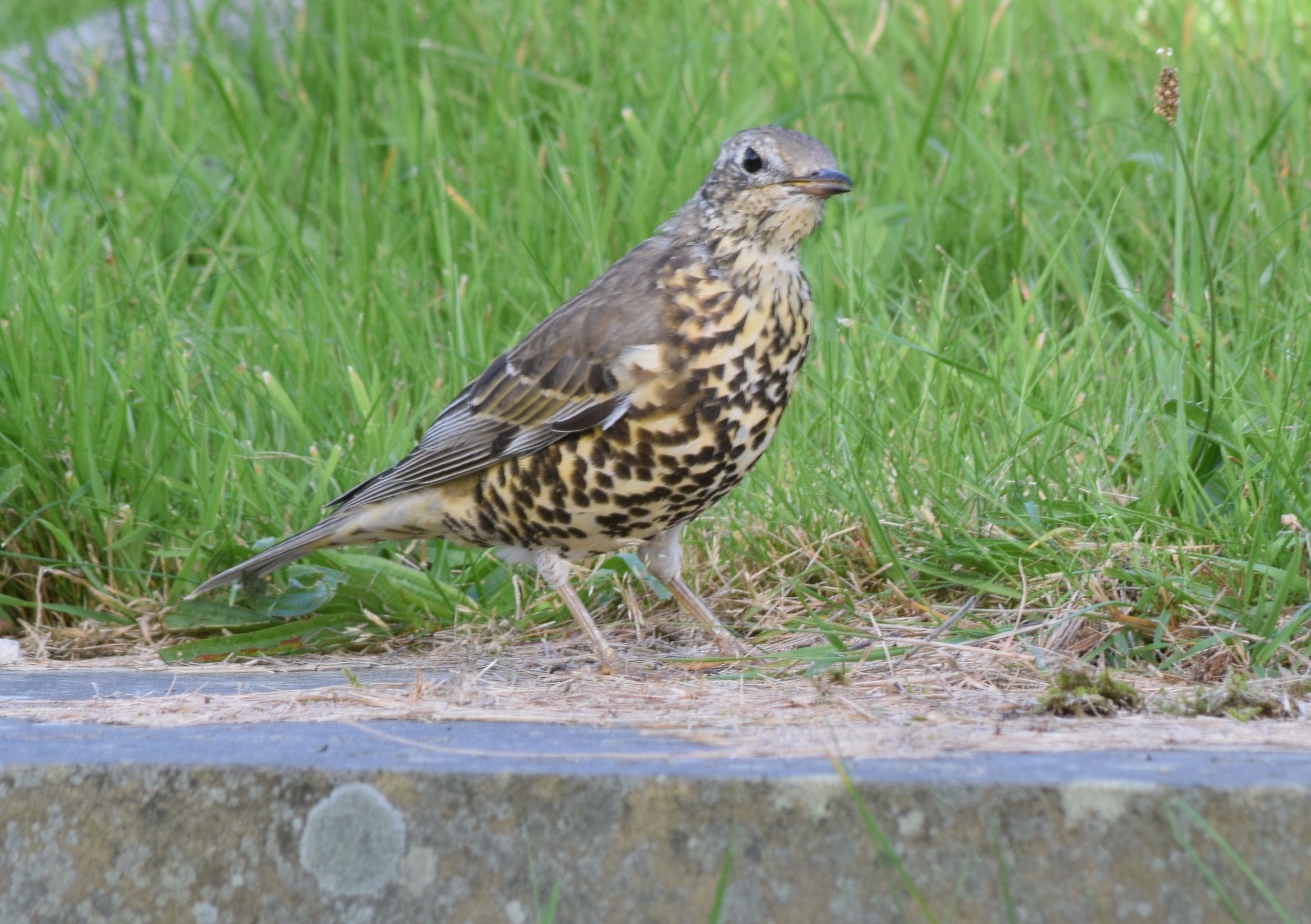
There were people faffing around at the pond we wanted to look at for some dragonflies so we had to give it a miss. We carried on to the cemetery having a look at the corner pond but it was devoid of life. Further on a family of Mistle Thrushes were pulling worms out of the moss at the edges of some of the older stones.
There are two sort of out of sight ponds, but not out of sight enough too many fishermen visit and one of them has found a rather large Swan Mussel and broken it open for bait - what a waste!
The other pond is less visited and normally very clear. It wasn't today there was a horrible algal bloom.
What's going on there??? And then we saw it, or was it them? Bally fishermen have released a/some big Carp in there, we saw at least one stout back break the surface. They must have been rummaging around in the sediment recycling all the nutrients that had been locked away for decades. Not food for any of the other wildlife in this pond and they'll be impossible to get out, sadly the pond is pretty much wrecked by our friendly neighbourhood environmental vandals. Very disappointing and only a brief and distant view of a Brown Hawker - where are all the other dragonflies today, they should have been out in force.
At the furthest point of our walk we didn't take enough notice of a falcon that went high over our head. We're not sure why we dismissed it at first but then turned for another look but by now it was much further away. It did look a bit slight and small for a Peregrine and was too short in the tail and not 'flying right' for a Kestrel - did we just ignore a Hobby???
We wandered back towards the pond we couldn't visit earlier to find it empty now. There were just a few Moorhens on there, count them and there were a few more scattered around the far side out of shot
Turning to leave we saw a movement over the grass below us, a smart looking parasitic wasp - probably a female Ichneumon deliratorius. A fine looking beast.
A few yards further on a bit of a surprise awaited us. We thought we heard a Rook calling, odd because we can't recall ever seeing them here before and they are as rare as rocking horse do-do over Base Camp only a few hundred yards away. And there away across the horse field there were indeed a couple of Rooks.
Our last snap was a butterfly, at last, a nice Small White perched up on a White Poplar leaf.
Where to next? Back to Patch 2 tomorrow.
In the meantime let us know who's dumped what in your outback


Saturday, 30 July 2016

National Whale & Dolphin Watch 2016 so far

The Safari has been doing an hour's watch midweek during lunchtime for National Whale and Dolphin Watch but without success. Indeed we've probably had negative success when we recovered another dead baby Harbour Porpoise which is now awaiting a post-mortem. Today we learned of another youngster dead on the beach 'one day last week' which was found on the tide-line to the south of us along the toe of the dunes - what's going on with them? There does seem to be an awful lot washing up. Best of the rest has been daily Grey Seals, two today but always distant and not so easy to get the generally inexperienced at using telescopes volunteers on to them. Eventually everyone got at least a few seconds look at it/them. Thursday morning also provided a decent birding session when at least 20 Sandwich Terns and 10 Common Terns were fishing quite close to the wall. It's a pity it was so dull as they were probably just in range of the lens. Today bird excitement was limited to a brief build up of Gannets at a small bait ball just this side of the horizon to the south west early in the watch. There were never more than 20 and they soon either dispersed or drifted back over the horizon...it didn't amount to much at all and that was about it bird-wise for the next three and a half hours. Apart from the rather strange sighting of a pair of Common Scoters coming over the road from inland and landing on the sea just behind the surf - never seen that before!
Here's some pics from our trip north of the border to the capital of Bonny Scotland last weekend.
Edinburgh Castle with flaming torches
Late 16th century building skills - engineered onto the solid basalt rock The original 12th C castle was destroyed during a siege in 1570s

We were there to enjoy what may or may not have been Runrig's last UK gig after 43 years on the road. If it was the last it was an absolute cracker to end with and we can say "we were there", if it wasn't we'll have to go back!

Bruce - Canadian from Nova Scotia...New Scotland; so we suppose that's OK then

Here's Wifey's pics of the Greyfriar's Bobby pub we found by accident after the gig. What a dedicated doggy he was.
Oh and on the drive up we saw a real choo-choo train with smoke and all!!! Chooowwooooo. In Lancashire too! Showing our train-spotting 'knowledge' it might have been a Black 5.
After watching no whales or dolphins this morning we took the camera into the garden at Base Camp this arvo but there wasn't really that much to point it at.
A Small White butterfly was fluttering around Wifey's Nasturtiums so we went to have a look for any eggs finding some tiny already hatched caterpillars had started muching holes in the leaves - they'll be defoliated before too long!
Also lurking on the underside of the leaves were a few Blackfly, but with Aphids a few can very soon become very many!
The big one in the middle is exuding a drop of honeydew from its backside
On the upper surface of a nearby leaf an rather nicely marked dipteran fly of a totally unknown species was taking in the afternoon sun during a welcome break in the clouds. It's possibly a parasitic Tachinidae maybe Dexiosoma sp??????
Far easier to identify was this 'Batman' hoverfly, Myathropa florea. It's a whopper and an excellent wasp mimic.
Even easier to ID were the Red Tailed Bumble Bees  on the Thyme flowers. Plenty of Honey Bees on there too.
Where to next? The last throw of the Whale and Dolphin dice tomorrow. This time we're up at the start of Chat Alley - wonder  if there'll be any migrant birds on the cliffs below our watch point.
In the meantime let us know who's playing hard to get in your outback.


Friday, 22 July 2016

Trying to make the most of the last of the sunshine

The Safari got out for a long lunch yesterday. Patch 2 was very quiet so we took the camera for a stroll round the work's garden. We were looking for butterflies, one species in particular but the sun had gone in by now and that make our target species might be a bit trickier.
There were still several Ragwort plants with Cinnabar moth caterpillars munching them bare.
Above them in the hedge the local House Sparrows were noisy and active.
Near to them we heard the high pitched begging calls of nestlings but it would be a while before we learned their identity. Butterflies were plentiful with Small Whites the most numerous.
Followed by Meadow Browns.
The hoped for Grayling hadn't made the few hundred yard flit from the dunes to the south. Or if one did it wasn't around when we were looking.
When we got to the end of the hedge and associated wildflowers we turned round to see a Dunnock on the lawn a ways off. It hopped around a bit grabbed a morsel and took it to the hedge from where we heard the heard the begging youngsters again - mystery solved.
Still keeping our eyes on the flowers, just in case of a Grayling, we saw plenty of Red Tailed Bumble Bees mostly on the Ragwort. Watching them we spotted another much smaller bee working the flowers.
We're fairly sure it's the tiny Colletes daviesanus which we've recorded here in previous years.
Today we've had a day off pending an adventure northwards this weekend. We concentrated on the flowers blooming in the garden
Wish you had smellavision - this one is delicious
Purple Loosestrife buzzing with bees
Oregano
Salad Burnet - in a pot donated by a local botanist
Honey Bee on the Oregano, lots of them being busy today
In the afternoon we had to take Wifey up town for an appointment and while we waited we set for the big park with the big camera and met up with BD for a couple of hours to see what we could find.
We haven't processed those pics yet so here's a cute cygnet off the phone - shame about the bag of turd in the top corner.
Sadly there were far too many people walking round staring at phone screens playing Pokemon, they were passing inches away from amazing real creatures all with awesome super-powers, if only they could be made as interesting and 'important' as the digital nonsense...how can we do that before it's too late?
Where to next? You'll have to wait to find out about our adventure to the north.
In the meantime let us know who's buzzing around in your outback.


Thursday, 14 July 2016

More gore

The Safari took a call while setting up on the morning of the family event mentioned in the previous post. It was from British Divers Marine Life Rescue local contact TH telling us there was a Long Finned Pilot Whale washed up dead on the beach to the south of Patch 2. It had been all over social media earlier in the morning but being busy we'd missed the news.
Not sure who's pic this is - lifted off Facebook, apologies to the photographer
Look at those scratches, is it a Risso's Dolphin, they get tooth rake marks from their social interactions or are they marks of aggression from a Bottlenose Dolphin or scratches from netting or ropes? TH sent some close ups later.
The teeth are inconclusive, if there are any (or if there are tooth sockets if the teeth have fallen out) in the upper jaw then it is a Long Finned Pilot Whale, if there never were any teeth up there then it would be a Risso's Dolphin.
The tangled fishing gear around the pectoral fin is a bit ominous but could have become attached after death.
We didn't get to see it in the end as it was removed from the beach to landfill. 
TH also told us she'd seen a pod of Bottlenose Dolphins not far off the prom earlier in the week too and has some pics looking back towards town we hope to be able to share with you soon. not only that she made a very generous offer to find out more keep an eye on our social media posts there may be the chance of some exciting opportunities coming up.
In other news on Tuesday we didn't see much from Patch 2 but that little was pretty good, a Little Tern (166, P2 #65) flew north dropping to catch fish occasionally with five Common Terns, a good find for our short visit  as they aren't guaranteed along our coast.
Our evenings have been taken up leading Brownie groups on bug hunts and pond dipping. The first night one of the Brownies came up to us saying she'd caught 'Stripe'. We lifted the pot and saw nothing! And then it moved - tiny! About the size of two large Springtails we could hardly see it without our specs on, and not much clearer with them on and the magnifier on the pot's lid. We'd no idea what it was, it ran rather than hopped. We tried to get a photo which was nigh on impossible with the wrong lens on a gloomy evening while being hassled from all sides by a gaggle of inquisitive Brownies and the darned thing just wouldn't keep still.
The pot is 5cm diameter and the line it's on is about 1mm wide
To be honest we don't even know which group of insects it belongs to, bugs, beetles or something else. Whatever it is it's distinctive so has anyone else ever seen anything like it before? There was enough sunshine to bring some other insects in to play too.
Small Tortoiseshell
And again
Small White
Common Wasp on Figwort
Red Tailed Bumble Bee on Ragwort
The following night wasn't quite so productive for bug weirdness but the Brownies did pull three Common Darter nymphs from the pond. It's not a species of dragonfly we see very often around the work's pond.
They also found a couple of damselfly nymphs, probably Blue Tailed Damselfly
We saw a nice grass that wouldn't have interested the Brownies. We think it could be Small Timothy, it does look pretty delicate compared to 'normal' Timothy even where it's growing quite tall.
While we were trashing the pond the green was being used for a most unusual sport, well a most unusual sport for round these parts. We see footy every day, cricket quite often, rounders fairly frequently but never have we seen hurling - until now!
Patch 2 gave us a distant Grey Seal today but not a lot else other than a nice fly past of four Manx Shearwaters together.
After work we had a quick nip down to the marine lake where we dipped a female Mandarin Duck that's been seen a few times since the weekend. Don't know where it was hiding this arvo but we sure couldn't find it.
There was some other interest though, we particularly liked seeing the family of Tufted Ducks, would have been better had they come a little closer.
Resting on the lawns were plenty of Canada Geese, Mallards and many Black Headed Gulls.
Away over on the edge of the island we spotted a Lesser Black Backed Gull poking at something. It turned out to be an almost fully grown ex-Cootling. It took a while but it went down whole in the end!
The feet are on their way down!
Where to next? We've got another children's event tomorrow, hope it doesn't rain.
In the meantime let us know who's got the brightest stripes in your outback.