Showing posts with label dark arches. Show all posts

Monday, 18 July 2016

It's hotting up so that means invertebrates

The Safari wasn't able to get out on Saturday until late afternoon. The sun was shining and it wasn't too windy so we smothered ourself in Clegg repellent took the short walk round to Patch 2. Insect repellent is the best thing to wear if you want to get close to insects! but it is essential if you don't want to be eaten alive by the little horrors.
We were immediately on to butterflies, there were Meadow Browns all over the grassland and nectaring on the few remaining Bramble flowers.
One pair were getting on down in the long grass


A little further on we came across an Early Bumble Bee which seemed to be a little worse for wear despite the warm sunshine.
It wasn't these low down insects we were there to see. We were looking up, high into the canopy where our quarry watches for rivals and drinks the honeydew. They were very active with two presumed males spiraling high above the tree in a dizzying battle before splitting apart and settling back down on their favourite leaves.
We watched and waited but they never dropped any lower - just as well as our first Brown Hawker dragonfly of the year was patrolling just above the Bramble thickets. Frustrated we wandered down to the rough field where there were many more Meadow Browns, a few Small Skippers and our second first of the year, three Gatekeepers.
We found one Large Skipper too and a fairly fresh one at that rather than an aging tatty one,
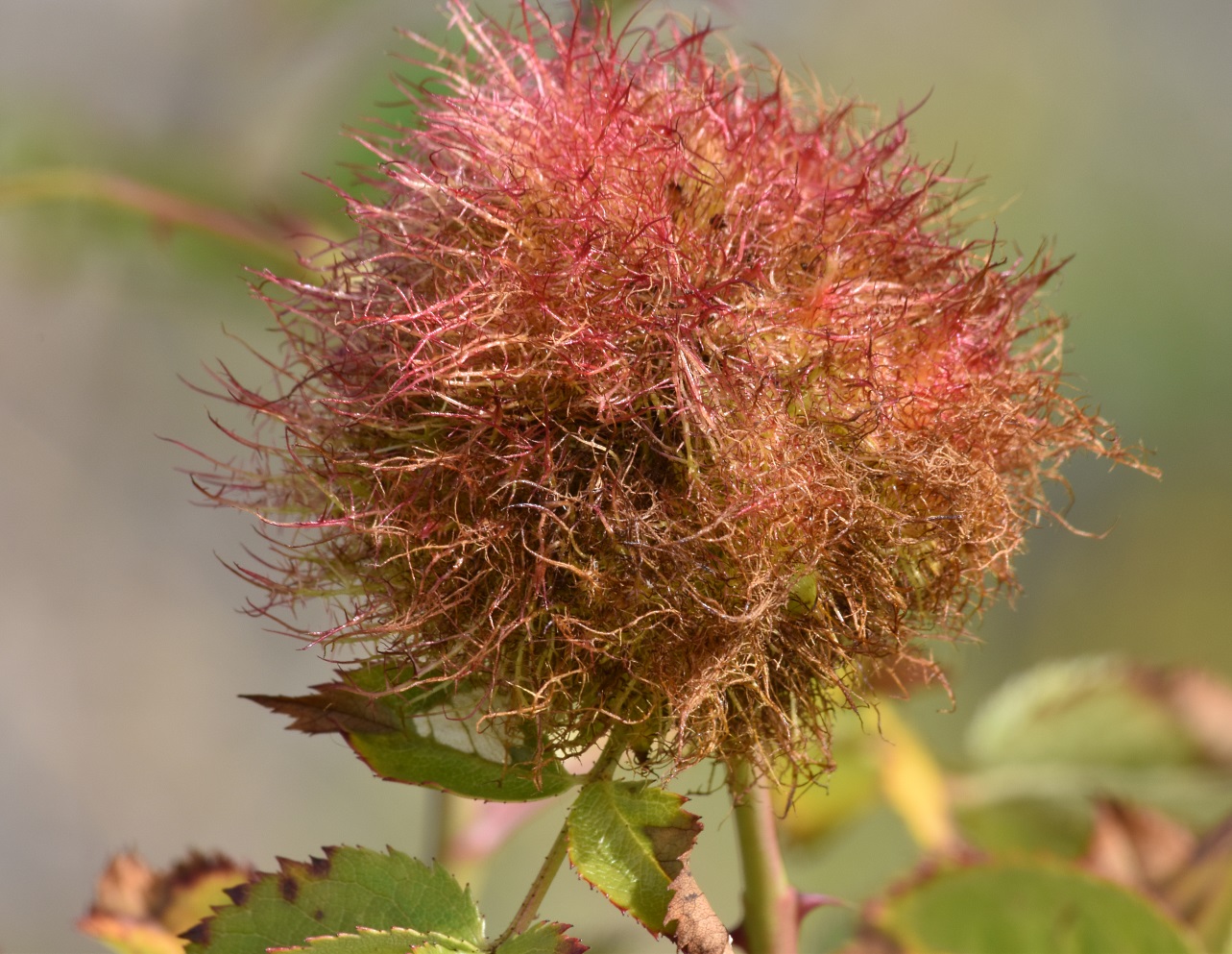
At the very bottom of the field there are a couple of scratty Dog Rose bushes, one of which was showing a good growth of Robins Pin Cushion Gall, made in response to a tiny wasp.
Time to return to the scrub for another neck craning session, but this time we were in luck. Almost straight away a movement on a flower caught our eye that wasn't bee-like. We moved in for a closer look and flushed the tiny butterfly. Thankfully it didn't go back up to the canopy but landed on a nearby leaf.
After a while the White Letter Hairstreak decided it was dinner time and more nectar was needed.


Once it was settled it gave us some good photo opportunities.
Phone camera
The White Letter Hairstreaks are a sign of hot summer days but all around were the  ripening signs of autumn.
That night we put the mothy on. Not a great catch 11 moths of seven species.
Chrysosteuchia culmella - again
Bramble Shoot Moth - New for garden
Dark Arches - quite a pale one
Dotted Clay
Dotted Clay - with tufts
Marbled Beauty
 At work we've had a school group investigating the pond.
Ramshorn Snail
Water Boatman
And the best if the lot several of these monsters, the children witnessed one catch and eat a small 3-Spined Stickleback fry and another eating an unfortunate damselfly nymph. Horror, shock, incredulity that that could happen to a fish, glee, the emotions and comments were quite revealing.
Common Darter nymph
So there you have it some brilliant bugs, far more brilliant than any Pokemon character and with more impressive REAL super-powers too.
Where to next? Just two children's groups tomorrow at different locations so there should be something fascinating to find.


Monday, 20 June 2016

What's a blue tit?

The Safari was able to get the moth trap out the other night. Again it was only with the 'little' lamp and brought a total of just eight species and 26 individuals of those 16 were Heart & Darts! But there were a couple of new ones for the garden this year.
Chrysoteuchia culmella
Small Magpie
Clouded Bordered Brindle - nearly escaped!
Common Marbled Carpet
One of the Heart & Darts was almost melanistic, one of the darkest we've ever seen and another was extremely well marked
The well marked Heart & Dart
Dark Arches
Just after lunchtime we headed for the coast to look for the Bottlenose Dolphins again but the rain started half way there and got heavier and heavier so we aborted and returned to Base Camp to watch the feeders for the rest of the afternoon.
This morning started cool, cloudy and rather windy but at least it was dry. From the bathroom we could see a small dark blob on the water tower up the hill we've not seen for a long time, a check with the bins and hey presto - it's back after a very long absence, so long it must be nearly or even over a year since we last saw it up there.
Peregrine in the early morning gloom
We gave our-self two targets a particular species and an individual bird. We wanted to get a better pic, or pics, of the Greenfinch's ring. It came in briefly while we were occupied doing something away from the camera in the kitchen and we only managed a few shots that didn't capture the ring, the camera was only inches away set up on the kitchen counter looking through the window. Later it came back, this time once the sun had come out but again we were doing something else and totally missed it this time.  
It was very lively at the feeders all day, the other family of Greenfinches coming and going regularly.
This is how we want the ringed one to pose for us
A family of recently fledged Great Tits was also doing a circuit although we only saw the adults feeding the youngsters early in the morning, by the afternoon the youngsters were far more independent but no less noisy - we could hear them coming from a couple of gardens away.
Our regular male House Sparrow who's not been so regular of late also decided to pay us a visit, very nice to see him back. It would be even nicer if he brought friends and family with him, we've plenty of food for them.
As ever the Blackbirds jostled for position around the suet feeder, we've got three males, at least one female and today discovered there are two well grown juveniles.
The species we really wanted to get a  pic of was the Blue Tit. They can be tricky just darting from cover on to the feeder pulling out a seed and darting back into cover to eat it in relative safety all in the blink of an eye - they don't tend to hang around for long!
We wanted to get a pic to show young O who lives down our street who doesn't know what they are. How many thousands of other kids are out there that can't put a name to a bird in the top five most common species in the country and a regular visitor to almost every garden with a tree or a shrub in it. How can we hope to protect Hen Harriers if the general public has no idea what a Blue Tit is? how can the next generation protect their environment if they are so far removed from it they can't identify the commonest species' in their local area. We desperately need better environmental education. But bear in mind 'they' don't want you to know too much about your environment because knowledge is a dangerous thing to them, if lots of people have ecological and environmental knowledge it may well prevent 'them' making money at the expense of the environment so best not have the plebs too informed. So really it's up to us that do know and do care to spread the word as best and as often as we can to ensure todays' nine year olds (and younger) become competent naturalists well before they're 19! All youngsters have an inherent interest in the natural world we mustn't let it get stifled as they get into school. OK so we don't expect them to be able to identify the moths by the time they leave primary school but they should be able to identify the birds and many more besides those few too long before they come to leave Yr 6. Go on get out there and inspire some kids!
Where to next? Family stuff tomorrow but we may be able to get a visit or two on route.
In the meantime let us know who's not showing their legs in your outback.


Saturday, 27 June 2015

Who's got all our moths?

The Safari was more than a tad disappointed with our mothing this season, there just doesn't seem to be many about at all around here. Last night seemed like it was going to produce the goods, it was warm and muggy but with a moderate wind, however it wasn't really that bad and we had high hopes for a decent catch this morning. 
It wasn't to be, opening the trap this morning we only had three Heart & Darts, the first Dark Arches of the year and a Eudonia mercurella micro along with something that escaped.
Frank had a swimming session this lunchtime and on the way back we stopped at a small town centre supermarket for some odds n sods for lunch. As Wifey was finding a car park space a Brown Hawker dragonfly, our first of the year, whipped over the car bonnet - quite a long way from the nearest suiutable habitat. 
This afternoon we should have done some gardening in the jungle but got too easily sidetracked with the macro lens when we spotted a few Red Spider Mites scuttling about on the lid of the coal bunker. They're tiny and double quick and refuse to keep still so make quite a difficult target for a lens with very little depth of field.
And they have an almost featureless face!
Those little legs don't have cover the ground, they're here there and everywhere and barely stop to draw breath.
Something made us look up and we're glad it did as there was Great Black Backed Gull (Garden #32) flying over which just about gave us time to get the macro lens off. A really scarce bird over Base Camp, this is the first since at least 2010!
A Supermarine Spitfire also flew over but it was traveling a little faster than the gull and we missed it...good garden tick though! It was then that we noticed the enormous Prickly Sowthistles that were in full flower when we were tending to the moths earlier had now gone over and the feathery tips of the pappuses (is that a word?) were showing, one day wonders.
There's three of these impressive beasts and even the smallest towers over us and must be well over two metres tall.
Our Tree Bee colony in the kitchen roof must be coming to an end as there's been quite a few crawling around on the floor in need of rescue. We've gently lifted them up and put them on the jasmine plant with their companions but it was probably in vain. We didn't get a pic in the end. Instead we concentrated on the several Blue Tailed Damselflies that were flitting around the pond.
Peek-a-boo
On the marginal vegetation we found some exuvia
How did the adult clamber out of there?
We had a play with the macro lens.
We're undecided about putting the moth trap out tonight, half the weather websites we've looked at say it's going top rain the half don't. The way our moth luck is going we can guarantee if we put it out it'll pour down and if we don't put it out not a drop will fall.
Where to next? could be a safari out n about somewhere tomorrow.
in the meantime let us know who's whizzing around non-stop in your outback.