Showing posts with label snakeshead fritillary. Show all posts

Tuesday, 17 April 2018

Scales and fluffy stuff

The Safari took advantage of some early morning sun in the weather forecast and planned a trip down the coast to the local lizard hotspot. CR drove the few miles south and pulled up in what he thought was a rather unusual spot, it was the right place and it is possible with a bit of luck to spot our quarry from the driving seat of your motor.
It wasn't to be today as we had to walk up and down the bank a few times, taking care not to let our shadows fall on the vegetation. It took a while but eventually persistence paid off. Hiding under an extensive amount of overhanging Marram Grass was the first Common Lizard of the morning. Cautiously we approached as close as we dared to get a good look at the little beauty.
They like bare patches of sand that are lightly covered by vegetation. For some reason they don't seem to like to bask out in the open as they do on boardwalks, or rocks, at other places. Maybe next time we should take a rake to pull away some of the excess dead grass to make spotting them a tad easier.
We walked up and don a few more times, the sun was warm but the wind was still chilly. As the sun gained a bit more strength we found a second, smaller individual right down at the far end of the bank but up high at eye-level. Again it was well concealed and we were lucky to spot it.
At first glance we thought it had lost the tip of its tail but when checking this pic we found it does indeed have a full tail.
We were able to get CR on to it before we made the fatal error of moving a little too quickly too close and it darted back down its almost invisible burrow in the sand.
With that one gone we had a check on the first one before we had to leave and it was still there warming up.
Can you see him? Would you have spotted him?
As CR drove away we took the liberty of having a look and yes we were able to see it from the passenger seat of the car as we passed.
The weather deteriorated as we approached base camp and then got worse throughout the rest of the day so we were rather fortunate to have had such good views. 
The following day we got news of a family of Tawny Owls in a local woodland. We saw one there many years ago while leading a moth and bat night and heard one calling when we helped out with moths and bats on a nearby Bioblitz about three years ago. We arrived at the site to see a pair of Stock Doves at the nest box, never seen one at that site before, but way above them in the topmost branches of the tree we found two fledgling Tawny Owls (YLPC #111). They weren't easy to get a pic of, trying to hold a heavy lens still while pointing it almost vertically isn't easy and we fired the ISO up to the giddy heights of 10,000 to get anything a shutter speed to knock out our wobbling.
There was no sign of the adults, with the Stock Doves going in the nest box they probably weren't in there! Maybe they were hiding in one of the Ivy covered large trees scattered about. Fortunately one our chums, PL, got a pic of an adult later in week.
Behind us is a pool where a Little Egret was fishing.
Successfully as it happens.
Still find it a bit weird that we can see these less than a mile from Base Camp.
With time to spare we wandered up through the woods and beyond with Monty coming across our first singing Blackcap (140) of the year, Chiffchaffs and eventually a singing Willow Warbler (141) but we couldn't get the camera on to any of them.
In the afternoon we met up with GR and had a mooch along Fleetwood Prom spotting not a lot apart from a couple of very brief views of what was probably a Harbour Porpoise out beyond the distant light surf.
A couple of scans of the golf course didn't give us any Wheatears but we did eventually find one on the beach. The local flock of Linnets gave us the run around, mostly as they kept being flushed by dog walkers. But with a little luck and patience we managed a couple of pics of a singing male.
Today we met up with CR again and went for another look at the Tawny Owls but they were nowhere to be seen this morning. There were plenty of other birds calling and singing in the woods, Nuthatches, cheeky Blue and Great Tits, Robins, noisy Wrens and singing Blackcaps. But again none of them were for posing for the camera so we drove round to Marton Mere in the hope of some summer migrants perhaps a more unusual one or two.
It didn't take long to hear a Blackcap and a Song Thrush hopped around in front of us until a camera was pointed at it and it went shy a flew in to cover. Cetti's Warblers sang all around us but remained invisible. By Heron Hide two Cetti's Warblers one either side of us tormented us by singing loudly at each other but refusing to show although we did see a presumed pair of Lesser Whitethroats (142) there to add to the one we'd seen earlier, a possible fourth was nearby too but could have been the first one that had moved across the path while we were looking for the Cetti's Warblers. Also from there we heard our first Reed Warblers (143) of the year.
The embankment, south east corner and Bird Club hide were quiet but coming out of the hide C noticed a couple of small bees resting on a fence post. They looked like a species of mining bee but neither of us were sure which one.
A minute or so later we found a female, that had us guessing a bit in the field but once the pics were downloaded and examined it was obviously a Tawny Ming Bee, as were the males seen earlier with their prominent white beard.
We looked for more as we passed the profusion of flowers on the Blackthorn bushes but none were seen. 
At the damp meadow there were a few patches of Cowslips in flower and far fewer than in previous years patches of Snakeshead Fritillaries. Where have they gone? Surely the bulbs haven't drowned over the winter months???
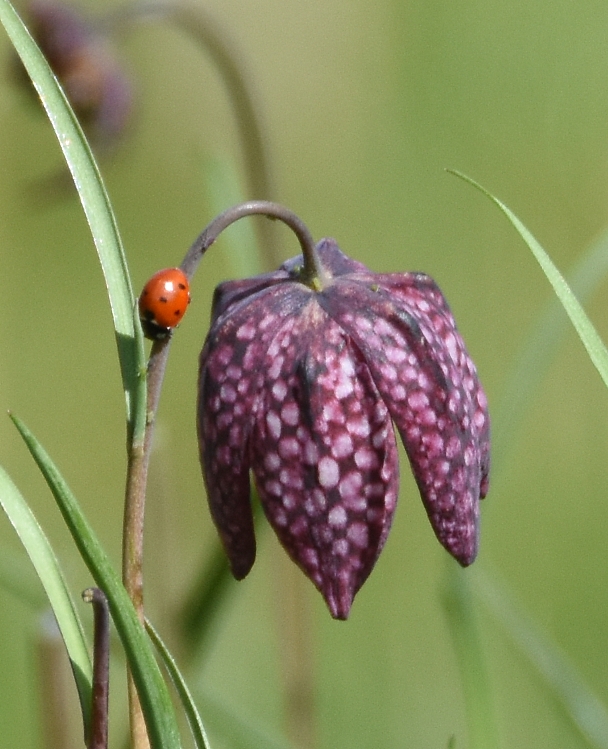
Above the Fritillaries the gulls were going bonkers and eventually C found the culprit, a very high soaring Buzzard which did drop lower and drift off to the south. 
The feeding station was disappointingly devoid of life so we didn't stay long.
The walk back to the car gave us a lone Swallow (MMLNR #66) hawking insects in the lee of the line of fruit trees alongside the track.
So a grand morning out despite the disappointment of not seeing the Tawny Owls and the frustration of not being able to get the camera on the warblers but as ever with wildlife there's always a surprise and always something new to see even if you don't see what you set out to see.

Where to next? A safari up the motorway beckons...

In the meantime let us know who's tipping the scales in your outback.


Tuesday, 4 April 2017

More spring arrivals

The Safari has been out n about recently. We've caught up with a most of the early migrant birds including a surprise, been herpetoligically challenged for a while and seen some quality solitary bees in new places.
On Friday we spotted a Tawny Mining Bee in the street at Base Camp, a first here. CR has loads in his garden only 400 yards away and offered the opportunity to come over and take some pics on Saturday but we had family duties so couldn't take him up on his kind offer. 
Sunday saw us out early picking up BD on the way to the dunes. We parked up at our favoured spot and started to cautiously inspect every square inch of the dune along the track. We soon found our first 7-Spot Ladybird of the year, but that wasn't what we were after.
Monty's keen nose sniffed at something on the road just in front of the car, we pulled him away as he's a begger for trying to eat anything and everything off the pavement but as we looked to see what it was shock and sadness overcame us - it was a freshly killed large specimen of what we'd come to look for. A Common Lizard.
How unlucky, what was it doing in the road in the shade? And a blow to the small and isolated population of them here. It may well have been killed by the car parked a little way in front of ours. 
It took a good half hour or more of intense scrutiny of the dune face to find our first live one tucked away in a small patch of dappled sunshine.
It took a while before we realised it wasn't on its own, there was a much bigger one extremely well hidden and superbly camouflaged only inches way!
Monty started getting disruptive as other dogs began to pass by on their morning walk to the beach an while we were gtetting to grips with him yet again BD shouted out he'd found a third, another tiny yearling well away from the first two. We bundled Monty into the car and went to have a look.
Tiny indeed and already missing its tail.
So three found and the dead one wasn't a bad haul if a little sad. on the way back to Base Camp we passed herpetologist supreme RL's truck parked at the roadside. A later email revealed he'd found about a dozen by 10.30 by which time he told us it had got too hot; we'd left to get back to Base Camp before our 10 am curfew.
At Base Camp we took Monty for a quick stretch before making Wifey her breakfast. It was on his little walk we spotted some solitary bees on the dry stone revetment of our neighbour's garden. You guessed it we had to go and get the camera!
They're too small for Tawny Mining Bees, the males of which have white 'moustaches' which these don't. They are a species of Andrena but which one??? 
After breakfast we were able ot get out again and this time went to the nature reserve where we met up with BD again. At the viewing platform we heard Willow Warbler (124, MMLNR #55) and Blackcap (125, MMLNR #56). B saw but couldn't get a pic of the very loud Cetti's Warbler singing in the reeds across the little pool. A Little Grebe whinneyed away in front of us too.
Moving down the main drag we had a look for the Bee Orchids but couldn't find any rosettes this time. All around us Chiffchaffs chiff-chaffed and we heard another Blackcap. Passing the scrape we stopped to look to see if any of the Teal were Garganeys, they weren't but we did hear a Reed Warbler (126, MMLNR #57) strike up its rhythmical almost mechanical song, it transpired that this was the earliest Lancashire record by a day. How long before a totally unprecedented March arrival???
A Buzzard (MMLNR #58) was temptingly in range of the lens over the embankment but by the time we'd got round there it had disappeared.
At the hide we grilled the gulls in the hope of the Iceland Gull - or better - but there were only Herring and Lesser Black Backs coming in to bathe save for a single 2nd winter Great Black Back and a lone Black Headed Gull. Again the very loud Cetti's Warbler refused to show and none of the Teal or Shovelers could be 'strung' into anything more exciting.  Two Oystercatchers (MMLNR #59) and a Lapwing (MMLNR #60) were with the waterfowl on the scrape. A Heron flew in and gave great views, not wanting to sound ungrateful but we'd have rather it had have been the Bittern.
Excitement did come a little further on when B spotted several Tawny Mining Bees in the grass. We'd have though it was a bit long for them but there they were in all they brilliant red glory.
Looks to be holding something in its jaws
We didn't stop at ICZ but did have a look at the adjacent meadow where there were a good number of Cowslips and a fair few Snakeshead Fritillaries.
Moving on to the Feeding Station we had a pleasant surprise, the Brambling (MMLNR #61) reported the previous day was still there.
The light was pretty good and the feeding station was fairly busy so we stayed a good while snapping away ad infinitum.
The Magpies were a little infuriating as they simply refused to turn so as the sun caught their iridescent plumage. It took a lot of shots to get this one...only to then see the bird has an elongated lower mandible.
Action shots always prove tricky but when they're right they're pretty impressive.
Always on the margins of the activity this Robin kept returning to a favoured perch but never stayed more than a few seconds. In the middle of winter they are far less shy getting right in the thick ofg the action on the feeders and arguing with all-comers.
There's always a Pheasant or two hoovering up spillage.
The male looked most splendid in the bright sunshine but only did his sing-whirring display under the cover of the trees, most annoying. The only time he did it in the open we missed it but he was obscured behind one the feeding table posts anyway.
Not a bad afternoon out despite the hordes of unleashed uncontrolled dogs, the idiots on the roof of the hide and the scrotes on the mini-moto bike. Must go mid-week after the holiday for a bit more peace and quiet next time!
Back on Patch 2 yesterday we our first Sandwich Terns (127, P2 #38) of the year when we saw half a dozen successfully catching small fish just behind the surf. 11 Whooper Swans (P2 #39) leaving the marshes of the estuary and pitching down on the sea about a mile out was good too. That evening we took Monty to a drier site than the mud-wallow of the park that is Patch 1 and saw our first Swallow (128) of the year tazz seaward.
Despite all this excitement we've only added one species to our Photo Challenge list, a very poorly phone-picd Jay (YBC #106) in our parent's garden, the only one we've seen there since the early 70s and the house is imminently to be sold! 
All busy busy springy stuff with more to come in the next few days. 
Where to next? Lots of desk driving at work is curtailing wildlifing opportunities to just a few minutes a day for the foreseeable but you never know! 
In the meantime let us know who's trying to get in the record books in your outback.


Monday, 13 April 2015

Marton Mere Spring Blog

The Safari is pleased to introduce another guest blog from young AFON member, Alicia. I hope you enjoy her account of her visit to the nature reserve.

Towards the end of the Easter holidays, I went to Marton Mere and met up again with my mentor Dave. It was only the second time I'd ever been there and since last November the whole of the reserve had been undergoing some amazing developments, so I was very excited to see it!

We arrived at Marton Mere at 1.45pm ready to start the walk, where we met the Development Officer, Annie, and learnt that only half-an-hour before we had missed an Osprey flying over the reserve! All the same, we kept our fingers crossed for it making a second appearance and progressed to the first hide where we were greeted by a mass if wetland waders: Oystercatchers, Greylag Geese, Mute Swans, Coots, Moorhens, Canada Geese (and a Peacock Butterfly) to name a few species. There were hundreds of Herring Gulls and (Lesser) Black-backed Gulls on the Mere and at one point they all flew up in a huge flock, spooked at something – we thought perhaps it was the Osprey but no such luck. It was probably one of the many Herons which kept flying around. we saw many more elegant waders including some young Cormorants that were sunning themselves in the typical 'Cormorant position'. It was lovely to watch. There were lots of pairs of birds, including a pair of Mallards that waddled right up the bank towards the hide.

Herring Gulls taking off in front of the first hide
We walked further around the reserve and I saw several Magpies flying around – a charm of Magpies! Then from the second hide we were also surrounded by loads of St Marks Flies which were flitting around the riverbank everywhere!There was a pair of Coots displaying to each other which I have never seen before, the two Coots were bunching themselves up and making themselves very fluffy before flapping their feathers at each other – it was fascinating to witness. Annie told us to look out for some nests, and we saw two Coots nests from the hide – rafts of reeds, floating on the water. In the distance we also saw a beautiful Goldeneye duck and a pair of Tufted Ducks, I don't see them much where I live so it was really special to see them both!

Tufted ducks
Further on we passed a tiny little patch of grass in which there was a spectacular showing of Snake's Head Fritillaries, Dave told us that he and a volunteer had planted ten fritillary bulbs 25 years ago and since then they had slowly colonised the area of grass in which they had been planted. They were very beautiful plants, and surrounding them were some Cowslips, the first I'd seen this year! Lots of large bumblebees were buzzing around the flowers, obviously filling-up on the bountiful nectar available!
Snake's Head Fritillaries
In a more wooded area of the reserve, we reached another hide which overlooked bird feeding tables, here we saw & heard many birds – including a Willow Warbler and Chiffchaff – probably very recently returned from their migration. There were also Chaffinch, Great Tit, Blue Tit and Robin. I also spotted a large Bumblebee by a Willow tree which was identified as a queen Tree Bee – another first for me!

We left the busy woodland hide and walked round to the viewing platform for the mere, on the way we found out that a pair of Great-crested Grebes had been performing a full courtship display. I was disappointed to have missed them, and we spent a while looking out onto the mere for both the grebes and a rare Iceland Gull that had been in the area all winter. The Iceland Gull eluded us, however after much waiting I did spot one of the Great-crested Grebes as it swam and dived to feed. They're such beautiful, majestic creatures, and this one looked particularly splendid with its head feathers framing its white face like a crown. I also heard a Cetti's Warbler, which I had never heard before. It was in the reed beds, but only heard, not seen.
Great-crested Grebe
Next we reached the new hide, and were honoured to be the first group to use it – it was very smart! From the hide we heard a Water Rail, and saw Swallows (newly arrived back at Marton Mere), Sand Martins, an Oystercatcher pair mating on the sand bank and a Buzzard, which sent all the different gulls on the mere flying in panic! We also watched a Cormorant trying very determinedly to swallow a HUGE fish possibly a Perch which had its fins out. After many minutes of the poor Cormorant trying to swallow its prize, it succeeded, and it looked quite a bit lower in the water than it had been to start with! However, it flew off, so was obviously fine.

Finally, we had a walk up to the new scrapes at the top of the mere, where the Oystercatchers, geese and Cormorants were. We had a closer look at the Sand Martin wall which has been put in for them to use for nesting, and we  looked at the newly cleared habitats which will hopefully encourage even more wildlife to the reserve. As we started to walk back again, we heard a Blackcap, it sounded tantalisingly close however frustratingly we didn't see it.

Once again, Marton Mere has been a wonderful wildlife bonanza: the Osprey may have eluded us but the rest of the wildlife certainly did not! We saw a total of 40 different bird species (and that's only what we listed....)! and also lots of butterflies and other insects.
I saw another wildlife first for me- the queen Tree Bee, and I heard my first Cetti's Warbler, along with witnessing lots of birds looking their best for the breeding season. It was great to see all the changes at the reserve and thanks to Dave and Annie for another fantastic visit.

Female Mallard – hopefully there will soon be some ducklings
By Alicia                      Aged 15                                       April 2015 

We're sure you enjoyed that, here's her post from last November if you've not seen it before.
Where to next? Well it was sort of an action packed weeekend so we've got some more stuff to let you know about tomorrow.
In the meantime let us know how the youngsters are getting on in your outback                                                                                    

Sunday, 29 March 2015

The annual path-standing jaunt

The Safari set off in horrific rain to meet our long-time birding chums for our annual aunt to the nature reserve which holds a few Lesser Spotted Woodpeckers. We haven't had a motorway drive as bad as that for a long time. We arrived before the others and had a bit of a wait in the car park where the rain still lashed down in bucket, it wasn't looking good. The rain eased a little and that was the cue for the birds to start to move around a bit. A Green Woodpecker (125) was particularly vocal as was a Chiffchaff. The rain desisted to a heavy drizzle so we decided to don the waterproofs and have a mooch about to see if we could see the Green Woodpecker. A Great Spotted Woodpecker drummed and we got a decent view of it high in a tree, two down just the hard one to go and the others hadn't arrived yet. A Buzzard called somewhere over the tree tops and we thought we might have heard a brief snippet of Blackcap song, the Mistle Thrush behind us was doing more than snippets!
The others arrived and it was off down the trail to stand on the path for a while. Other than a small flock of Goldfinches and a Nuthatch it was very quiet down there. We took a few pics of the same Primroses we take every year.
With nothing doing we went a little further and had a look over the lake where three Little Grebes a few Tufted Ducks and Canada Geese were all that was on offer, on the other side of the track the 'marsh' hide offered even less although a Bumble Bee was seen. It was quite mild if still a bit damp.
Retracing our steps going very slowly past the Lesser Pecker zone we wandered down to the feeding station which was very lively.
Blue, Great and Coal Tits were regular visitors with Chaffinches and a couple of Reed Buntings and a bolshi Nuthatch for good measure until a Jay dropped in for a few peanuts. Another near miss was a possible Willow Tit that shot through without stopping. Under the feeders the pool held a pair of Teal and a Moorhen. Mammals were represented by two Grey Squirrels.
All the while our collective ears were open for the distinct drumming or calls of the Lesser Peckers -  but nothing! Back to the 'zone' we went again for another bout of path standing. But again we saw and heard nothing of note. Time for luch back at the car park.
At the car park we heard the Green Woodpecker again and this time it flew over us and landed in a nearby tree giving excellent views - nice one!
The rain had gone and the sun was trying to come out bringing out some Buzzards.
One of our mates had a friend of his leading a birding group elsewhere on site and it was at lunchtime we met up them. While catching up on all the gossip, they'd seen a couple of Iceland Gulls on the dump but not a great lot else, AK shouted 'up there!' 'Sand Martin' everyone swung their bins skyward as two Sand Martins (126) went over. The prolonged heavy rain had prevented what could have been a much better overnight migration.
We also kept an eye on the passing gulls in case one of the Iceland Gulls should go over but found a Yellow Legged Gull (127) instead.
After lunch it was all eyes to the trees and a bit more path standing.
All to no avail sadly. From there we wandered down the canal with the group in a strong wind seeing plenty of Gadwall, some Shelducks and a couple of Teal. We ended up overlooking the river were the tide was low and plenty of gulls were loafing on a sand bank in the middle. As soon as we raised our bins we spotted a 1st winter Iceland Gull sat right on the front of the flock. Apparently this was a different one to the others seen earlier.
By know we'd run out of time and had to forgo the excellent farmland area. Our day had come to an end far too soon so it was time to say our goodbyes and plan our next adventure - it'll be something to do with warblers.
Today we had a lunchtime event on the beach with a gang of kids. It was cold and horrendously windy and not conducive to enjoying a couple of hours beachcoming and rockpooling. 
We weren't out very long at all, far less than we'd arranged, and only found a small Brown Shrimp, a Gammerid type shrimp and a nice Blunt Gaper Shell.
With a bit of time on our hands we went to the nature reserve for a quick look. Again the wind was putting the mockers on everything although the sun was out it wasn't warm.
Bottoms up!
We were pleased to find our first flowering Snakeshead Fritillary out but not yet fully open. The Cowslips aren't quite out yet either, another couple of days of sunshine should do it.
A long shot - we didn't want to go onto the meadow for fear of accidentally standing on any not yet with a obvious flower bud
 The Sand Martin bank is all but finished - all we need now are the birds!
Where to next? More Patch 2 stuff tomorrow - hope that strong wind's died down.
In the meantime let us know who wasn't for showing themselves in your outback.