The Safari saw a headline a couple of days ago.
English farmland could be cut by 9% to hit green targets
The article beneath the headline made for interesting reading and although it might seem like 'another' threat to farming from an already precieved as farming-unfriendly government there are fantastic opportunities to be had for our beleaguered wildlife, not forgetting the the UK is one of the most wildlife depleted countries on the planet. By coincidence for Christmas we had received this book and read it during the bad weather that prevented going out on safari in January.
We're a big fan of re-wildling and that doesn't mean land abandonment which many folk out there seem to think it does. To maximise the diversity of wildlife an area can hold there does need to be some management otherwise one vegetation type will tend to dominate (dependent on local variations in soil composition/moisture etc). However, and this is the biggy, the management doesn't have to be done by man, although some works like stopping us peatland drains and removing invasive non-native species eg Rhododenron ponticum need to be done by us humans. What happened before us humans brought fire, axe and sheep? The answer is wild animals would have shaped the vegetation across landscape scale areas.
Does anyone watch Wildearth TV? The reserves to highlight southern Africa's majestic animals they use all used to be farmland but now have fabulous ecosystems thanks to letting the land recover from cattle overgrazing and introducing larger native animals. We don't have Elephants and drove our nearest equivalent, Aurochs, to extinction many many years ago but we do still have plenty of proxy animals that would do the job of long lost wild cattle, horses and Wild Boars. We have deer two, although only two are native, two are naturalised and are 'probably?' OK the other two are definitely not OK - more about those later.
Several of the reserves we visit use proxy animals to manage the habitats mainly for specific species/associations of birds although in a couple of cases it is shorter vegetation to enhance the overall diversity of wild flowers that is the target. Here are some examples of our favourite management tools going about their work.
 |
Longhorn Cattle
|
 |
Redpoll Cattle
|
 |
Mixed cattle including a Belted Galloway
|
 |
Exmoor Pony
|
 |
Redpoll Cattle
|
 |
Redpoll Cattle
|
 |
Redpoll bull
|
 |
Highland Cattle
|
 |
Highland Cattle
|
 |
Carneddau Pony
|
 |
|
We should have drawn the southern boundary line to include the steep
Patterdale Common and the northern boundary line to include Matterdale
Common too, basically taking in all the western watershed into
Ullswater from Grisedale Beck (= Wild Boar stream) to Aira Beck at Dockray. Arnison Crag (bottom right probably alludes to White Tailed Eagles, Whelp Side (bottom left) - Wolves, Hart Side (top centre) - deer possibly Fallow Deer as Red Deer males are known as stags not harts, Swineside Knott - Wild Boar. Now what do all these creatures have in common? They're all woodland species (the White Tailed Eagle is a wetland/coastal species but often requires big trees close by for nesting), yet if you were to climb to the top of Birks above Black Crag and looked slightly west of north you'd barely see a single bush never mind a whole tree. There's got to be an opportunity to relieve that area, 26 sq kms and at least probably that much again going up to Dockray, of its sheep, do some tree planting, allow some tree regeneration, prevent any non-natives establishing (need humans to do that), bring in suitable hardy cattle and pony species (there's an income stream for the farmers - who might no longer be called farmers but Landscape and Biodiversity Stewards (and hopefully be handsomely subsidised for becoming such) - - would 'Conservation Grade Meat' bring a premium price to their pockets?) The question of free-roaming pigs is a little more tricky but there could be the potential to use inobtusive electric fencing enclosures which can easily be moved around to prevent the pigs over-grazing, or better still what about good old fashioned proper job wild Wild Boar? Wild Boar could be controlled (in sustainable numbers) by those members of society who like killing things, instead of shooting millions of tame non-native Pheasants how about learning how to stalk Wild Boar and use the meat...hmmm WB sausages - very nice indeedy. And therein lies another issue - how do you prevent the cattle and ponies over grazing? In the old days those whelping Wolves would have kept our beasts on the move not lettin g them settle in any one area too long. Now there's no chance of bringing Wolves into this area and that could potentially be a problem, we're not sure what the answer is - someone walking behind them with a sharp stick??? Oh you mean a shepherd!
Now all this might sound like pie in the sky but it is beginning to happen, even in the lake District NP with the new Skiddaw Forest Cumbria Wildlife Trust project, the more established Wild Ennerdale and the Restoring Hardknott Forest Project which aims to create and restore 630 ha native woodland and other wildlife rich habitats on what was recently one of the Lake District's largest commercial coniferous forests - there's another discussion as to whether or not foerestry plantations should have ever been allowed in a National Park in the first place but it is possible that the trees were planted before the NP status was confered - we don't know. Neither do we know if Skiddaw Forest or Hardknott intend to have proxy grazers, Wild Ennerdale and Wild Haweswater definitely do.
Not far to the south and west of the map above another exciting re-wildling project is afoot. This time it's not an area or a habitat but an iconic species that was extirpated from this area many years ago, namely White Tailed Sea Eagles aka Ernes (Heron Crag, on the main Ambleside to Keswick road, and Arnside Knott across the bay etc are place names that allude to their former presence). We can't wait to see this project get off the ground - if only to get WTE on our garden fly-over list. It would be great to watch them catching Mullet off the mouth of the River Wyre or plucking feral Canada Geese from the shores of Windermere in front of gobsmacked tourists. Let's hope it gets the go-ahead before too long but we do have some reservations about any potential impact on nearby seabird colonies at St Bee's Head and RSPB's Hodbarrow reserve and also on potential distubance to the eagles themselves just from the sheer numbers of people on the fells these days. Anyway fingers crossed it happens soon...and they don't 'disappear' like almost all of the re-introduced Red Kites have.
Moving on...our National Parks are probably where most of the effort should be concentrated and not only the upland ones as there are other areas that would benefit such as some of the former Areas of Outstanding Natural Beauty, our nearest one, the Forest of Bowland, is about as an unnatural area of little beauty as you can imagine, it could be so much better. There are three main land owners, the water authority who to give them their due are doing their but but the other two need a bit of persuading, one of whom is the King, Charles III, who allegedly has conservation running through his blue blooded veins - it certainly doesn't show up there on his hunting estate nor at Balmoral (in Scotland) where if he were to re-wild his estates rather than haveing them as killing grounds maybe some of his neighbours might follow his lead. Come on Charlie Boy grasp the Nettle what's stopping you?
9% of farmland given over to nature might sound like a very frightening amount to some folk but when you consider that much of that 'farmland' is barely productive at the moment and sheep aren't a necessary staple in our diets and that we pay heavily to subsidise them along with often paying through taxed to drain land for them, then pay again for flood defences to cope with the increased water flow off the mountain - there's nothing wetter that wet long grass but there isn't much long grass up there its all been nibbled away, and then we pay again in increased insurance premiums to cover the losses when floods do happen. When you look at it that way and the very few jobs provided by that amount of land it makes sense to us to restore its biodiverisity and enrich its landscape. There's probably quite a few more jobs available in the latter scenario as well.
Going back to those members of our society who like killing things, they could become conservationists too by doing some essential culling of some of our non-native nightmares - we're looking at you Muntac Deer (the carnage we saw on the roads between Oxford and Southampton last year was horrendous, the carnage they cause to our woods and associated wildlife is even worse), Sika Deer, Grey Squirrel, Canada Geese to name but a few. They could fulfil their bloodlust while providing our beleagured wildlife a very helpful service rather than being part of the problem. Not sure about the freal geese and the squirrels but venison should be almost free in this country there's so many deer causing so many problems. The squirrels and geese - well there's lots (far too many!) dogs n cats that need feeding, would the pet food industry be interested in free range produce; shot with non-toxic ammo though. How about "Eat the Aliens" as a slogan?
Not just woodland/forest either, parts of Somerset flooded again last week not as devastatring as a few years ago but enough to show there's anm on-going issue - the book describes opportunities for large scale wetland restoration in various areas of the country especially Somerset...Pelicans? Yes please!
all well and good this know-it all townie - Community buy-in essential - aging multi-generational sheep farmer how to engage and encourage them to change/retrain - economics, government initiatives and incentives, the policy is just about there
Fewer sheep, fewer problem deer, more Wild Boar, Beavers, Moose and Wisents please and Nightingales which used to nest in Lancashire just about living memory. The Safari is going to admit to watching a TV show called A Place in the Sun, when they visit France the sound of the local area being viwwed by the punters is always Nightingales. And can we have more Corncrakes which an elderly relative now passed away could remember calling on our family farm when she was a young girl - oh did we not mention we're not just a another suburban townie keyboard warrior know it all.
All we want is a future abounding with wildlife rather than the currrent position of letting it dwindle away with the shifting baseline getting lower and lower despite the odd success story like the Bittern comeback
and
Cetti's Warbler colonisation,
these are just feel better blips on the otherwise inexorable downward spiral to mass extinction on these isles. Being closer to 70 than 60 now were unlikely to see the benefits of all this good work even if it starts at first light tomorrow morning. But given the opportunity wildlife can spring back very quickly as the Knepp project down south has shown - somewhere we'd like to visit for a good shuffy round one day. All it needs is the will and some sensitive management and our future generations will be looking back asking why didn't they do it sooner.
There has to be community buy-in to these projects. After all you can't just turf folk off their land, well ntot in a civilised society you can't. But how do you convince an aging sheep farmer whose family have been sheep farmers for generations to give his land over to nature, even with compensation what is he going to do next? What's in it for hime? Can he quickly learn a new set of livestock skills to look after cattle rather than sheep, can he become a woodsman - does he have the time to wait for trees to grow so he can harvest them - does he really feel comfortable running wildlife watching safaris - questions that those affected will need answering. Maybe the government coud waive the recently introduced inheritance tax for those farmers that would be affected by the tax that join the schemes. We'd much rather se a lot of carrot and not a lot of stick in this transition to a better state otherwise there's going to be a lot of resentment. It's going to be hard enough to get the status quo vested interests on board as it is. Look how difficult it continues to be to get raptor persecution to stop or even a prosecution on the few occassions there's enough evidence.
Here's some pics of recent 'winners'
 |
Little Egret
|
 |
| Spoonbill |
 |
Roe Deer
|
 |
Tree Bee
|
and some recent 'losers'
 |
Corn Bunting
|
 |
| Skylark |
 |
Willow Tit
|
 |
Tree Sparrow
|
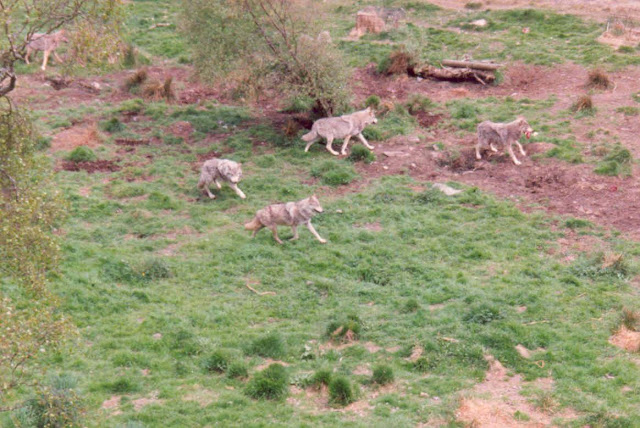
And don't forget it's not just about birds, it's as much if not more about soil improvement (structure, microbiome and losing toxins), mosses, lichens, liverworts, fungi, the herb layer, invertebrates (see above), fish, amphibians and reptiles as well as the birds and mammals - it's restoration of a whole (at least as whole as can be) functioning ecosystem including these chaps - one day? Maybe the wilder parts of NW Scotland first, can't really see England going for Wolves anytime soon...but you never know, if you don't ask you certainly won't get!
 Lynx
Lynx should be out there soon. However, numpties recently illegally releasing them inappropriately might have added a few years on to that wait though.
Anyways it's all food for thought so what do you think?
Where to next? We expect to be out on safari again later this week - when the weather imroves, honking it down today!
In the meantime let us know how much wilder your outback could be given a few sympathetic changes.


