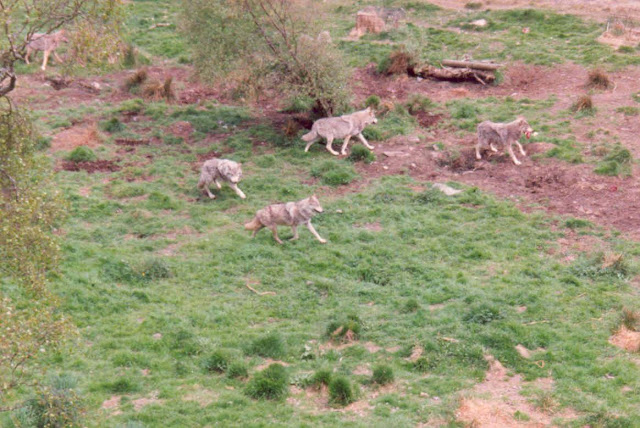
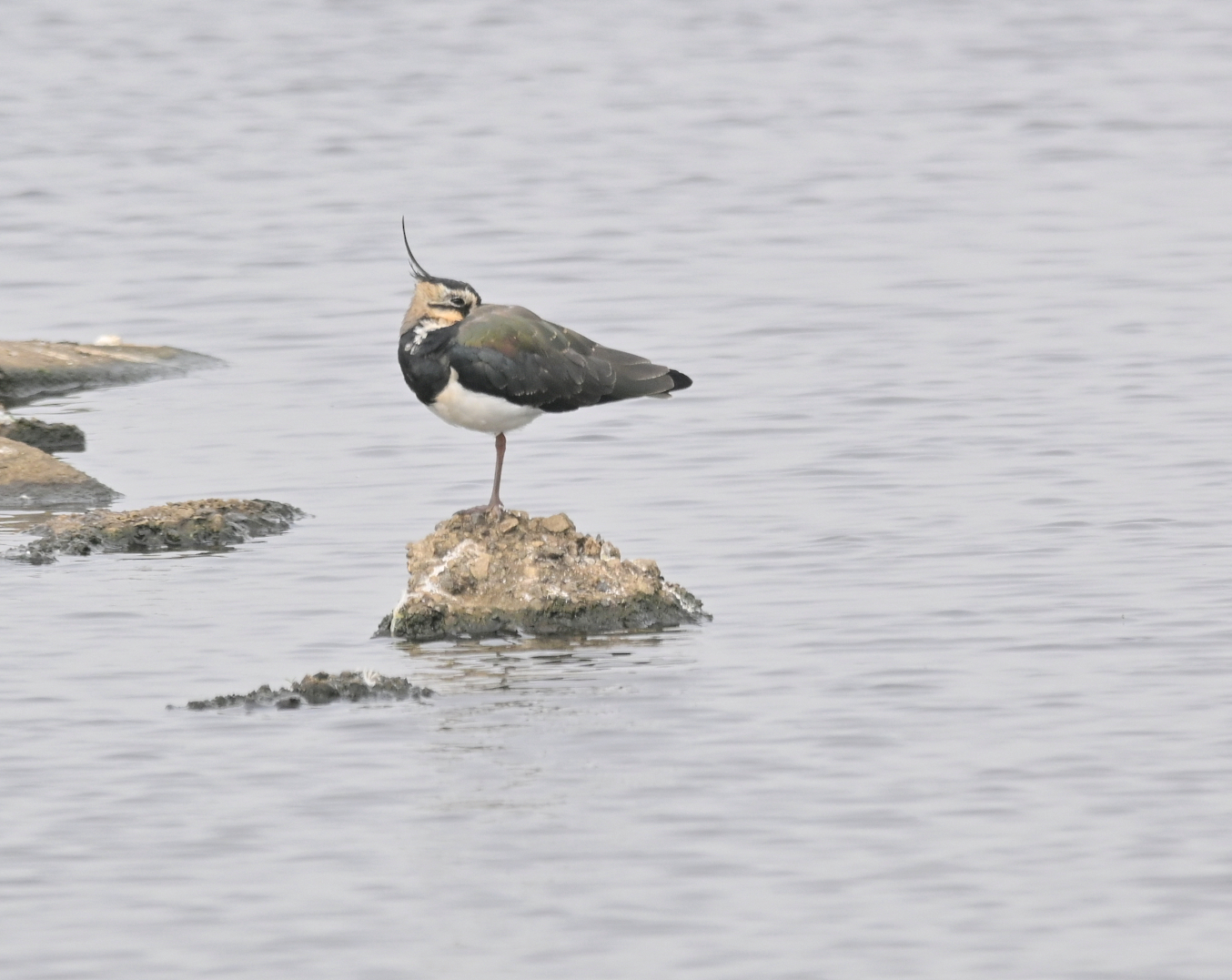
Showing posts with label longhorn cattle. Show all posts

Tuesday, 4 February 2025

Has the time arrived for landscape scale re-wilding finally arrived?

The Safari saw a headline a couple of days ago.

English farmland could be cut by 9% to hit green targets

The article beneath the headline made for interesting reading and although it might seem like 'another' threat to farming from an already precieved as farming-unfriendly government there are fantastic opportunities to be had for our beleaguered wildlife, not forgetting the the UK is one of the most wildlife depleted countries on the planet. By coincidence for Christmas we had received this book and read it during the bad weather that prevented going out on safari in January.

We're a big fan of re-wildling and that doesn't mean land abandonment which many folk out there seem to think it does. To maximise the diversity of wildlife an area can hold there does need to be some management otherwise one vegetation type will tend to dominate (dependent  on local variations in soil composition/moisture etc). However, and this is the biggy, the management doesn't have to be done by man, although some works like stopping us peatland drains and removing invasive non-native species eg Rhododenron ponticum need to be done by us humans. What happened before us humans brought fire, axe and sheep? The answer is wild animals would have shaped the vegetation across landscape scale areas. 

Does anyone watch Wildearth TV? The reserves to highlight southern Africa's majestic animals they use all used to be farmland but now have fabulous ecosystems thanks to letting the land recover from cattle overgrazing and introducing larger native animals. We don't have Elephants and drove our nearest equivalent, Aurochs, to extinction many many years ago but we do still have plenty of proxy animals that would do the job of long lost wild cattle, horses and Wild Boars. We have deer two, although only two are native, two are naturalised and are 'probably?' OK the other two are definitely not OK - more about those later. 

Several of the reserves we visit use proxy animals to manage the habitats mainly for specific species/associations of birds although in a couple of cases it is shorter vegetation to enhance the overall diversity of wild flowers that is the target.  Here are some examples of our favourite management tools going about their work.
Longhorn Cattle


Redpoll Cattle

Mixed cattle including a Belted Galloway
Exmoor Pony
Redpoll Cattle
Redpoll Cattle
Redpoll bull
Highland Cattle
Highland Cattle

Carneddau Pony


We should have drawn the southern boundary line to include the steep Patterdale Common and the northern boundary line to include Matterdale Common too, basically taking in all the western watershed  into Ullswater from Grisedale Beck (= Wild Boar stream) to Aira Beck at Dockray. Arnison Crag (bottom right probably alludes to White Tailed Eagles, Whelp Side (bottom left) - Wolves, Hart Side (top centre) - deer possibly Fallow Deer as Red Deer males are known as stags not harts, Swineside Knott - Wild Boar. Now what do all these creatures have in common? They're all woodland species (the White Tailed Eagle is a wetland/coastal species but often requires big trees close by for nesting), yet if you were to climb to the top of Birks above Black Crag and looked slightly west of north you'd barely see a single bush never mind a whole tree. There's got to be an opportunity to relieve that area, 26 sq kms and at least probably that much again going up to Dockray, of its sheep, do some tree planting, allow some tree regeneration, prevent any non-natives establishing (need humans to do that), bring in suitable hardy cattle and pony species (there's an income stream for the farmers - who might no longer be called farmers but Landscape and Biodiversity Stewards (and hopefully be handsomely subsidised for becoming such) - - would 'Conservation Grade Meat' bring a premium price to their pockets?) The question of free-roaming pigs is a little more tricky but there could be the potential to use inobtusive electric fencing enclosures which can easily be moved around to prevent the pigs over-grazing, or better still what about good old fashioned proper job wild Wild Boar? Wild Boar could be controlled (in sustainable numbers) by those  members of society who like killing things, instead of shooting millions of tame non-native Pheasants how about learning how to stalk Wild Boar and use the meat...hmmm WB sausages - very nice indeedy. And therein lies another issue - how do you  prevent the cattle and ponies over grazing? In the old days those whelping Wolves would have kept our beasts on the move not lettin g them settle in any one area too long. Now there's no chance of bringing Wolves into this area and that could potentially be a problem, we're not sure what the answer is - someone walking behind them with a sharp stick??? Oh you mean a shepherd! 

Now all this might sound like pie in the sky but it is beginning to happen, even in the lake District NP with the new Skiddaw Forest Cumbria Wildlife Trust project, the more established Wild Ennerdale and the Restoring Hardknott Forest Project which aims to create and restore 630 ha native woodland and other wildlife rich habitats on what was recently one of the Lake District's largest commercial coniferous forests - there's another discussion as to whether or not foerestry plantations should have ever been allowed in a National Park in the first place but it is possible that the trees were planted before the NP status was confered - we don't know. Neither do we know if Skiddaw Forest or Hardknott intend to have proxy grazers, Wild Ennerdale and Wild Haweswater definitely do.

Not far to the south and west of the map above another exciting re-wildling project is afoot. This time it's not an area or a habitat but an iconic species that was extirpated from this area many years ago, namely White Tailed Sea Eagles aka Ernes (Heron Crag, on the main Ambleside to Keswick road, and Arnside Knott across the bay etc are place names that allude to their former presence). We can't wait to see this project get off the ground - if only to get WTE on our garden fly-over list. It would be great to watch them catching Mullet off the mouth of the River Wyre or plucking feral Canada Geese from the shores of Windermere in front of gobsmacked tourists. Let's hope it gets the go-ahead before too long but we do have some reservations about any potential impact on nearby seabird colonies at St Bee's Head and RSPB's Hodbarrow reserve and also on potential distubance to the eagles themselves just from the sheer numbers of people on the fells these days. Anyway fingers crossed it happens soon...and they don't 'disappear' like almost all of the re-introduced Red Kites have.

Moving on...our National Parks are probably where most of the effort should be concentrated and not only the upland  ones as there are other areas that would benefit such as some of the former Areas of Outstanding Natural Beauty, our nearest one, the Forest of Bowland, is about as an unnatural area of little beauty as you can imagine, it could be so much better. There are three main land owners, the water authority who to give them their due are doing their but but the other two need a bit of persuading, one of whom is the King, Charles III, who allegedly has conservation running through his blue blooded veins - it certainly doesn't show up there on his hunting estate nor at Balmoral (in Scotland) where if he were to re-wild his estates rather than haveing them as killing grounds maybe some of his neighbours might follow his lead. Come on Charlie Boy grasp the Nettle what's stopping you?

9% of farmland given over to nature might sound like a very frightening amount to some folk but when you consider that much of that 'farmland' is barely productive at the moment and sheep aren't a necessary staple in our diets and that we pay heavily to subsidise them along with often paying through taxed to drain land for them, then pay again for flood defences to cope with the increased water flow off the mountain - there's nothing wetter that wet long grass but there isn't much long grass up there its all been nibbled away, and then we pay again in increased insurance premiums to cover the losses when floods do happen. When you look at it that way and the very few jobs provided by that amount of land it makes sense to us to restore its biodiverisity and enrich its landscape. There's probably quite a few more jobs available in the latter scenario as well.

Going back to those members of our society who like killing things, they could become conservationists too by doing some essential culling of some of our non-native nightmares - we're looking at you Muntac Deer (the carnage we saw on the roads between Oxford and Southampton last year was horrendous, the carnage they cause to our woods and associated wildlife is even worse), Sika Deer, Grey Squirrel, Canada Geese to name but a few. They could fulfil their bloodlust while providing our beleagured wildlife a very helpful service rather than being  part of the problem. Not sure about the freal geese and the squirrels but venison should be almost free in this country there's so many deer causing so many problems. The squirrels and geese - well there's lots (far too many!) dogs n cats that need feeding, would the pet food industry be interested in free range produce; shot with non-toxic ammo though. How about "Eat the Aliens" as a slogan?

Not just woodland/forest either, parts of Somerset flooded again last week not as devastatring as a few years ago but enough to show there's anm on-going issue -  the book describes opportunities for large scale wetland restoration in various areas of the country especially Somerset...Pelicans? Yes please!

all well and good this know-it all townie  - Community buy-in essential - aging multi-generational sheep farmer how to engage and encourage them to change/retrain - economics, government initiatives and incentives, the policy is just about there

Fewer sheep, fewer problem deer, more Wild Boar, Beavers, Moose and Wisents please and Nightingales which used to nest in Lancashire just about living memory. The Safari is going to admit to watching a TV show called  A Place in the Sun, when they visit France the sound of the local area being viwwed by the punters is always Nightingales. And can we have more Corncrakes which an elderly relative now passed away could remember calling on our family farm when she was a young girl - oh did we not mention we're not just a another suburban townie keyboard warrior know it all.

All we want is a future abounding with wildlife rather than the currrent position of letting it dwindle away with the shifting baseline getting lower and lower despite the odd success story like the Bittern comeback

and Cetti's Warbler colonisation,
these are just feel better blips on the otherwise inexorable downward spiral to mass extinction on these isles. Being closer to 70 than 60 now were unlikely to see the benefits of all this good work even if it starts at first light tomorrow morning. But given the opportunity wildlife can spring back very quickly as the Knepp project down south has shown - somewhere we'd like to visit for a good shuffy round one day. All it needs is the will and some sensitive management and our future generations will be looking back asking why didn't they do it sooner. 

There has to be community buy-in to these projects. After all you can't just turf folk off their land, well ntot in a civilised society you can't. But how do you convince an aging sheep farmer whose family have been sheep farmers for generations to give his land over to nature, even with compensation what is he going to do next? What's in it for hime? Can he quickly learn a new set of livestock skills to look after cattle rather than sheep, can he become a woodsman - does he have the time to wait for trees to grow so he can harvest them - does he really feel comfortable running wildlife watching safaris - questions that those affected will need answering. Maybe the government coud waive the recently introduced inheritance tax for those farmers that would be affected by the tax that join the schemes. We'd much rather se a lot of carrot and not a lot of stick in this transition to a better state otherwise there's going to be a lot of resentment. It's going to be hard enough to get the status quo vested interests on board as it is. Look how difficult it continues to be to get raptor persecution to stop or even a prosecution on the few occassions there's enough evidence.

Here's some pics of recent 'winners'

Little Egret

Spoonbill

Roe Deer

Tree Bee

and some recent 'losers'

Corn Bunting

Skylark

Willow Tit

Tree Sparrow
And don't forget it's not just about birds, it's as much if not more about soil improvement (structure, microbiome and losing toxins), mosses, lichens, liverworts, fungi, the herb layer, invertebrates (see above), fish, amphibians and reptiles as well as the birds and mammals - it's restoration of a whole (at least as whole as can be) functioning ecosystem including these chaps - one day? Maybe the wilder parts of NW Scotland first, can't really see England going for Wolves anytime soon...but you never know, if you don't ask  you certainly won't get!
Lynx should be out there soon. However, numpties recently illegally releasing them inappropriately might have added a few years on to that wait though.

Anyways it's all food for thought so what do you think? 

Where to next? We expect to be out  on safari again later this week - when the weather imroves, honking it down today!

In the meantime let us know how much wilder your outback could be given a few sympathetic changes.

Wednesday, 7 September 2022

A change of ID and a sneak across to the SouthSide

The Safari got a txt from old friend TS the other morning telling us that the Hobby we'd seen reported on the local birders' WhatsApp group at Marton Mere was still there. Not having seen one there for many years, and not anywhere else for only slightly fewer and not hardly having been there at all this year we decided to go and have a look, it shouldn't be too busy as the schools have gone back to the annoying adjacent caravan site would be a lot quieter.

The walk in was very quiet, just a calling Chiffchaff and Blackcap breaking the warm silence. We soon found out where to look as a couple of other birders were stood half way down the main drag looking towards a particular bush. We stopped and scanned and saw the unidentifiable silhouette of a small falcon perched on the edge of said bush. Joining the others, who were unable to see it on the far side of the bush, we stood waiting and chatting until it decided to hop around a bit - which eventually it did.

The light wasn't brilliant, looking towards the sun but we got a couple of snaps. It did a little fly around chasing dragonflies too. It was then that top local birder PE when reviewing his pics realised something wasn't quite right and the Hobby might not be a Hobby after all. After a phone call he rejoined the small group and announced the bird was in fact a juvenile Red-footed Falcon. So one off our list and one on our list! Still not seen a Hobby at that site for many years! But a Red-footed Falcon makes up for not being able to get to the one not too far away a tad over 30 years ago. The rubbish pic above is also a much better view than the very poor flight views we had of one at Spurn well over 25 years ago too. The big question is had we come across it on our tod would we have questioned the original ID or like PE twigged something was amiss, sadly it'd mostly likely have been the former.
All too soon we had to leave but came back for another look later in the afternoon when we hoped the light would be better. It was but now the little falcon was performing at the western end of the reedbed hawking dragonflies so for viewing purposes the light still wasn't great.

When it was in better light it was back at its favoured bush but that was now miles away from our new position.
At least this distant shot shows the barred tail confirming it's not a Hobby. None of the flight shots of the underwing we got were very good unlike others we've seen on Flickr/Twitter etc which should the underwing coverts are buff coloured so it's not the very closely related but much much rarer Amur Falcon either.
With news of it still present we went down the next day too and watched it catching dragonflies. But still very much against the light.
It did perch up in nearby Willow tree for a while too.
And so onto Day 3, gosh - hardly been to the reserve all year and now thrice in three days! This time we had CR as company. But we couldn't find it anywhere, then TS came along and told us it had been favouring the NE corner the previous evening, so we had a look there and met other birders looking too but to no avail - had it moved on after an earlier shower? We took the opportunity to do a circuit of the reserve, noting not a lot apart from a few Cetti's Warblers singing half-heartedly from unseen perches deep in the reeds. As we come towards the NE corner along the embankment we could see a bigger pack of birders and they looked to be looking at something - sure enough when we approached there was the Red-footed Falcon sitting almost directly over the path in a tall Willow tree.
At last a decent view in decent light but we still couldn't manage any half-good flight shots...and still nothing else to point the camera at. 
The other birders told us that a proper Hobby had been seen too as well as a juvenile Cuckoo, that would have been good to bump into, the last one we saw here was being fed by every passing species of small bird while it sat in its Sedge Warbler foster parents' diminutive nest many years ago.
We didn't get a fourth day as the Saturday was earmarked for a safari over the river to meet up with the old gang at the 'other' place we don't mention by name.
As we approached the entrance we could see a shiny white patch in the field opposite - looked like about 2-300 gulls..."hmm that bodes well must be a Mediterranean Gull on the cards today", we thought.
Another white bird was first up though, we'd passed through the check-in desk and through the facing window we could see an egret sat on a pontoon in middle of the lake. A telescope was set up in the window too, manned by a volunteer - not seen that before. Well it was a Cattle Egret hence the excitement, they're sort of regular just inland of the Ribble estuary now, more so on the south side but there may be not so many records from this site which is a little further inland still but does have the herd of Longhorn Cattle grazing sort of naturally on the wet fields so Cattle Egrets might be expected to turn up there.

When we started birding you had to go to the Carmargue in southern France, the  Ebro delta in SE Spain or SW Spain and southern Portugal to see these - how times change! 

JG was already in the Discovery Hide when we'd finished gawping at the egret and pointed out a few Ruff and a Buzzard on a post, there's always a Buzzard on a post at this reserve. Something put the Lapwings and gulls up and in the throng we picked out a Mediterranean Gull but it must have left the reserve with most of the other gulls as we never saw it again all day despite concerted efforts whenever the gulls were in view.

Moving round to the screens before the rest of the crew arrived at the first one we had great views of a snoozing juvenile Shelduck, a stunning pair of Lesser Black-backed Gulls, iridescent Lapwings and a deep wading Snipe. 


The second screen provided a lone Black-tailed Godwit and a Green Sandpiper obliged by flying in and running round in the gloopy mud in front of us.


We arranged to meet the late arriving remainder of the gang at the Feeding Station so sat up there for a while enjoying the Brown Rats (always a star attraction for us), Greenfinches and Goldfinches on offer. No sign of any Willow Tits this morning although there were very few of the regular Blue and Great Tits knocking about.

The gang arrived and had a quick look before moving on to the Harrier Hide with it's throngs of feral Canada and Greylag Geese. A couple Little Grebes and Gadwall broke the gooses' monopoly on the water while overhead a small number of Sand Martins tazzed about. The most exciting wildlife wasn't a bird though, a tiny orange beetle was clambering about the shelf and AB's camera, on closer inspection by AB he declared it to be a type of Leaf Beetle. A few photos and a bit of research later it was identified as one of the Sphaerodermas, of which there are two species to choose from in Britain. All the info about them is here.

Time to move on - we hit the UU Hide to enjoy distant views of not a lot. Easily pick of the bunch was an arriving but immediately disappearing Kingfisher which put in a second brief appearance a few minutes later and a quality Kestrel hovering not too far away.

Another Green Sandpiper flew in but landed on a muddy pool miles away. They do remind us of giant - well not that giant - House Martins when they swoop across the water. Scanning around we found a Buzzard on a post, a Buzzard on a stick, a Buzzard on a gate and a Buzzard on a bonfire with a distant Marsh Harrier to break the Buzzard monotony. With not a lot else happening we soon moved on to the next hide. Well would you believe it we couldn't get in - the ginormous camera brigade were in there and not for sharing the space so we didn't stay. Lunch beckoned anyway so it was no hardship turning back and we got great views of a bright Comma butterfly on the path outside the hide.

Back at the reception area we met our remaining late arriving gang member and aimed for our butties in the boot of the car while noting that the earlier Cattle Egret was no longer on its pontoon. 

After a selection of butties, chips, salads and more were eagerly scoffed it was time to hit the trail again. T'other way this time to the as yet unvisited hides. Nowt doing in the first three but that's only to be expected at this stage of the autumn as the wintering ducks and geese from the northern latitudes haven't arrived yet, another week or so and they'll start steaming in. 

From the elevated Kingfisher Hide we watched a juvenile male Marsh Harrier cruising around and the Cattle Egret appeared landing among the Longhorn Cattle where the scene was looking decidedly primaeval.

No Tree Sparrows were on the feeders nor were there any on the walk up - where  are they we wondered, they're always along this stretch.

On the approach to the final hide there's a pool, sheltered by some tall Willows and a hedge, this sheltered area was absolutely hooching with dragonflies, mostly Migrant Hawkers with a few Common Darters thrown in for good measure. It was like a scene from a tropical documentary they were everywhere, dozens of them, absolutely awesome. And looking good for a Hobby slicing through in search of an easy meal or two. But when a passing cloud obscured the sun they disappeared. Well not quite they were spotted roosting up high in the tree tops of the hedge waiting for the sun to come back out. Some trees had good numbers - here's a couple of twigs with seven Migrant Hawkers on them.

The hoped for Hobby didn't show up, neither did the Kingfisher or Stoat that fairly regularly hang around the bridge. A distant small raptor circling with a couple of Buzzards could have been a Hobby but could easily have been a Sparrowhawk. With all the hirundines over the adjacent farm and all those dragonflies behind us there just had to be a Hobby somewhere close by, all we had to do was wait. A Peregrine flew over high up and didn't bring about a panic, several Ruff fed on the mud including a couple of nice bright white males, along with a few Teal. It was during that wait that we ran out of time and had to head back to the car for the drive back across the river.
We stopped at the Discovery Hide on the way to the car just to check the gulls but alas very few gulls were visible. The couple in there had seen a Stoat or a Weasel a few times hunting among the rocks but it refused to show for us. Then just as we'd got through the door it reappeared - black tipped tail they said so a Stoat. 

And that was that, time to go after a great day with great company, lots of laughs catching up and reminiscing and lots of fantastic wildlife too.

Where to next? Not sure yet, new Base Camp is having some modifications so we mightn't be very far afield for a while but you never know what we might find on the garden or a cuple paces from the front door - it's all out there just waiting to be seen.

In the meantime let us know who's been tazzing through your outback.


Friday, 21 July 2017

All change down in the fields by the brook

The Safari had a family day out with brother P and niece M who were over from Italy on a short break back home. A few years ago they took us on a very pleasant walk around the Karst limestone area just east of their home in Trieste so it was time to return the favour...but where to go?
We decided to take them to the new nature reserve that was fields of carrots, spuds, cabbages and cereals when P was a lad before he set off on his international wanderings. 
He is also one of the members of the Year Bird Challenge but hasn't added too many species yet despite visits to the Confluence of the Niles at Khartoum and Etosha National Park in Namibia. He gets to exotic locations but probably doesn't have much time to devote to sight-seeing or bird photography. With him not being in Britain so far this year we thought we give him a chance to add to his tally...and of course we might too and had a couple of targets in mind.
Before we met up we stopped off at a big wetland reserve on the way. Only a small part of it is dog friendly so we were restricted having Monty with us. The areas of the reserve we could access were pretty quiet with just large numbers of moulting Mallards, Coots flitting Sand Martins  and a few Lapwings on show, and none of them really close enough for a decent pic. There was no sign of the 'famous' car park Kestrel that shows down to a few inches at times.
One of the best conservation developments in recent times has been the use of grazing animals to help create the right conditions for other species by breaking up areas of continuous sward in to a more mixed habitat. At this reserve they use a small herd of Longhorn cattle.
They don't quite have full access all over the reserve but are able to get down to the lakeside to drink, bathe, chill out if the so desire. It's standing ankle deep in Crassula, the invasive New Zealand Pygmyweed which unfortunately blankets all the lakes' margins. It's a pity the cattle don't eat it as there's plenty for them to go at.
From the raised viewpoint we saw a new structure out in the water. A gravel raft for Common Terns to nest on. Within a few minutes a tern arrived a sat up on a corner post. We watched while it had a good preen but couldn't see if there was another bird or any chicks inside.
 A scan of the far bank revealed a small pale wader scurrying around at the water's edge. Could this be one of our target species? We couldn't really tell  as it was too far away through our new Super-Swazza bins so we fired off a few hopeful shots.
Can you see it?
Zooming in we saw it was 'just' a Ringed Plover, not the hoped for Little Ringed Plover.
Time to go and meet up with the family...
The day was warm, humid but with enough breeze to thankfully keep the vicious bloodsucking  Cleggs grounded. There were other insects on the wing in the form of butterflies which P monitors back home and was telling us that so far this year he's recorded 49 species on his 1km transect - compare that to the total British list of just 50 species! He was surprised to see the most common butterfly here today was the Gatekeeper, a species we never would have guessed would colonise the area when we were nippers out on our bikes round the former fields.
At the first screen he added several species to his Year Bird Challenge tally, 'simple' stuff like Lesser Black Backed Gull, Lapwing and Canada Goose. We picked up a wader behind the Lapwings which we embarrassingly called as a Ruff until we got a better view ad decided it was actually a Greenshank (165, YBC #142) - Ouch!!!
Following the trail rpund we saw more Gatekeepers, a Red Admiral some Meadow Browns and found P a rather well hidden Snipe.
A Little Grebe fished in the small pool as a few dragonflies zipped about.
Climbing the flood bank to view the river the dyke by the pumphouse had a lovely Banded Demoiselle which we couldn't get a pic of as our big lens wouldn't fit through the mesh of the fence. Once again this was an unheard of species from our youth in these parts, the ditches and rivers were so polluted they were just about lifeless, now there were more Banded Demoiselles, other small damselflies, Broad Bodied Chaser dragonflies patrolling, water weeds, even Mallards cruising up and down. All these would have probably been dissolved in the foul smelling chemistry set this river used to be!
Now Sedge Warblers song-flighted, Lapwings panicked, a Peregrine flew overhead, a Kestrel hovered, butterflies flitted - all in all a rural idyll and a wildlife haven where not too long ago there was very little wildlife to be found.
Back-lit Meadow Brown
As a thunder cloud darkened menacingly and grew larger and closer it was time to go.
Yet another great day on safari and some excellent Monty wrangling from young M who's not used to walking dogs.
Where to next? No sure yet but no doubt we'll come across some wildlife somewhere to tell you about.
In the meantime let us know who's sitting on the posts in your outback.

PS...apologies to Led Zeppelin for the slight lyric change


Tuesday, 26 May 2015

A Southside safari

The Safari picked up BD yesterday morning and we headed to the huge wetland reserve over the river. We had a bird or two to twitch. We stopped at a field close to our destination and the first thing we noticed was we'd left our trusty Swazzas at home...ohhh no an all day visit to one of the North West's top reserves and no bins!!! Our quarry here was Yellow Wagtails which we did see briefly but they disappeared into the ruts in a ploughed field almost as soon we pulled up.
Once through the doors and onto the reserve proper we could have hired some bins but chose not too ass we knew that much of the stuff would be distant and others would be so close as to not need the bins, but we won't be forgetting them next time that's for sure! We didn't need them to spot this huge Chicken of the Woods fungus. 
A look in the nearest hide wasn't too productive with just lots of nesting Black Headed Gulls and several Shelducks and a couple of pairs of Avocets. At the back of the pool was a small flock of Black Tailed Godwits, some in their summer finery but too far away for any pics. The trails are about as insect friendly as it gets with just a one mower width strip along the path edge cut for 'neatness'. Why can't all roadside verges be managed this way - it's not rocket science.Just look at that colour and visit next week and it'll probably be different as the next species in the succession comes into flower.
We arrived at the intended hide to learn the diminutive Temminck's Stint was in view but the other bird we'd hoped to see, the White Winged Black Tern, had done a bunk overnight. The bins would have been useless for spotting the stint it was miles away across the marsh, almost half way back to Base Camp it seemed, even with the scope wound up to full volume 70x it was still little more than a small dot although in the good light we could tell it was a summer plumaged dot. Temminck's Stint (165) on the list; a bonus species that wasn't really on the radar in our Year List Challenge with Monika. The old Dutchman Mr Temminck has fair few species named after him.
We shared our scope with several other visitors who only had bins with them to ensure they got the best views possible. One of those said she'd just seen a Merlin flying across the back fields as we were watching a distant Barn Owl hunting out in broad daylight. A Merlin here at the end of May would be unusual so we thought she may have seen a Hobby but couldn't relocate it.
Moving on back to the previous hide we stopped to have a good look at the superb variety of grasses and wildflowers on the bank amongst the 4-5000+ YO 'Bog Oaks' on display. It's amazing to think that these trees which look like they were felled recently were actually growing in the Middle Stone Age! 
From the hide there wasn't much to see but one of the punters there said they'd seen a Cuckoo not long since - that was probably what the 'Merlin' was, not a Hobby. 
Next stop was right around the far side of the reserve, you can't do a round circuit at this reserve. Here the water levels were down and lots of black sticky mud was exposed. A very dirty legged Redshank was the first bird seen other than the multitude of nesting Black Headed Gulls. We were a little disappointed to see the little islands that used to be covered in shingle were now well vegetated and so far less suitable for Common Terns and Little Ringed Plovers to nest on although the Black Headed Gulls and a pair of Oystercatchers were taking full advantage.
Phone-scoped
Eventuality we found the Little Ringed Plovers (166), more tiny dots well camouflaged and miles away on the mud.
Phone-scoped at 70x mag
Even further away was a small group of Whooper Swans unable to migrate to Iceland but they had strayed too close to a pair of Avocet's chicks and the adults were trying to drive them off, even giving them stamps on the back in one instance. We were able to get a family of youngsters to witness this through the scope - great behaviour for them to see first-hand. Also close by but not a threat to the Avocets were two Pink Footed Geese.
Outside the breeding season the marshy grasslands are grazed by a herd of Longhorn Cattle to get the grass the right length and tussockiness for the wintering geese and then the breeding waders. The bulls are impressive beasts.


Retracing our steps, as you have to, we stopped at the raised hide and had excellent views of a Blackcap and some Tree Sparrows. Somewhere in the thicket below us was a Whitethroat too but it refused to show itself.
Arty Tree Sparrow
A Blackbird sang its glorious fluty song non-stop for ages and looking at it more closely we saw it was ringed, probably on site. 
All of a sudden it dropped like a stone with an alarm call and milliseconds later a Sparrowhawk flashed through exactly where it had been - a lucky escape! Checking our photos on the puter later none of them show it to have two feet on the branch, nor do BD's pics.
The hawk put paid to the bird activity so on we went stopping a few yards further down the path to admire some large fungi which we thought were Puffballs at first but closer inspection by BD revealed them to have a thick, short stipe who thought it was more than likely to be St George's Mushrooom.
While admiring them we heard an unusual alarm call we couldn't identify, was it a corvid or a squirrel? But it was in the area where Tawny Owls hang out in the densely Ivy covered trees. Looking up we saw a blob in the open in one of the Scot Pine trees, a Tawny Owl (167), nice even if a poor view, we've only heard them or had very fleeting flight views in the car headlights in recent years.
Stepping back a few yards to try to get a better angle we came across its mate tucked up close to the tree trunk only a couple of feet away but not visible from where we were before.
Once again we were able to get lots of youngsters on to it, and after a little while this one went to sit next  to the other out in the open but the only view of them together was looking right up their backsides through lots of twigs. Tawny Owls love to roost up unseen in Ivy - another good reason NOT to clear it from the trees its growing up -it does no harm...we did see a bloke hacking away at some on our hols last week - - numpty, probably thought it's going to kill the tree or it just looks that nightmare word 'untidy'!
The cold wind meant there weren't many invertebrates about, an Early Bumble Bee early on in the day and a white buttterfly were all we could really muster until BD's sharp eyes found a fence post covered with flies all lined up facing the same way, like planes on an aircraft carrier - we tried to get pics of the unusual array but inched too close and flushed them, we don't recall ever seeing anything quite like that before. It was just after we disturbed them that BD found an Ichneumon Wasp and was able to catch it as it wasn't very lively in the cool temperatures.
Looking at our pic we now think it could be some kind of Sawfly rather than an Icneumon Wasp.
A food and coffee stop by the captive collection offered some super photo opportunities and we've always wanted to get a decent pic of the simple but stunning patterns on a drake Gadwall.
Almost mesmerising to look at for a long time
A look at the time showed us time was running short and with no further sign of the White Winged Black Tern we decided to leave and have a last look down the lane for the Yellow Wagtails. We were glad we did, they were very close this time. Thanks to DC for the gen on which field to find them too - cheers bud.
We had a final stop at the Common Tern colony at the docks on the way back to Base Camp where there weren't many terns in and they were mostly right across the far side. A Great Black Backed Gull played with something in the water, we thought it looked like a fish but on closer inspection seems to be a piece of twig or root, vegetable rather than animal anyway.
So another very enjoyable safari with plenty of great wildlife found and shared; and thanks to BD for the company.
Where to next? Last day of freedom tomorrow, hopefully we'll get out somewhere.
In the meantime let us know who's snuck off before time in your outback.