
The Safari picked up BD after breakfast and pointed the Land Rover at the motorway for a day's safari-ing around the limestone hills on the county border. We had a few targets in mind, a couple or three birds and a butterfly or two and an orchid.
Let's just say the day didn't quite go according to plan, the birds being abandoned early on despite adding little to our Year List Challenge total, although from Monika's posts she's been totally Orca'd-out recently and done little birding too. We think we're still in the lead by a feather or two.
Our first stop was at the quarry we've been a thousand times but we discovered that BD, not being a driver, had never had the opportunity to visit before. Here was the chance of two of our target species, Small Pearl Bordered Fritillary and Dark Red Helloborine. We had a better chance of the former as we hadn't heard if the latter had appeared this year, we last saw it three years ago. The strong and quite cool wind meant butterflies were in short supply. The wildflowers were quite spectacular around the car park area.
Our first stop was at the quarry we've been a thousand times but we discovered that BD, not being a driver, had never had the opportunity to visit before. Here was the chance of two of our target species, Small Pearl Bordered Fritillary and Dark Red Helloborine. We had a better chance of the former as we hadn't heard if the latter had appeared this year, we last saw it three years ago. The strong and quite cool wind meant butterflies were in short supply. The wildflowers were quite spectacular around the car park area.
 |
| Common Spotted Orchid |


The predominant colour of the flowers was yellow, Ladies Bedstraw, Ladies Mantle, Hawkweeds, but numerous amongst the yellows were many intensely purple heads of about to open Majoram.

The out of bounds rock face gave us a stark example of why it is out of bounds, a crack and rumble while we had a our heads down photographing the plants a sizable rock fell from high up the old quarry face. A look from the safety of the fence had us looking at a large patch of English Stonecrop apparently growing straight out of the solid rock.

Our favourite wasn't one of the most numerous but they are the most delicate of colours, Field Scabious.


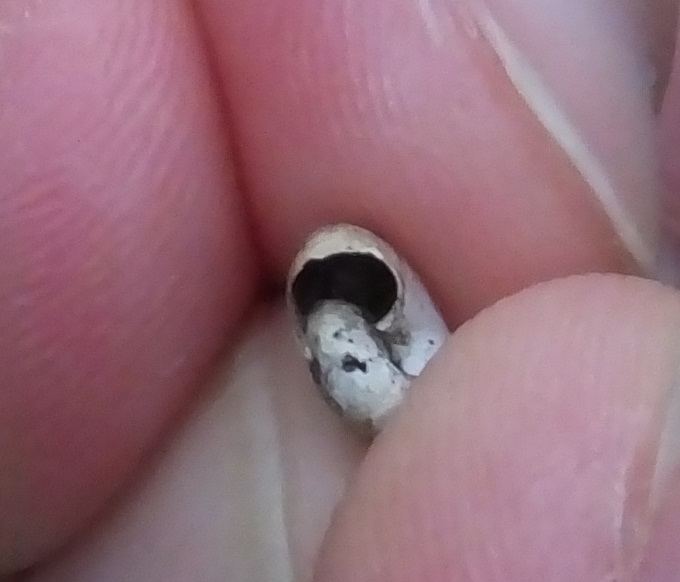
No idea what the snail is though

Within the quarry the plants were delectable and with the additional shelter there were butterflies everywhere.
 |
| Betony |
 |
| Common Blue |
 |
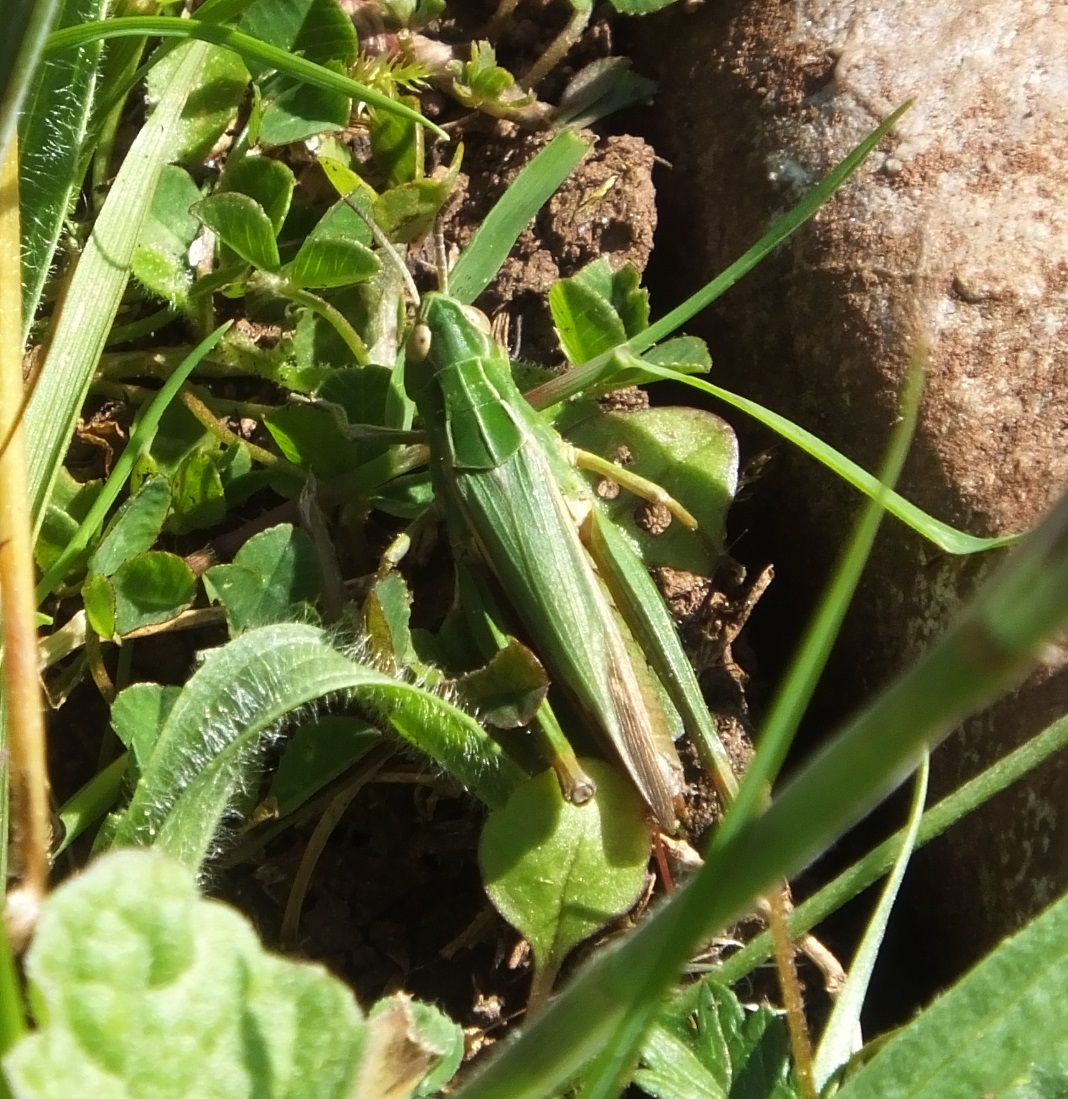
| Common Green Grasshopper |


Ringlet butterflies were everywhere almost as numerous as the Meadow Browns. This is a species not found locally for some bizarre reason, they're pretty common almost everywhere else. But the first one ever for the Fylde was seen the day before after strong easterly winds. There's a strong chance of it colonising our area in the nest few years.

The plants were superb but with nothing really different to the first quarry, lots of Common Spotted Orchids but nothing overly exotic...that is until we found a couple of Broad Leaved Helliborines.

Around the grassland were lots of ant hills. BD put his hand too them and found them to be rather warmer than the surrounding soil. A bit of a scrape of the surface revealed the Yellow Meadow Ants to be only a few millimetres below the surface.
 |
| Too small to get a proper pic of |

Part of the rockface has some interesting fossils in it which are apparently the trails of worm like creatures, Their position on the face means the surface that is now vertical was once horizontal.


Our best find here was one of the first we saw. Due to lack of experience with the fritillaries we expected this to be Small Pearl Bordered Fritillary but once back at Base Camp news came though from BD that he'd IDd it as one of our rarest butterflies High Brown Fritillary...the only frit we saw all day and it didn't stick around long; what a great fluke.

We moved on again and once again avoided the bird reserve going instead to a nearby Butterfly Conservation reserve instead.
Meadow Browns and Ringlets were order of the day but no fritillaries and no Northern Brown Argus which apparently are the site specialities.


The extra heat of the path was too much for a teneral Common Darter to resist, just like the Grayling at the previous site.

Better, or at least far less often seen by us, was a cracking Southern Hawker that settled on the outer twigs of an Ash tree just at eye level.


 |
| Lots of Chaffinches |

Lots of young Blue and Great Tits too and some juvenile Coal Tits, a young Marsh Tit put in a couple of brief appearances too.


We did get our best pic of a Bullfinch, OK so its far from any good but it is our best effort yet...maybe next time it'll be closer and not in the dark.

The reserve has just built and opened a very impressive tall viewing platform from which the views are nothing like you've ever seen on the reserve and we've never seen in all our visits from about 1971

Out on the mud there were few Lapwings and among them a juvenile Starling, a white male Ruff and a couple of Dunlins.
We didn't have time to give it proper justice but we can imagine there'll be some great views of the Marsh Harriers and Bitterns being seen over the next few months.
A great day out with loads of sights and sounds, we never mentioned the impossible to photograph swarm of solitary bees - can you have a swam of solitary bees? And we heard a Green Woodpecker, still no photo opportunity for BD though.
Can you top that for a day out??? Brillliant!
But then today after all that we were totally trumped when our Extreme Photographer sent through a pic he'd taken with his phone on the patch of rough ground over the road from his office on the industrial estate...

Where to next? It's the weekend and we might have another change of scenery tomorrow.
In the meantime let us know who's flukily rare in your outback.


