Showing posts with label fossil. Show all posts

Saturday, 18 July 2015

Up north on the limestone hills

The Safari picked up BD after breakfast and pointed the Land Rover at the motorway for a day's safari-ing around the limestone hills on the county border. We had a few targets in mind, a couple or three birds and a butterfly or two and an orchid.
Let's just say the day didn't quite go according to plan, the birds being abandoned early on despite adding little to our Year List Challenge total, although from Monika's posts she's been totally Orca'd-out recently and done little birding too. We think we're still in the lead by a feather or two.
Our first stop was at the quarry we've been a thousand times but we discovered that BD, not being a driver, had never had the opportunity to visit before. Here was the chance of two of our target species, Small Pearl Bordered Fritillary and Dark Red Helloborine. We had a better chance of the former as we hadn't heard if the latter had appeared this year, we last saw it three years ago. The strong and quite cool wind meant butterflies were in short supply. The wildflowers were quite spectacular around the car park area.
Common Spotted Orchid
At the other end of the height scale were lots of tiny Eyebright plants.
The predominant colour of the flowers was yellow, Ladies Bedstraw, Ladies Mantle, Hawkweeds, but numerous amongst the yellows were many intensely purple heads of about to open Majoram
The out of bounds rock face gave us a stark example of why it is out of bounds, a crack and rumble while we had a our heads down photographing the plants a sizable rock fell from high up the old quarry face. A look from the safety of the fence had us looking at a large patch of English Stonecrop apparently growing straight out of the solid rock.
Our favourite wasn't one of the most numerous but they are the most delicate of colours, Field Scabious.
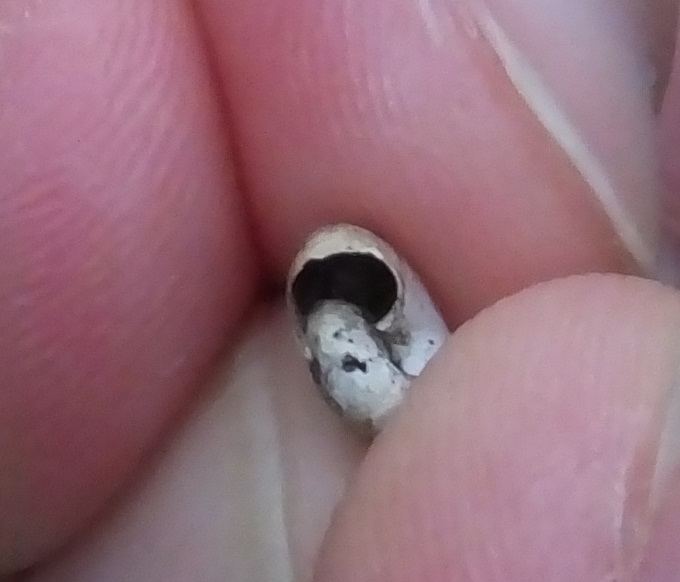
For the next site we bypassed the bird reserve as BD hadn't had a look at another old quarry before. This one has a walk in rather than an one site car park. The track takes you through some nice woods where BD's observant eyes spotted a couple of tiny snails worthy of pointing the lens at and a very small moth that turned out to be one we've had in the garden at Base Camp, Pammene regiana.


No idea what the snail is though

And that was one of the larger ones he found!
Within the quarry the plants were delectable and with the additional shelter there were butterflies everywhere.
Betony
Common Blue
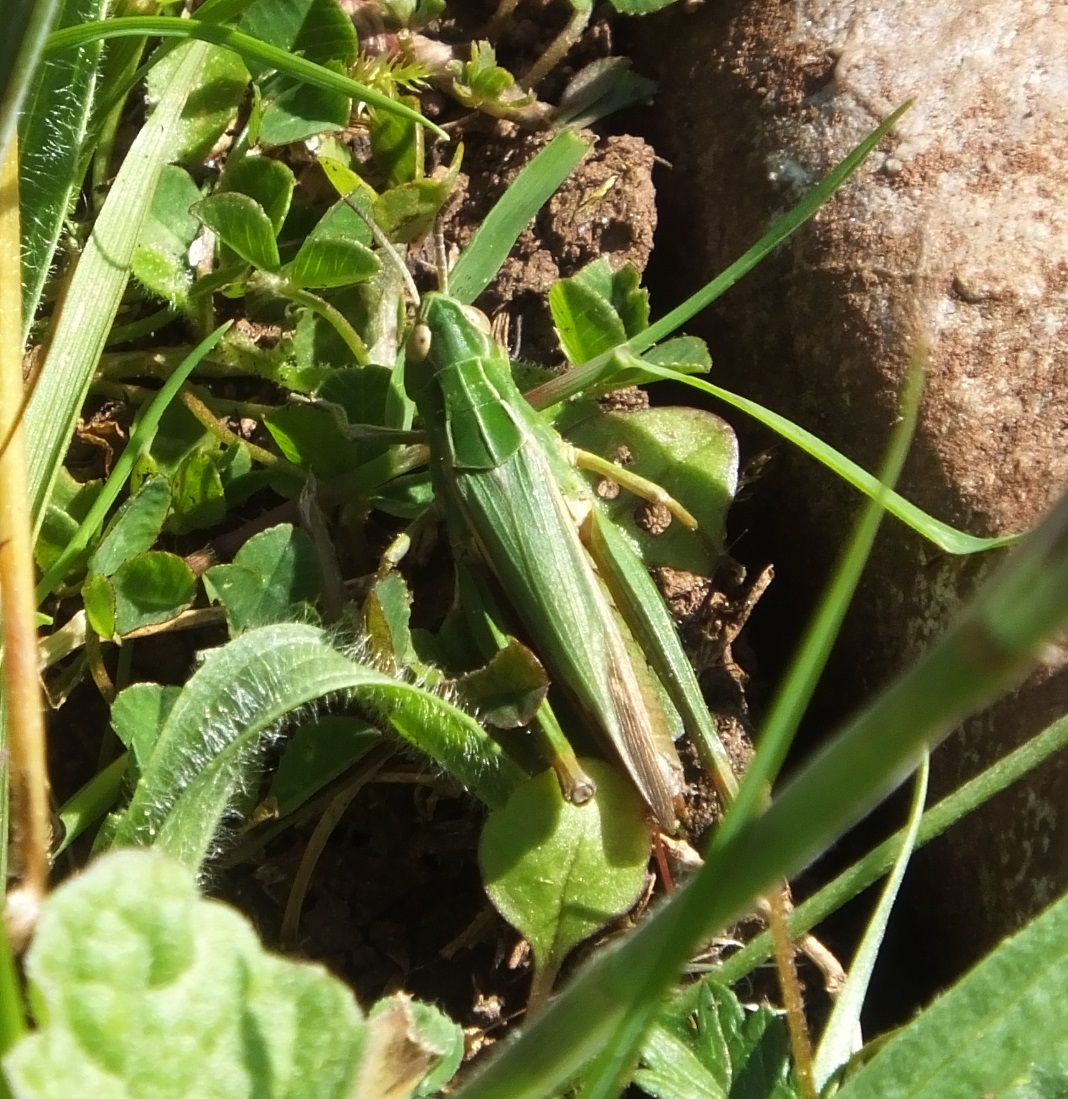
Common Green Grasshopper
Ringlet butterflies were everywhere almost as numerous as the Meadow Browns. This is a species not found locally for some bizarre reason, they're pretty common almost everywhere else. But the first one ever for the Fylde was seen the day before after strong easterly winds. There's a strong chance of it colonising our area in the nest few years.
The plants were superb but with nothing really different to the first quarry, lots of Common Spotted Orchids but nothing overly exotic...that is until we found a couple of Broad Leaved Helliborines.
Around the grassland were lots of ant hills. BD put his hand too them and found them to be rather warmer than the surrounding soil. A bit of a scrape of the surface revealed the Yellow Meadow Ants to be only a few millimetres below the surface.
Too small to get a proper pic of
A butterfly that wasn't a Meadow Brown or Ringlet caught our eye and fortunately it landed on a bit of a pathway and it gave itself up as a Grayling - a nice find.
Part of the rockface has some interesting fossils in it which are apparently the trails of worm like creatures, Their position on the face means the surface that is now vertical was once horizontal.
Our best find here was one of the first we saw. Due to lack of experience with the fritillaries we expected this to be Small Pearl Bordered Fritillary but once back at Base Camp news came though from BD that he'd IDd it as one of our rarest butterflies High Brown Fritillary...the only frit we saw all day and it didn't stick around long; what a great fluke.
We moved on again and once again avoided the bird reserve going instead to a nearby Butterfly Conservation reserve instead. 
Meadow Browns and Ringlets were order of the day but no fritillaries and no Northern Brown Argus which apparently are the site specialities.
All our recent sightings of Burnet Moths have been Narrow Bordered 5-spot Burnets so it was nice to come across a Six Spot Burnet for a change.
The extra heat of the path was too much for a teneral Common Darter to resist, just like the Grayling at the previous site.
Better, or  at least far less often seen by us, was a cracking Southern Hawker that settled on the outer twigs of an Ash tree just at eye level.
Eventually we did get to the bird reserve but with little time left we only got a s far as the feeders.
Lots of Chaffinches
Lots of young Blue and Great Tits too and some juvenile Coal Tits, a young Marsh Tit put in a couple of brief appearances too.
 A young Great Spotted Woodpecker was on the feeders too.
We did get our best pic of a Bullfinch, OK so its far from any good but it is our best effort yet...maybe next time it'll be closer and not in the dark.
The reserve has just built and opened a very impressive tall viewing platform from which the views are nothing like you've ever seen on the reserve and we've never seen in all our visits from about 1971 
There were Otters frockingly in the water not long before we climbed the steps.
Out on the mud there were few Lapwings and among them a juvenile Starling, a white male Ruff and a couple of Dunlins.
We didn't have time to give it proper justice but we can imagine there'll be some great views of the Marsh Harriers and Bitterns being seen over the next few months. 
A great day out with loads of sights and sounds, we never mentioned the impossible to photograph swarm of solitary bees - can you have a swam of solitary bees? And we heard a Green Woodpecker, still no photo opportunity for BD though.
Can you top that for a day out??? Brillliant!
But then today after all that we were totally trumped when our Extreme Photographer sent through a pic he'd taken with his phone on the patch of rough ground over the road from his office on the industrial estate...
Where to next? It's the weekend and we might have another change of scenery tomorrow.
In the meantime let us know who's flukily rare in your outback.


Tuesday, 23 June 2015

Invasion of the killer jellyfish

The Safari is exaggerating slightly. The day dawned bright warm and calm, actually it was well past dawn by the time we got out of our pit. Looking at the sea on our commute we were eager to get out but for the second day in a row it wasn't possible which was a tad annoying to say the least - it was just about perfect out there. Not to worry we would be out on the beach exploring with a group of youngsters soon enough.
Today we were near the pier rather than at our usual temporary rockpooling site so it was all a bit new to us. There wasn't much standing water near the new steps but a bit of a shingle bank that had been thrown up had a few strandlines on it which looked promising. We started off there looking for pebbles, one's with stripes in them, round ones, flat ones, ones that looked like a marble; the children were only very young. All the while keeping our eyes peeled for shells and other items of interest.
Once we'd looked at this small section and not found a great lot although the kids did like the seaweed with 'armbands' to help it float - Spiral Wrack and Bladderwrack - we wandered a fair way down the beach to the nearest pool of water. A decent amount of shells had been washed up here including all the favourites, Banded Wedge  Shells, Striped Venus, Common Otter, Prickly Cockles, Common Cockles, Mussels, Pod Razors, Bean Razors, Curved Razors, Telins, Tower Shells, Whelks, Rayed Trough Shells along with lots of Masked Crab carapaces. All of which found their way into the tubs.
In the pool lots of tiny young Brown Shrimps skittered away from the nets, many weren't quick enough and found themselves in the tubs too.
Fish catcher extraodinaire from last week RC found another flat fish, not a tiny juvenile this time but a full grown whopper, dead though.
Looks like the remains of a Dab
We'd already seen quite a few mostly small jellyfish stranded on the beach but were quite unprepared for the mass of them in one corner of the pool. Lets just say there were a few more than plenty.
Almost all appeared to be dead, we didn't see any pulsating trying to swim off. The great majority were the harmless Moon Jellyfish but scattered here and there were a few orangy Lion's Manes.
At the nend of the session we gathered together to show everyone what each other had found. There's a nice big Thornback Ray mermaid's purse in the middle and a 'modern' lump of limestone that's sheared in the shape of what is almost definitely some kind of largish fossil.
The seaweed bottom left is a piece of the invasive non-native Wireweed originating from the Pacific Ocean.
Back at the office at lunchtime the sun was still strong and bright and had brought a few insects out in the wild garden. There were some Tree Bees collecting pollen and our first Large White butterfly of the year here. There's still nont that many hoverflies about although there were several of this shiny metallic Broad Centurion Flies (Chloroyia formosa).
A pair of bee mimicking Narcissus Bulb Flies were really making the most of the sunshine.
A quick look at the sea at lunchtime revealed it was very poor - other than a handful of Herring Gulls there was nothing to be seen at all.
Where to next?Back in the rockpools tomorrow.
In the meantime let us know who likes jelly in your outback.


Tuesday, 21 May 2013

Tales of the riverside

The Safari went to the beach yesterday and boy was it murky. Last time we were here there were Gannets diving just off shore they may have been there today but there was no way of knowing!
As we walked Frank on the beach we spottted a surfer! The water temperature is no more than a bone numbing 8C.


The beach was being moved - a storm had thrown up thousands of tons of sand against and over the wall so it was being taken back down the to the water's edge.
They've been shifting the sand for six weeks apparently. Each trailer load was about seven tons.
This morning we had a lovely early walk along the river. We were out by a couple of minutes after 05.00. The walk down to the river was cacophonous with birdsong. All your favourites were in full voice, Blackbirds, Song Thrushes, Robins, Wrens, Willow Warblers, Chiffchaffs, Blackcaps, a Nuthatch and Stock Doves. Across the fields on the other side of the lane we could hear Skylarks and Yellowhammers...all very nice aswas the heady aroma from the Wild Garlic (aka Ramsons).
 Down at the river all seemed normal, the resident Gosaanders were as flighty as ever - really hard to get close to them. Nothing seemed to be out of the ordinary o we decided to amble downstream to the Sand Martin colony. Turned out to be a good move!
Sedge Warblers were numerous in the bankside vegetation and crossing the little bridge over the brook we chances]d upon a Roe Deer thrashing his antlers through a small sapling a mere 20 yards away - we were in the open and trying to raise the camera as sneakily as we could we weren't sneaky enough he saw us and for a moment stood his ground but then turned an ran barking fiercely in indignation.
A little further on there is an arch way beyond which the riverside becomes a little wilder. We passed under it and could hear some squeals above the water tumbling over the low wier. Scasnning the far bank we soon found the noisy little devils, a mother Otter with two cubs have a last play before bedtime...brilliant!!!
We rattled off a few shots which are far from the best pics of Otters you'll ever see but to be fair they were a long way off and it was still before the sun had climbed over the eastern hills. While watching their antics a Kingfisher flashed over the top of them. This was becoming a pretty good morning!
Eventually they disappeared into the overhanging vegetation and we moved on. The river was pretty quiet and we began to think that there were no Sand Martins this year as we hadn't seen any or even any Swallows hawking over the river. We needn't have worried. climbing over the last stile in to the sheep field which has the colony's sandy bank there they were in abundance high over the fields rather than over the river.
We stopped to take a pic of the river looking back upstream.
Across on the far bank we could hear Song Thrush, Sedge Warblers, a Whitethroat, a Blackcap, we hoped we might hear a Cuckoo but instead heard a Garden Warbler (161) singing from a dense patch of Willow scrub from who's cover a Heron stealthily fished the margins of a area of slack water.
All was as peaceful as it gets, until the anxious chitterings of the Sand Martins alerted us to a predator, we span round to see a raptor cruise against the backdrop of trhe far trees, Buzzard - not common in these parts, we're not far from 'Buzzardgate' land - but no wait a minute better views shows as it came over the river showed it wasn't a Buzzard at all - Osprey!!! (162). Seriously hitting the jackpot now! We fumble with the camera as it turned and disappeared round the bend in the river before we could press the shutter button.
The river is noted for its Salmon and the fishermens' boats were tied up at regular intervals. We hoped to see one jump at the weir but the only one we found was floating downstream pretty much deceased.
As you can imagine there was a very definite spring in our step on our walk back to temporary Base Camp. And there was more to come. At the old walled garden we saw a bird flit out of a hole in the crumbling stone work - it looked sort of sparrow like but there are no sparrows here - oh yes there are! Getting on it in a flower filled Wild Cherry (aka Gean ) tree it was nothing less than a Tree Sparrow!
A Brown Hare was in a different field to yesterday's two which were still in their field later in the morning when a Buzzard - shhhhhhhh don't tell the local Pheasant brigade - flew over being seriously mobbed by the local Rooks and Jackdaws.
After a light lunch we headed out to the seaside again, a different beach this time. Frank had a ball to play with for the first time in almost a year. We were cautious with his knee and didn't let him do too much but a splash in the breakers was a real treat for him!
Birdwise it was quiet. A pair of Pied Wagtails combed the beach while out at sea on the horizon Gannets dived and closer in in the swell several small flock of Eiders bobbed about.
Then we picked up a broad winged raptor well out to sea somewhere off Lindisfarne and watched intently as it drew nearer the coast, what was it? Too far to tell, Buzzard, Marsh Harrier, Osprey, Holy Grail (aka Honey Buzzard)??? Frank decided to flip out and have a bit of frutch about and taking our eye off it we lost it never to refind it!!!! A check of Birdguides back at tBase Camp showed nothing of note had been seen from Holy Island or the Farnes Islands at that time so probably not one of the latter two, or the watchers at those locations missed it. An immature Peregrine flew past us as we about to load the car and leave.
The beach had some impressive fossils in the rocks of something perhaps a bit like a Woodlouse or Sea Mouse.
Back at Base Camp the sun was shining and Frank wanted to dry off outside which gave us the opportunity to miss a really nice pic of a Green Veined White butterfly although we did get the trickier shot of this Common Dog Violet(?).
Can you tell the species from the sepals?

Just chillin
Where to next? Boaty ride to the Farne Islands tomorrow and with no Frank we can actually land and have a mooch about on them.
In the meantime let us know what no-one else seems to have seen in your outback.