Showing posts with label dipper. Show all posts

Monday, 25 March 2024

Rummaging around the foothills

The Safari has been on the trail of some early summer migrant birds. For the most part we've been traipsing up n down the prom on the search for Wheatears. For the most part we've been thwarted by poor weather conditions though. One grotty, grey morning we saw a small group of Common Scoters sat on the sea not far beyond the low water mark. That's at least half a mile from the seawall but easily the nearest we'd seen this species this year, normally they are just black dots out on the horizon. T'mutt was hastily returned to Base Camp and swapped for the camera, luckily the flock hadn't flown off. Not the best pic but still #122 for our Challenge.


Despite the weather not improving we continued our promenade Wheatear quest failing to find any but did bump into the local male Kestrel hovering almost at eye level along thr cliffs. We usually see him in great conditions when we don't have the camera, or if we do the wind is in the wrong direction and we don't bother to take 'bum shots'. Today the wind was right but the light was pants and he was a little more distant than we would have liked.

A couple of unsuccessful Wheatear days later we had a wander to Marton Mere to join the volunteers, something we've been meaning to do for some time. We walked in from the north east passing a veritable plethora of Chiffchaffs, they were singing everywhere, and some were even showing themselves!
Also singing were a few Cetti's Warblers, Wrens and a couple of Robins, from deep in the scrub one of the small local population of  Bullfinches called.

We arrived at the worksite a little before the volunteers so sat on the nearby bench soaking up the spring atmosphere . We were joined by old mate AL and just as he sat down a Jay all to briefly landed in the bushes in front of us, far too quick for us to raise the camera, we've got a sneaking feeling that Jay is going to be this years Challenge bogey bird!
The volunteers arrived and we got stuck in to some dead hedging for a couple of hours. That's us at the back wandering around aimlessly. The deadhedging is made from cut back Bramble and other sgrub trimmings to help keep mostly dogs but also unleashed people out of the scrub areas during the nesting season.

We couldn't stay more than a couple of hours, it was a very pleasant spring day and t'mutt was beginning to get a bit hot so even if we had been able to continue working a longer we'd have had to have stopped to take him back to Base Camp sooner rather than later anyway. The walk back to the car gave us a couple of opportunities to try to get a pic of a Cetti's Warbler, but they were either too obscured in the vegetation or posing very nicely for the briefest of seconds and flitting off, like the Jay, far too quickly for us to raise the camera. We did another pic of a Chiffchaff though. #123 and March target of six new species reached, better still four of those weren't on our target list but 'bonus birds' if you will.
Another bird that wasn't on our radar for March, and one we didn't see at all last year never mind photograph, was a Green Sandpiper that dedicated local patch worker TS had found on a flooded field which was on our route back from the Mere so we stopped for a quick look but had no joy. We decided that if it was reported the following day we'd try again after getting some more detailed info about its exact whereabouts.We did go back the next day and had a look from where we'd unsuccessfully looked from the previous day and Bingo there it was and like most scarcer birds seem to be it was the furthest bird from us by far. A good addition to the tally, #124, and a big thank you to TS for finding a local one, putting the news out and the extra info.
And so onto the continuing saga of no Wheatears...we took the camera on every dog walk with half decent weather to no avail. And then a grotty no camera morning there was what we were looking for stood on the seawall not five yards in front of us - could we get a phone pic...no chance! And then before we'd got half way down our usual dog walking route we found another that soon disappeared when another dog walker came the other way. Just our luck it was a grim camera-free morning. Drat, drat and double drat. 
The next day the weather was morev conducive to carting a heavy camera round and much less  likely to get it water damaged, but there wasn't a sniff of a Wheatear to be had, We console ourself with taking some snaps of the passing Herring Gulls.
Further Wheatear meanders with t'mutt continued to prove fruitless, just as well really as they were mostly camera-less too.
Friday came around, and that's the week's day out  on safari with CR and IH. We had hoped to go up to south Cumbria but the weather had other plans for us so we stayed relatively local and had a day out on the foothills of Bowland, meeting IH at Beacon Fell's Visitor Centre. There was addition exctiement here as the North West Stages rally was being set up for the weekend. Here's a bit of what they got upto on the lanes we'd be driving later in the day. There going nearly as fast as we do if we've had news of a good bird in the area.
Once IH had arrived we had a look at the feeders at the visitor centre and they didn't disappoint. It's a bit of a shame you have to view them from inside the VC and there's a net acrosss the window to stop the birds trying to fly through the VC and hurting themselves crashing into the glass but you are up close and personal to the action just a few short feet away. The usual feeder suspects are there, Blue Tits, Great Tits, Coal Tits, Chaffinches with the added excitement of lots of Siskins, a odd Nuthatch and the stars of the show, the speedy Bank Voles.
A walk through the forest to the Trig Point at the top and then down around the back produced very little, just a smattering of Coal Tits, Siskins and Robins, the strongcold wind not helping at all. So it was onward to our next port of call, Brock Bottoms - there's an ointment for that in the first aid kit in the car!
Here there wasn't as much water in the river as we feared which was good but at the car park a fair portion of the riverbank had been cordoned off where a flood had washed away several trees and taken away a good few yards of riverbank with them. The flood hadn't seemded to have changed the island in the stream there and Butterbur flowers were beginning to show through the shingle.
Walking down towards the first proper bend in the river, Dipper Corner, we came across a goodly patch of Wood Anemones, an indicator of Ancient Woodland.
We did see a Dipper at Dipper Corner but the bankside vegatation makes it difficult to get pics from there and at this time of day you're looking straight down the barrel of the light reflection off the water. So we hoped we'd see some more further on. We've already had Dipper for our Challenge but it's always good to get an improved pic which we hoped to do. The bird we really 'needed' was a Grey Wagtail having seen only one so far this year and that, weirdly, was in the garden at Base Camp during the Big Garden Bird Count. It wasn't long before IH saw some movement in a large fallen tree straddling the river, a pair of displaying Grey Wagtails. Nice but tricky to get anything like a decent shot of. #125
Continuing our walk through the fairly quiet riverside woods past the archaeolgical remains of the old mill workers' cottages we did finally meet up with another Dipper.
Great to listen to it singing too.
There were more Grey Wagtails here too.
We stayed a while trying to improve our pics of both species, having much more luck with the Dipper.
Wouldja look at those nictitating membranes, they protect it's eyes when foraging underwater.
And a typical 'on a rock' pose
And the other way round
We carried on downstream towards the old mill renewing our aquaintance with an old friend, the smallest plant with the biggest name - Opposite Leaved Golden Saxifrage.
Believe it or not there is an Alternate Leaved Golden Saxifrage, and it occurs at this site but we've never been able to find it here - or anywhere else for that matter. It's a much scarcer and less widespread plant. The nectar in the tiny flowers of our 'OLGS' was being enjoyed by a few Drone Flies, Eristalis pertinax.
Beside them on a patch of emerging Wild Garlic was a shiny blue beetle, possible an Alder Beetle off the adjacent bankside Alder trees.
In the afternoon sunshine and down in the steep valley sheltered from the cold wind we had hoped for our first butterfly of the year but these were just about all the invertebrates we came across. 
We went as far as the old mill before heading back to the cars and lunch. Passsing the same Grey Wagtail and Dipper on the way but with butties beckoning we didn't hang around too long.
While eating lunch we watched the feeders in the car park but they didn't give any photo opportunities. A procession of rally cars went past presumably reccying the route for pace notes for the event tomorrow, while a cheeky Spaniel appeared and began to hassle IH for some titbits, good job it didn't come to us - we're to mean to give t'mutt owt to eat away from his mealtimes.
Two sites were in the offing after lunch, Lydiate Lane or Grizedale (correctly with a Z this time) we opted for the latter as the former would have been just a smaller version of what we had just done and the latter held the prospect of finding some scaly things.
We drove more rally lanes to get to the parking area for Grizedale where we found safety tape on the tight bend warning any potential spectators not to stand there. No standing around for us we were off down the hill towards the river. It was fairly warm and still sheltered as we came up to the Slow Worm site. Unfortuantely turning over several of the rocks they like to hide under didn't produce any, perhaps they weren't out of hibernation yet. We've not been here for a couple of years and it was a shock to see the damage that mountain bikers had done in the big gully there, churned up tracks all over the place, trees cut down and obviously lots of disturbance to a formerly quiet area.
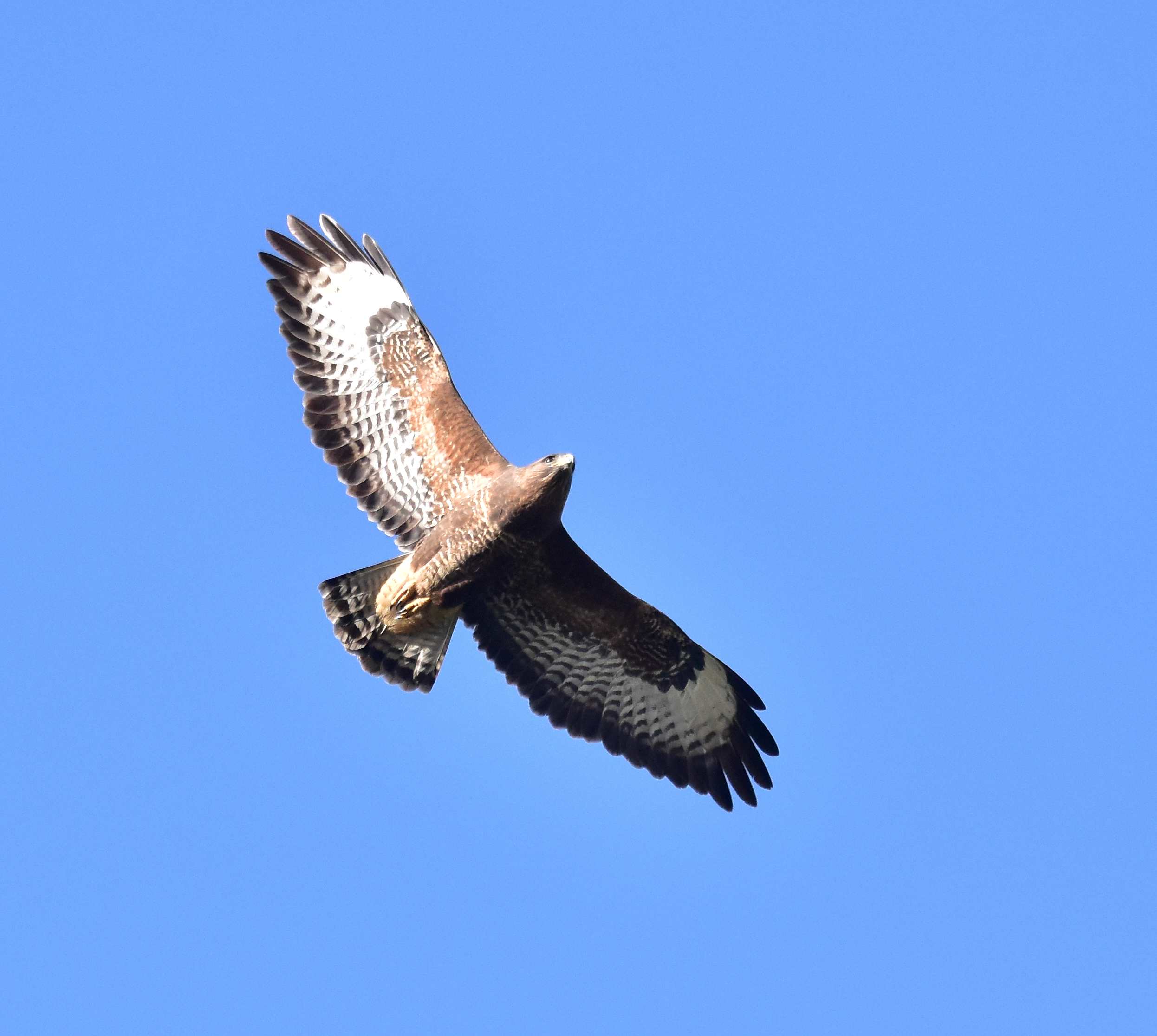
Working our way carefully down the steep valley side back to the main path we saw a Buzzard overhead, just about the first bird of the afternoon. Down in the woods all was deadly quiet, the most exciting thing we found was this rather large Scarlet Elf Cup fungus.
The reservoir dam didn't have any Common Sandpipers working theirv way along its edge, still a week too early we guess but IH did hear a Green Woodpecker yaffle in the distance, a good tick for here and good to know they're still around it's a good few years since we've seen or even heard one here. The res itself was devoid of life, no Goosanders - not even a Mallard. We should have taken a photo of the absolute butcvhery someone with a tractor mounted flail someone had done to the pathside shrubs and trees - horrific, it was really bad and whoever did it shouldn't have been allowed out with anything more than a pair of secateurs!

Back at Base Camp we've been continuing our unsuccessful quest to photograph a Wheatear, it's hard to photograph the invisible. We did see a promenade mega rarity this morning though, a Wren was hopping around the seawall, never seen one here before in several years of wandering up and down Chat Alley and beyond.

We've got another rant coming but we'll leave that til next time.

Where to next? Yet more grotty weather is forecast so it;ll probaly be more tales of unsuccessful Wheatear hunting and maybe another visit to the Mere volunteers...weather permitting!
 
In the meantime let us know who's been dipping in and out of the water in your outback.


Wednesday, 28 February 2024

Onward, here, there, and everywhere and even further afield

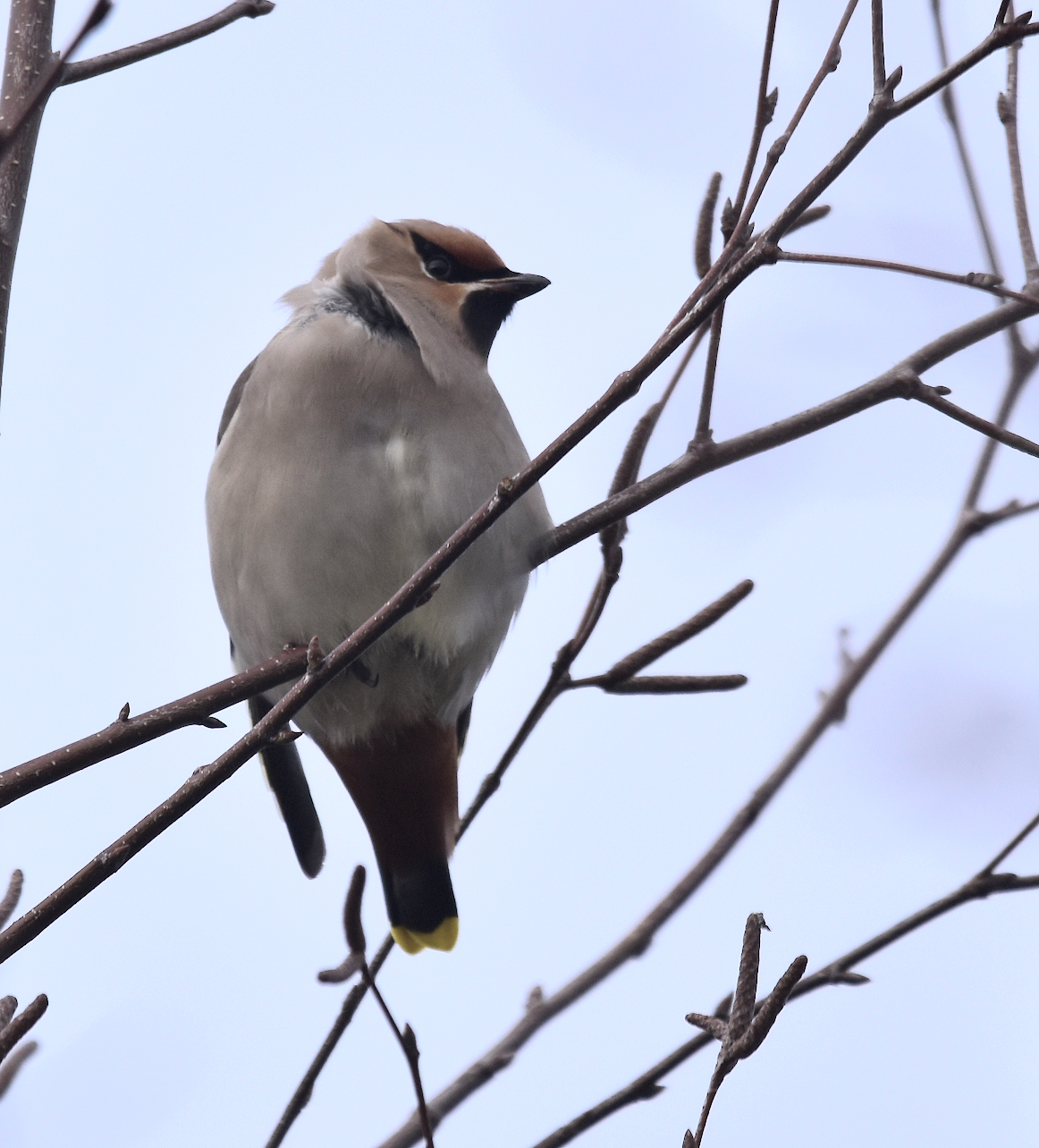
The Safari mentioned at the very end of our last blog that theres not much change in the local birdlife at this time of year, the birds are pretty much settled down in their favoured spots waiting for the winter to draw to a close, saving energy and staying warm are order of the day. Well that was about to change. As all UK based readers will know this winter has been a 'Waxwing Winter' and these birds do move around...some so quickly they've moved on before we'd finished reading the news of their whereabouts on several occasions so far. Then news broke of two not too far away but we couldn't go that day, panic was setting in, this looked like it wasn't even going to be our fourth dip of the winter.                                          We were mightily relieved to learn they had stuck overnight so picked up CR and off we went...arriving at the site, after a minor detour, we spotted a couple of birders who told us we should have been there five minutes earlier...ARRRRGGHHH. They pointed in the direction thwe birds had flown off in and we had a drive round the local housing estate being viewed with some suspicion by a few of the residents. Then we went up the lane we'd detoured down earlier (at least we were in the right area) but there was no sign of our quarry. It was indeed fourth time unlucky. Thankfully the birding gods were with us as again there was positive news the following morning so off we went again. This time as we approached we could see a birder on the other side of the road who looked to be looking at something...we waved and made a thumbs up and then a thumbs down sign...she replied with a thumbs up. Happy Days. A quick dash across the raod and two minutes later we were enjoying poor views of two Waxwings high up in the tree tops. #111

Better was to come, they stayed another night and we were able to go back with the intention of getting some shots of them feeding on the Guelder Rose berries down at eye-level like everyone else was putting on social media. (That puts paid to the widely accepted theory that nothing eats Guelder Rose berries). Anyway we arrived on site, the birds were still there...and when we say there they were still high in the tree tops. Guess what..yep, the birders on site told us they'd been down to feed on the berries and were now up there digesting them, should have been here ten minutes ago...AAARRRGGGHHH. Best hang around until they drop down again. In the meantime we took some more, slightly better, tree top shots.
Nearly two hours we stood by the roadside waiting for them to drop onto the berries. The Waxwings had other ideas, they started calling persistantly then flew off away over the houses... AAAARRRRGGGGHHHH. At least our dips had been broken, it would have been dreadful to be the only birder in the country not to have connected with them this winter.

For our nest safari we had been hoping to head up north to Leighton Moss again but the coninuing wet weather meant we'd be wading through knee deep water to see the same few birds as last time so we decided to head back to (the much drier underfoot) Martin Mere to see the same few birds as last time. 

As usual we met IH in the Discovery Hide were we tried our hand at getting some gull in flight shots. There were many more Black Headed Gulls than last week and they were in the early stages of their pairing/breeding behaviour so there was lots of noisy activity. We've got a beginners talk on gulls coming up later in the spring (all will be revealed in due course) so took the opportunity to get a load of hopefully useful shots.

A cold wet wind blew through the window of the hide so we soon decamped to the more sheltered feeders. It was fairly busy with the usual suspects but without the Great Spotted Woodpecker of our previous visit.
As you can see the ringing team have been very active, almost all the birds we saw sported brand new shiny bling. Including this Siskin which was a good spot, we've never seen one on the feeders here before.
The Reed Buntings were still glreaning from the surface of the water
And some had found the table top with its nicely positioned perch
All this excitement was proving too much so IH suggested moving on to nearby Mere Sands Wood just for a bit of a change...and there might be a Jay which we needed for our Challenge.

It was wet and grey in the woods with little to point our cameras at until we reached the first hide where in the gloom beyond gloom, through the heavy drizzle, at the farthest point away from us, a tiny orange spot sheltering under the dark branches of a huge Rhododendron bush was a male Mandarin, but could it be captured on digital film? The answer was yes - just - #112 but only after a lot of deleting absolutely dire shots that could have been nail varnish on Bigfoot's toe and some serious processing we ended up with this single useable identifiable pic.

The rest of our visit continued in the same gloomy veinbut there was some good stuff to be seen like several Goosanders.

IH found the first Toad we've seen this year and AH found what's probably a Geen Shieldbug but still in its winter garb.
So a wet but still fun day out with good mates. Only one new species was added to our Challenge tally but that now leaves just three more to reach our February target with half the month (and we get an extra day this year) to go.
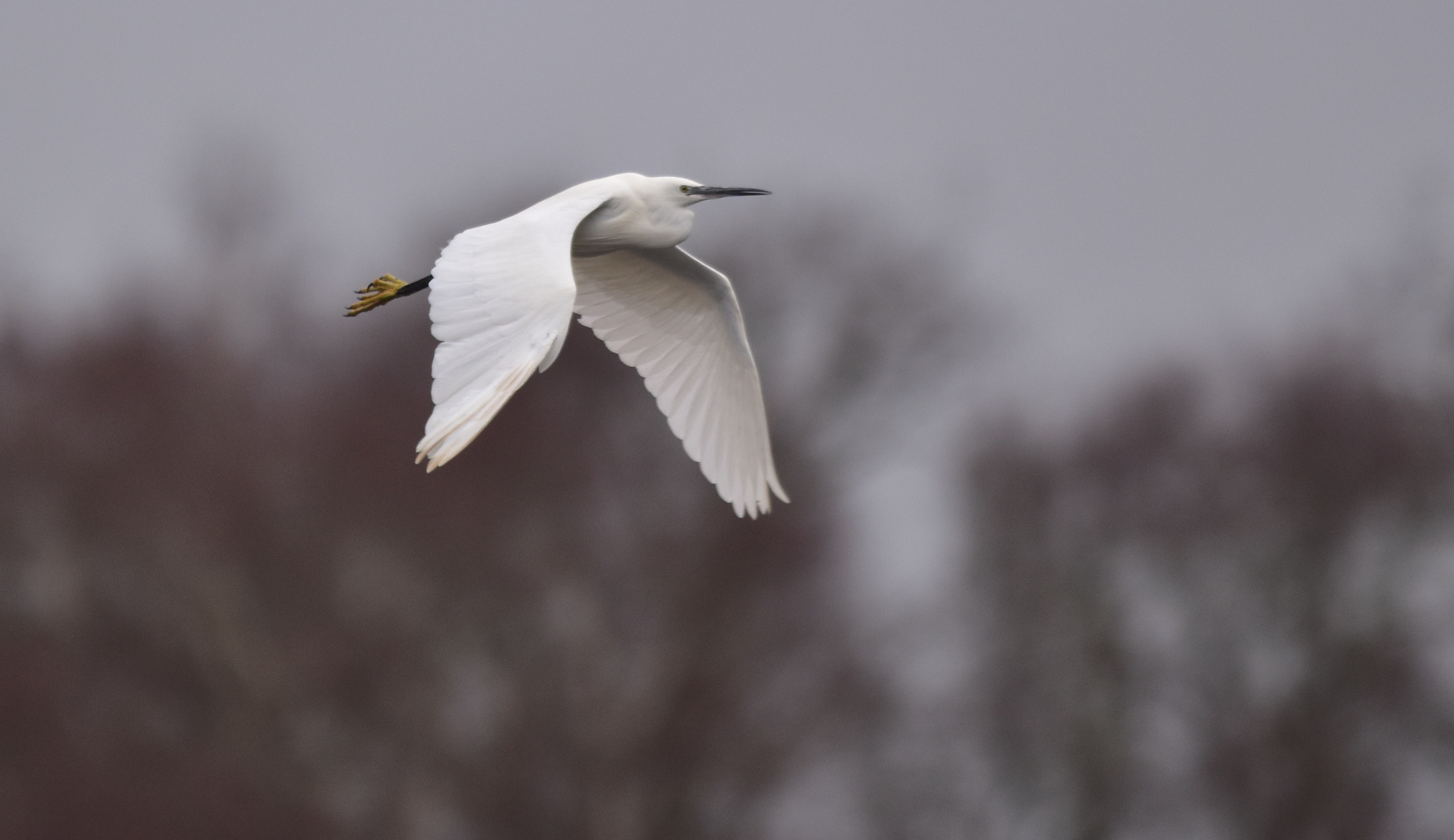
A couple of days later we had an errand to run up Fleetwood way so took t'mutt for a walk along the prom to see if we could catch up with any waders, in particular the Purple Sandpiper that's been hanging around with the large Turnstone flock. No such luck and we've not had any joy with it at the high tide roost on the old boating pool wall close to Base Camp this winter either. The only waders we found were small numbers of Sanderlings and even fewer Ringed Plovers.
There's always something to see though and our attention was turned inland when the sky brightened up a bity and the Skylarks on the adjacent golf course started singing from their lofty song flights. Eventually one landed almost within range of our lens. #113
On the way back to Base Camp we had a quick stop at the old boating pool but there was very few waders in the roost. The next day we tried again but again very few waders were on the wall, where are they all going these days? Not to be outdone and ever hopefully we went again the following day. Yet again there were no more than a handful of waders but there was a small bird sat just beyond them...and one we wanted...a Rock Pipit #114.
A couple of Pied Wagtails mooched around the artificial rocks.
The Rock Pipit left just one more species to photograph for our February target of 15 and well over a week left in which to find it. What would it be...we put a plan together for it to be a biggy, but would the plan hold???
Our initial thought was to head back to Leighton Moss and see if there were any showy Water Rails along the causeway. Once again the weather had other ideas, heavy rain for 36 hours before meant that much of the reserve would be flooded so an alternative was quickly arranged. We were to meet IH at Sizergh Castle for a rendezvous with their elusive Hawfinches, where they had been very elsusive for the safai and CR over recent years being either unlucky, thwarted by deep snow and even turning up one year to find the car park closed for re-tarmacing - you couldn't write it! 
Today was different IH was there well before us and as we pulled into the car park he was sat on the cafe verrandah pointing excitedly skywards. From where the car was parked we could only see the low sun burning out our retinas so car doors were thrown open optics gathered and we dashed over to where he was sat to be shown a lone Hawfinch high in a Hornbeam tree in the middle odf the car park. Getting a pic of it was tricky with lots of branches and twigs in the way. CR managed this shot
but we couldn't get a way through to it so moved slowly to the other side of the tree. As we did so another car load of birders was diembarking their vehicle so we pointed it out to them...maybe we shouldn't have as no sooner had we got round to the other side of the tree withe the sun now behind us and far fewer twigs in the way it flew just as we began to lift the camera; those 60 seconds showing the new arrivals the bird cost us dearly...and worse most of them didn't see it when we asked them later. We hung around for a good hour more as IH had seen them coming and going all morning before we arrived, even a flock of five at one point but sadly we only got a couple more fleeting glimpses of fly-over birds and a couple of maybes that disappeared into the foliage never to be seen again. Ah well c'est la vie - no doubt we'll be back for another look before March is out.
Plan A failed but the day was young and we had another site or two to visit. From Sizergh we drove the few miles further to Fowlshaw Moss were the car park feeders were busy with a nice mix of finches, a few Tree Sparrows and a Great Spotted Woodpecker.
And then,while eating a tasty looking pasty, CR said there's a Water Rail under the end feeder. Stretching up on tippy-toes leaning on the car roof we could just about see it in the gloom of the ditch at far side of the car park.
Thoughts of nearly but not quite submitting the Hawfinch to the SD card were (almost) banished as we hit our target for February, and with the very same species we'd hoped but in a different location. 115 reached, now what? Do we stop for a few days or carry on and potentially eat into March's target which is only another six. That Law of Diminishing Returns is really biting hard now! At Fowlshaw there is another species that isn't on the 'list of potentials for March, Lesser Redpoll. So far we hadn't got out of the car park and we'd not seen one come down to the feeders nor heard any in the trees nearby nor flying over. Only one thing for it - go and have a look at their other feeding station a few yards away. That one wasn't so busy and again no sight nor sound of any Redpolls. The sun was out but the wind was cold as we hit the boardwalk trail. Last year we'd found our very first February Common Lizard at this site so it was deffo worth a look today particularly in any sunny sheltered spots. We searched high and low, well exclusively low, in sunny spots under sheltered bracken, along the sunny edge of the boardwalk, which we flet with the back of our hand and it had some warmth to it, and at the base of likely looking trees to no avail...but IH did spot a small group of Lesser Redpolls making their way through a copse of thick Hawthorn and Silver Birch, we struggled to get the bins on them in the deep cover and none of us managed to get a lens on them, another one for next time. We did find some likely looking lizardy/snaky spots that we'd not come across before that are worthy of further investigation in a few weeks time when the weather has warmed up a bit. Back at the not car park feeding station we had a chat with the Rangers while they had their lunch break away from boardwalk repairs. Still no Lesser Redpolls but a couple of Coal Tits and at least one Marsh Tit darted in and out.
Once the possibilities of Fowlshaw had been exhausted there was still plenty of time to do another site. IH really didn't want to do Leighton Moss so suggested we follow him to a nearby riverside walk he knew. Once off the road and over the stile we were in a different world, the river running wide beside us as we walked up the hill past some impressive veteran trees. Eagle eyed IH came up trumps again when he spotted a Dipper close to the river bank. It flew but a  bit of stealthy stalking found it downstream on the other side but now much more distant.
#116, we watched it for a few minutes before it flew further downstream and was lost to view. A top spot by IH again! He was certainly earning his Spotters Badge today. Now Dipper was on our list of March potentials so we've made our meagre target of just six perhaps a wee bit harder. What else could we find on this wander through riversides and woods? We'd not gone far when a herd of Fallow Deer came into view as we came to the crest of a rise along the path. Not unexpected as we were in a deer park and these are captive animals but not really domesticated as cows or sheep. Their dark colour took us aback at first and we thought they may be Sika Deer but no they are in fact a 'black' form of Fallow Deer and have been on the estate for about 300 years.
Many of the trees were planted at that time too and some of them have been damaged by big the storms of recent years. There's certainly some weird and wonderful shapes.
Continuing on along the footpath we came across another group of deer lazily chewing the cud taking it all very easy. You can tell they're used to people as they hardly bothered to look up as we stopped to get some snaps.
A few yards further on we got a better angle on him
Another one looked bizarrely Kangaroo like.

After leaving the estae and crossing a rather wet and fruitily scented field - looking at the tractor tyre marks we surmise it had recently been slurried, we ended up on a track leading back down to the river where the patch would take us under the main road on a ledge buit into the bridge stanchions. Above the track before we reached the bridge a pair of Buzzards circled over our heads.
Passing under the bridge we came out on a lane looking down into a bit of a gorge in the river which looked vaguelly familar. IH consulted his map telling us we were about to cross a bridge in a 100 yards or so and whe nit came into view we recognised it as the place we really ought to spend some time looking for leaping Salmon, Sedgewick Force. Now that is east of Sizergh Castle, it didn't feel like we'd walked that far but now we were at the furthest point all of a sudden the way back on the other side of the river felt like a bit of a hike.
Our route back was fairly uneventful other than for passing some very impressive Oak, Beech, Lime and Sweet Chestnut trees until we neared the road where our cars were parked. There we found another group of the balck Fallow Deer.
Again they went about their business oblivious to our presence and we were able to get some really close full frame shots. 
In the distance from the trees close to where the cars were parrked we could hear a Jay calling repeatedly, a species that's eluded our lens so far this year, in fact we've only had one fleeting glimpse of one. It is on the Potentials for March list but it was slightly annoying that it kept itself hidden all the while we walked back to the cars. Wonder if we'll get it in March??? And so ended a fabulous and diverse day out in south Cumbria.
Back at Base Camp the following morning we caught sight of the Snow Bunting on the dunes while out with t'mutt again. As per usual we didn't have the camera with us and it was way to far away for even contemplating as phone pic especially after our previous 'Weasel' attempt. There ws no sign of it on our late afternoon dog walk, however the next morning there it was again. This time we cut the dog walk short and went back for the camera only to walk up and down the prom for an hour or more without so much as a glimpse of the darned thing...where does it go??? Lunchtime saw us do another hour or so, again without any joy. The sun was more or less still out for our late afternoon dog walk so again we took the camera and this time after only half an hour we struck gold after seeing it being fluched by another dog walker. Unusually this time it didn't disappear to who knows where but stayed low down on the dune edge and began feeding. It was still very flighty having a little feed here before either flying or running mouse-like through the vegetation to start feeding in a new spot. Keeping up with it while dragging a reluctant 30+kg dog was easy but we did at long last manage to get some shots off. #117
With two species now crossed off our 'Wanted for March' list we've reduced our target to 6 out of the 10 remaining potential 'victims'.

Where to next? Another further flung safari is coming up but one that is still within our 75 mile Challenge radius - just.

In the meantime let us know who's finally fallen in your outback.