The Safari has been on the trail of some early summer migrant birds. For the most part we've been traipsing up n down the prom on the search for Wheatears. For the most part we've been thwarted by poor weather conditions though. One grotty, grey morning we saw a small group of Common Scoters sat on the sea not far beyond the low water mark. That's at least half a mile from the seawall but easily the nearest we'd seen this species this year, normally they are just black dots out on the horizon. T'mutt was hastily returned to Base Camp and swapped for the camera, luckily the flock hadn't flown off. Not the best pic but still #122 for our Challenge.

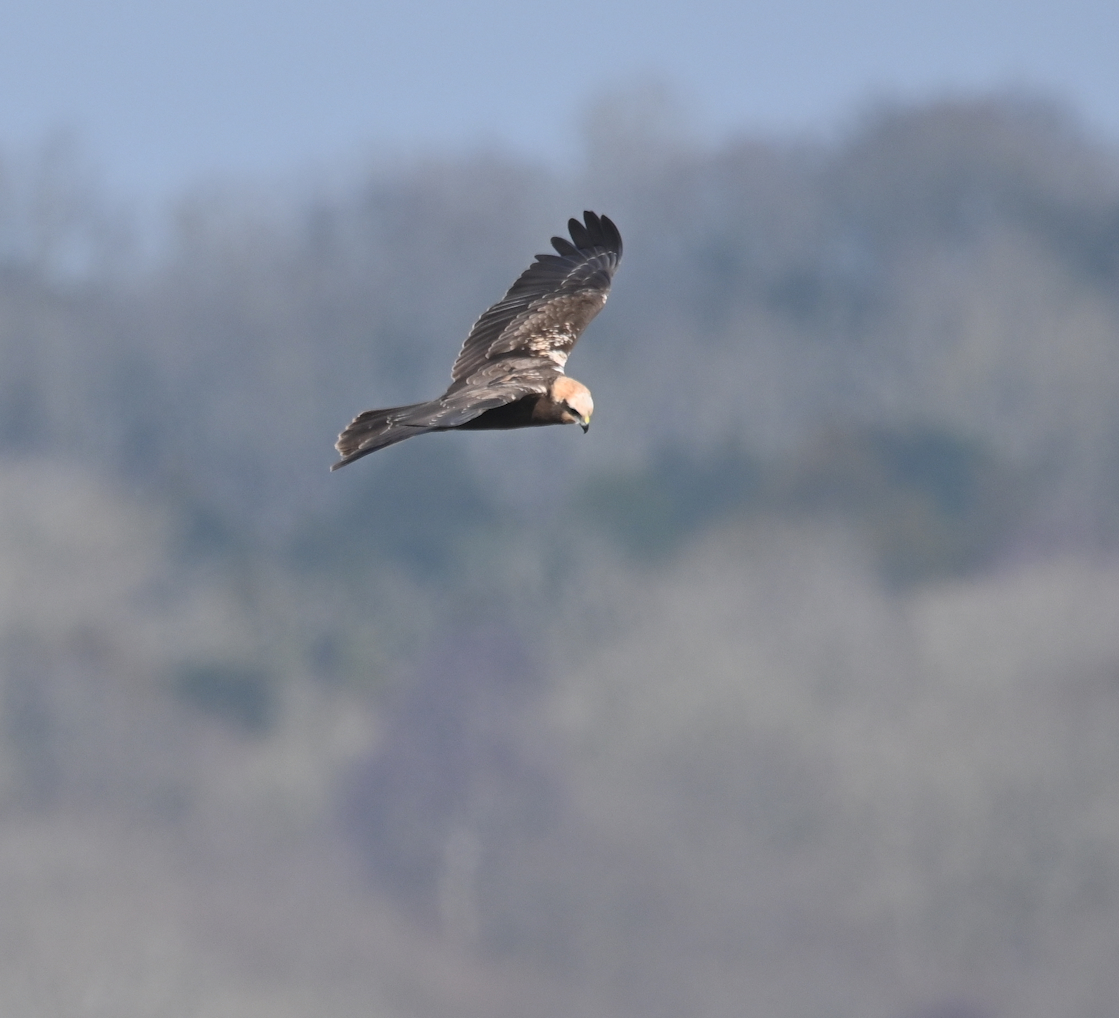
Despite the weather not improving we continued our promenade Wheatear quest failing to find any but did bump into the local male Kestrel hovering almost at eye level along thr cliffs. We usually see him in great conditions when we don't have the camera, or if we do the wind is in the wrong direction and we don't bother to take 'bum shots'. Today the wind was right but the light was pants and he was a little more distant than we would have liked.
A couple of unsuccessful
Wheatear days later we had a wander to Marton Mere to join the volunteers, something we've been meaning to do for some time. We walked in from the north east passing a veritable plethora of
Chiffchaffs, they were singing everywhere, and some were even showing themselves!
Also singing were a few
Cetti's Warblers, Wrens and a couple of
Robins, from deep in the scrub one of the small local population of
Bullfinches called.
We arrived at the worksite a little before the volunteers so sat on the nearby bench soaking up the spring atmosphere . We were joined by old mate AL and just as he sat down a Jay all to briefly landed in the bushes in front of us, far too quick for us to raise the camera, we've got a sneaking feeling that Jay is going to be this years Challenge bogey bird!
The volunteers arrived and we got stuck in to some dead hedging for a couple of hours. That's us at the back wandering around aimlessly. The deadhedging is made from cut back Bramble and other sgrub trimmings to help keep mostly dogs but also unleashed people out of the scrub areas during the nesting season.

We couldn't stay more than a couple of hours, it was a very pleasant spring day and t'mutt was beginning to get a bit hot so even if we had been able to continue working a longer we'd have had to have stopped to take him back to Base Camp sooner rather than later anyway. The walk back to the car gave us a couple of opportunities to try to get a pic of a Cetti's Warbler, but they were either too obscured in the vegetation or posing very nicely for the briefest of seconds and flitting off, like the Jay, far too quickly for us to raise the camera. We did another pic of a Chiffchaff though. #123 and March target of six new species reached, better still four of those weren't on our target list but 'bonus birds' if you will.

Another bird that wasn't on our radar for March, and one we didn't see at all last year never mind photograph, was a
Green Sandpiper that dedicated local patch worker TS had found on a flooded field which was on our route back from the Mere so we stopped for a quick look but had no joy. We decided that if it was reported the following day we'd try again after getting some more detailed info about its exact whereabouts.We did go back the next day and had a look from where we'd unsuccessfully looked from the previous day and Bingo there it was and like most scarcer birds seem to be it was the furthest bird from us by far. A good addition to the tally, #124, and a big thank you to TS for finding a local one, putting the news out and the extra info.
And so onto the continuing saga of no
Wheatears...we took the camera on every dog walk with half decent weather to no avail. And then a grotty no camera morning there was what we were looking for stood on the seawall not five yards in front of us - could we get a phone pic...no chance! And then before we'd got half way down our usual dog walking route we found another that soon disappeared when another dog walker came the other way. Just our luck it was a grim camera-free morning. Drat, drat and double drat.
The next day the weather was morev conducive to carting a heavy camera round and much less likely to get it water damaged, but there wasn't a sniff of a
Wheatear to be had, We console ourself with taking some snaps of the passing
Herring Gulls.
Further
Wheatear meanders with t'mutt continued to prove fruitless, just as well really as they were mostly camera-less too.
Friday came around, and that's the week's day out on safari with CR and IH. We had hoped to go up to south Cumbria but the weather had other plans for us so we stayed relatively local and had a day out on the foothills of Bowland, meeting IH at Beacon Fell's Visitor Centre. There was addition exctiement here as the North West Stages rally was being set up for the weekend. Here's a bit of
what they got upto on the lanes we'd be driving later in the day. There going nearly as fast as we do if we've had news of a good bird in the area.
Once IH had arrived we had a look at the feeders at the visitor centre and they didn't disappoint. It's a bit of a shame you have to view them from inside the VC and there's a net acrosss the window to stop the birds trying to fly through the VC and hurting themselves crashing into the glass but you are up close and personal to the action just a few short feet away. The usual feeder suspects are there,
Blue Tits, Great Tits, Coal Tits, Chaffinches with the added excitement of lots of
Siskins, a odd
Nuthatch and the stars of the show, the speedy
Bank Voles.


A walk through the forest to the Trig Point at the top and then down around the back produced very little, just a smattering of Coal Tits, Siskins and Robins, the strongcold wind not helping at all. So it was onward to our next port of call, Brock Bottoms - there's an ointment for that in the first aid kit in the car!
Here there wasn't as much water in the river as we feared which was good but at the car park a fair portion of the riverbank had been cordoned off where a flood had washed away several trees and taken away a good few yards of riverbank with them. The flood hadn't seemded to have changed the island in the stream there and Butterbur flowers were beginning to show through the shingle.
Walking down towards the first proper bend in the river, Dipper Corner, we came across a goodly patch of Wood Anemones, an indicator of Ancient Woodland.
We did see a
Dipper at
Dipper Corner but the bankside vegatation makes it difficult to get pics from there and at this time of day you're looking straight down the barrel of the light reflection off the water. So we hoped we'd see some more further on. We've already had Dipper for our Challenge but it's always good to get an improved pic which we hoped to do. The bird we really 'needed' was a Grey Wagtail having seen only one so far this year and that, weirdly, was in the garden at Base Camp during the Big Garden Bird Count. It wasn't long before IH saw some movement in a large fallen tree straddling the river, a pair of displaying Grey Wagtails. Nice but tricky to get anything like a decent shot of. #125
Continuing our walk through the fairly quiet riverside woods past the archaeolgical remains of the old mill workers' cottages we did finally meet up with another
Dipper.Great to listen to it singing too.
There were more
Grey Wagtails here too.
We stayed a while trying to improve our pics of both species, having much more luck with the
Dipper.
Wouldja look at those nictitating membranes, they protect it's eyes when foraging underwater.
And a typical 'on a rock' pose
And the other way round
We carried on downstream towards the old mill renewing our aquaintance with an old friend, the smallest plant with the biggest name -
Opposite Leaved Golden Saxifrage.
Believe it or not there is an
Alternate Leaved Golden Saxifrage, and it occurs at this site but we've never been able to find it here - or anywhere else for that matter. It's a much scarcer and less widespread plant. The nectar in the tiny flowers of our 'OLGS' was being enjoyed by a few
Drone Flies, Eristalis pertinax.
Beside them on a patch of emerging
Wild Garlic was a shiny blue beetle, possible an
Alder Beetle off the adjacent bankside
Alder trees.
In the afternoon sunshine and down in the steep valley sheltered from the cold wind we had hoped for our first butterfly of the year but these were just about all the invertebrates we came across.
We went as far as the old mill before heading back to the cars and lunch. Passsing the same Grey Wagtail and Dipper on the way but with butties beckoning we didn't hang around too long.
While eating lunch we watched the feeders in the car park but they didn't give any photo opportunities. A procession of rally cars went past presumably reccying the route for pace notes for the event tomorrow, while a cheeky Spaniel appeared and began to hassle IH for some titbits, good job it didn't come to us - we're to mean to give t'mutt owt to eat away from his mealtimes.
Two sites were in the offing after lunch, Lydiate Lane or Grizedale (correctly with a Z this time) we opted for the latter as the former would have been just a smaller version of what we had just done and the latter held the prospect of finding some scaly things.
We drove more rally lanes to get to the parking area for Grizedale where we found safety tape on the tight bend warning any potential spectators not to stand there. No standing around for us we were off down the hill towards the river. It was fairly warm and still sheltered as we came up to the Slow Worm site. Unfortuantely turning over several of the rocks they like to hide under didn't produce any, perhaps they weren't out of hibernation yet. We've not been here for a couple of years and it was a shock to see the damage that mountain bikers had done in the big gully there, churned up tracks all over the place, trees cut down and obviously lots of disturbance to a formerly quiet area.
Working our way carefully down the steep valley side back to the main path we saw a Buzzard overhead, just about the first bird of the afternoon. Down in the woods all was deadly quiet, the most exciting thing we found was this rather large Scarlet Elf Cup fungus.
The reservoir dam didn't have any
Common Sandpipers working theirv way along its edge, still a week too early we guess but IH did hear a
Green Woodpecker yaffle in the distance, a good tick for here and good to know they're still around it's a good few years since we've seen or even heard one here. The res itself was devoid of life, no
Goosanders - not even a
Mallard. We should have taken a photo of the absolute butcvhery someone with a tractor mounted flail someone had done to the pathside shrubs and trees - horrific, it was really bad and whoever did it shouldn't have been allowed out with anything more than a pair of secateurs!
Back at Base Camp we've been continuing our unsuccessful quest to photograph a Wheatear, it's hard to photograph the invisible. We did see a promenade mega rarity this morning though, a Wren was hopping around the seawall, never seen one here before in several years of wandering up and down Chat Alley and beyond.
We've got another rant coming but we'll leave that til next time.
Where to next? Yet more grotty weather is forecast so it;ll probaly be more tales of unsuccessful Wheatear hunting and maybe another visit to the Mere volunteers...weather permitting!
In the meantime let us know who's been dipping in and out of the water in your outback.