Showing posts with label thyme. Show all posts

Wednesday, 15 July 2015

Orchid time on the dunes

The Safari had built up a big surplus of extra hours and even after booking some flexi-time for a long weekend we still had a a few to play with. Yesterday mornig we got a txt from Young Un AB saying he'd just been on the dunes and counted a very accurate 841 Pyramidal Orchids and seen a Grayling butterfly - that was excuse enough for a very long lunch break. 
As soon as we arrived on site we saw there were lots of Burnet moths everywhere, almost every Creeping Thistle flowerhead had at least one supping away at the nectar within.
All the ones we looked at closely, without our specs we might add, were Narrow Bordered 5-spot Burnets.
Walking a few yards further into the dunes we disturbed a Meadow Pipit that wasn't at all happy with our presence
 It kept a rather watchful eye on us.
But where were all those orchids? Another couple of steps and we crested a small rise and there amid the Creeping Willow were several pink flower spikes, about 20of them, not the mother lode but a good start.
They were growing in an area from which much invasive Sea Buckthorn had been removed during the winter, the management certainly appeared to suit them.
AB was kind enough to tell us the whereabouts of other orchids nearby too which included Common Twayblade which we didn't know grew on the site, surely we'd been told at some stage over the last 25 years or so and forgotten if that was the case the information certainly wasn't for being retrieved from our memory banks!
Only a few yards away near a large hole that is being dug for an as yet unknown reason, probably to provide some form of dune slack (aka seasonally wet area), he said there were some Marsh Helleborines.
From there he directed us across the road to look into the garden of the rest-home which has been left uncut and is a wondrous array of colours from the multitude of wildflowers growing in the short sand turf, it is a sight to behold! The target here was probably the most dull and insignificant looking plant in the 'meadow' but one of the rarest in the country/world being an endemic to a handful of scattered sites around the coast and not overly numerous at any of them, the rather wishy-washy nondescript looking Dune Helleborine.
We didn't have permission to enter the garden but saw one of the five specimens not too far away from the wall.
 Exciting isn't it! Well it's not a looker but it is pretty special.
Walking back to the Land Rover (we keep threatening to replace it, but can we part with it?) a small orangy butterfly flew across the track in front of our knees, a Gatekeeper - one of the species we looked for unsuccessfully at the White Letter Hairstreak site at the weekend. They'll probably be out in force there this coming weekend if the warm(ish) sunny weather holds.
Not a bad way to spend a lunch hour and a bit.
Back in the office walking along the corridor we spotted a tiny bee that hadn't been able to find an open window and succumbed to the heat - yes we look at all manner of strange things! The thing that grabbed our attention was the red underside to its abdomen, not seen one like that before so in a pot it went, but what exactly was it? Why a pot for a dead bee - habit we suppose!
A plea on Twitter was made and the very knowledgeable and very modest @RyanClarkNature cme back with a name Megachile centuncularis, a quick look on the national database showed it to be, unsurprisingly, the first record for town and only the second for the whole of the Fylde (with the proviso that the NBN maps can be a little behind the times)/
Our last late finish of the season was helping an enthusiastic gang of Rainbows do some mini-beast hunting and pond dipping. Our best find for them was a Zebra Spider just before the action kicked off.
A quick little devil that didn't like being in the light in the middle of the lid of the pot
Better but stiller in the bright sunshine
Today we had a pretty intense time at work but were able to finish early and meet up with AB on the dunes and he showed us some of the other specialities he'd learned about from the old master MJ.
There's some nice moths on the dunes, we saw Latticed Heath but it was too quick for the lens unlike this Blackneck which did its best to hide from us.
It's larvae feed on Tufted Vetch of which there is plenty on the reserve. Nowhere near as common locally is Cotton Grass, a species more normally thought of as upland bog plant but was probably very common on the lowland mosses before they were extensively drained. A nearby field which had a sizeable colony was drained for a sports field not too many years ago.
Another orchid species here is Early Marsh Orchid, its earliness now meaning it's coming to the end of its season and most of them were going well over.
Harebells were everywhere, don't think we've ever seen so many here. the floral display this summer is really fine and well worth a visit.
 Like the Cotton Grass they were blowing around a bit
AB shifted up a gear after spotting another speciality moth, seconds later his bag was off his bag and a pot removed and de-lidded. in a jiffy a Silver Hook was inside. A new one for us and what a little beauty.
This one's a sedge feeder.
He released it but it wouldn't settle in the right place for a pic. While trying to get the pic we saw a shield bug. It's a still a nymph and we're not sure which species.
There are areas of the dunes that are losing their spectacular wildflowers to longer denser grassland. Some management has been begun to address this but really what's needed is more Rabbits to graze it down. There are some but not enough and they're widely scattered across the reserve and not able to 'control' large areas of dense vegetation. One thing is for sure they don't like Thyme!
On the final way back to the Land Rover we got the pic we wanted, OK very nearly the pic we wanted
We'd have preferred a more contrary Small Skipper but you can't have everything and it was a brilliant hour out all thanks to AB.
Where to next? Anything could happen tomorrow.
In the meantime let us know what unknowns who's keeled over in your outback.


Friday, 4 July 2014

Down on Patch 1

The Safari hasn't been able to get outside today, too busy and even if we hadn't of been the rain was persistantly heavy all day, downright miserable. Luckily just outside the office door there is a small Ragwort patch which has been visited by a Cinnabar Moth. There's a lot of caterpillars and not alot of Ragwort so there's going to be either a bit of starvation or a bit of cannibalism going on later.
Back at Base Camp we have some good news to relate - we have baby Dunnocks! Not sure where the nest is, perhaps in the tangle of Clematis on the pergola over the front gate.
In other birdy news juvenile Godfinches are now regular visitors to the feeders.
The recent bout of 'hot' dry weather has meant water must have been at a premium locally as there is always a bird in the waterfall having a drink and a bath.
Flowers in the garden have been putting on a show too
Ox-eye Daisy
With a hoverfly
A tiny Thyme flower
Tubular Waterdropwort
A pretty tub of something bright - no idea what thougbh
Last Sunday - seems a long time ago - we spent a sunny hour with our Extreme Photographer on Patch 1. We had a good spell inverting coming up with all manner of nice finds including several Meadow Grasshoppers.
The top, smaller pond, had a good colony of Iris sawfly caterpillars chewing away on the Yellow Flags. Unfortunately just a few inches beyond comfortable (ie no risk of falling in) arm's length and the light was fading so pics aren't as sharp as we'd like.
Butterflies were good in the sun, loads of Meadow Browns and Large Skippers with a few Speckled Woods thrown in for good measure.
Down at the bottom end of the rough field there were a few Small Skippers enjoying what the Brambles had on offer too.
Another trip out there, this time with the Brownies was in dull conditions and butterflies, the pack's quarry for the night, didn't put in much of a show, although just as they were arriving a Red Admiral flew past us but didn't reappear for them.
There were however far too many of these evil little monsters
A bit ropey - taken from a safe distance through the side of a pot
What is it with their eyes? What exactly do they see with all those patterns? What ever it is we wish it wasn't!
Where to next? National Moth Night (3rd - 5th) has been a windy washout so far but here's hoping it dries up in an hour or so the mothy can go out.
In the meantime let us know who's getting you all scared in your outback.

Saturday, 29 June 2013

What time d'yer call this?

The Safari's mystery find yesterday was identified as Sea Chervil Alcyonidium diaphanum, not a sponge but a bryozoan. Good old iSpot!
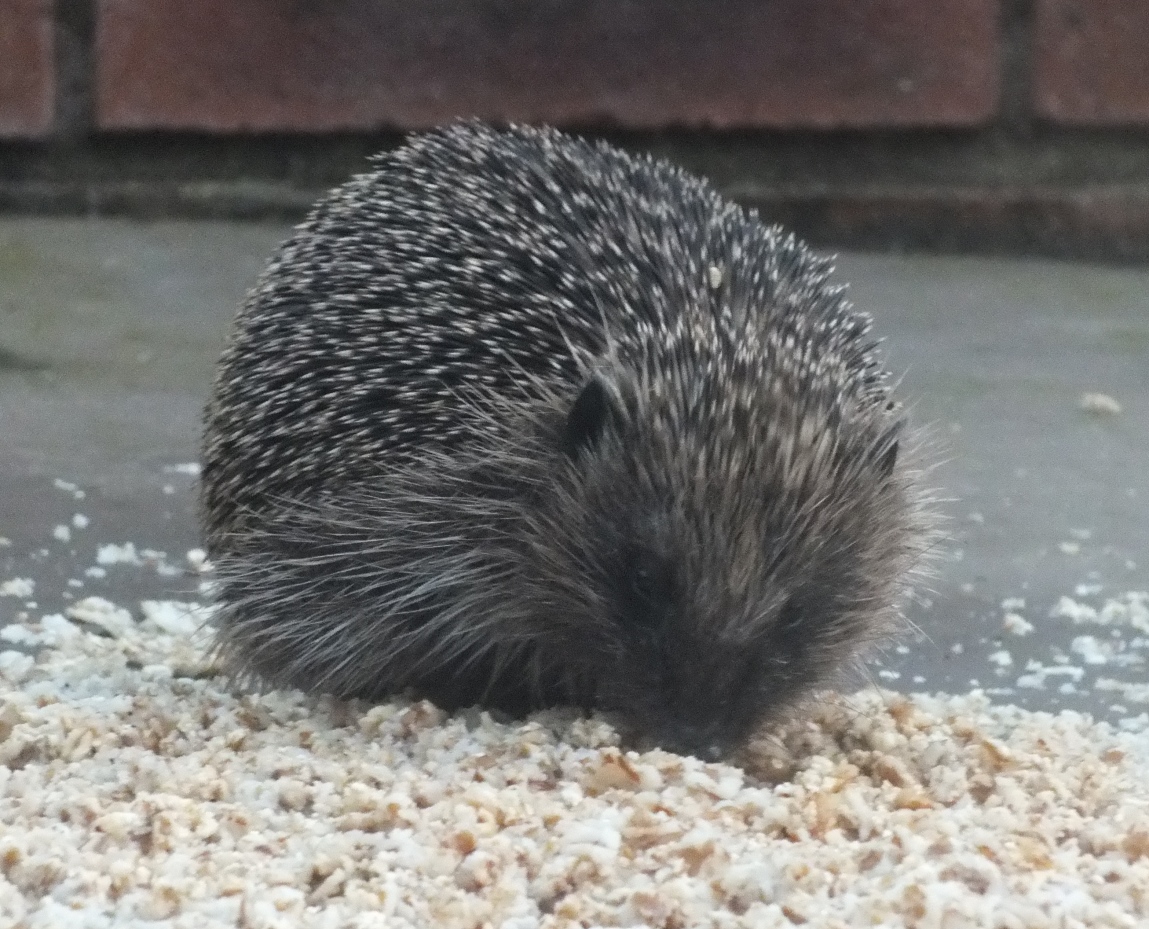
Last night the Hedgehog put in a very early appearance at only 8.30, more late afternoon than evening at this time of year! We missed it then as it saw us through the kitchen window but came back an hour later by which time we lost a lot of light...and the kitchen window's mot the cleanest after last weekend's storm.
This morning we were at the nature reserve a few minutes after 05.00. The Grasshopper Warbler was singing in the distance and near the cabins a Lesser Whitethroat rattled away. We waited for CB to return from his net round ready to do the scribing while he concentrated on processing the birds.
This Reed Warbler was the first juvenile of the site of what we hope will be very many.
 Sedge Warblers always look good, even when their starting to fray a little around the edges.
A walk down to see if we could find any Bee Orchids revealed a load of Whitethroats, Blackcaps, Great Tits, Song Thrushes, Reed Buntings and another very showy Sedge Warbler in the ever-increasing Bramble patch.
We found two quite large Bee Orchids. Crikey the vegetation has grown up densely despite the best efforts of the Yellow Rattle keeping the grasses in check - it's all the wildflowers that have gone bananas especially Hardheads and this Tufted Vetch.
At the cabin chatting while waiting for the next net round we had a male Kestrel and male Sparrowhawk go over, the latter was very seriously mobbed by an Oystercatcher - at one point it looked as though the Spar was going to be speared by that blood-orange bill! Had to have been defending young somewhere but the Kestrel was probably a bigger threat to them. Two Curlews flew towards the sea, one was significantly smaller than the other.
We helped do a bit of remedial work to the nets and very unsuccessfully attempted to extract a Dunnock, will need to take our specs next time so that we can see what we're doing!
Back at Base Camp there wasn't much to point the camera at but that's thing with wildlife there's always something of interest if you look long or hard enough.
Ox-eye Daisy with Herb Robert in the background
Ox-eye Daisy with a 2-spot Ladybird...Phone-cam
Close-up with big camera + extra lens
We weren't expecting our next subject. A teneral Blue Tailed Damselfly was chased around the garden until it clung to the laundry hanging on the lined. we thought that they'd all have emerged from the pond by now.
Still with the extra macro lens we struggled to get plant pics in the increasing wind but this tiny Thyme flower-head stayed just about still enough long enough.
After tea we put the mothy out and would you believe it the rain started within minutes! Hopefully it'll blow over quickly.
Where to next? What time will Hedgy appear tonight and will there be anything other than water in the mothy in the morning? If the sun dares to come out tomorrow afternoon we might even have a stab at finding some butterflies, either on Patch 1 or the North Blackpool Pond Trail...or both!
In the meantime let us know what put in a totally unexpected appearance in your outback.